The best educational toys for 4 year olds build early math, language, motor, problem-solving, and creative skills.
A four-year-old may lose interest in a toy that feels like schoolwork, yet still need practice with letters, numbers, hand control, and simple logic. The right learning toy turns that practice into play. I reviewed five useful options, from reusable tracing books and magnetic games to STEM building sets and counting blocks. Each pick suits a different learning style, budget, and play setting. I also looked at age fit, hands-on value, storage, parent support, and likely long-term use.
See the differences between my top picks at a glance.
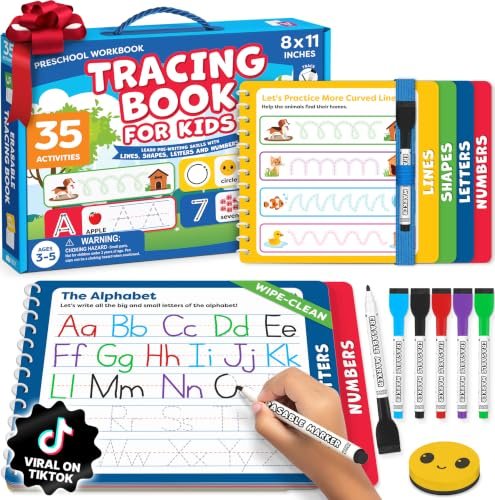
Reusable Letter Tracing Workbook

This reusable workbook gives preschoolers a simple place to practice letters, lines, and early writing strokes. The format helps children repeat a task without using a new worksheet each time. Repetition matters at this age because hand control grows through short, regular practice. The book can also give a child a calm activity during travel, quiet time, or a homework-style routine.
I like this option for families that want a focused learning toy rather than a large play set. It works best when an adult shows the correct stroke, then lets the child try alone. Keep sessions short and cheerful, since a four-year-old may tire quickly from pencil work. Check the current package for the included writing tools and care directions before purchase.
Pros:
- Supports early letter and line tracing
- Encourages pencil control and hand strength
- Reusable format can reduce paper waste
- Works well for quiet indoor play
- Easy to add to a preschool routine
- Suitable for short practice sessions
Cons:
- Tracing may feel less exciting than active toys
- Children may need help with correct letter formation
- Writing tools and refill details can vary by package
What Amazon Buyers Are Saying
Buyers commonly look for clear tracing paths, useful page layouts, and a workbook that keeps a child engaged. In this product type, families often value the reusable design and the chance to practice more than once. Some buyers may find that young children need guidance at first or that interest depends on the child’s comfort with writing. Read the latest listing reviews to confirm the current contents, marker quality, and durability.
My Recommendation
I recommend this workbook for a child who enjoys table activities or needs gentle pre-writing practice. It is not a full learning system, but it fills an important gap with little setup. It earns a strong score for simple, repeatable practice and portable use.
| Category | Rating |
|---|---|
| Learning value | 4.5/5 |
| Ease of use | 4.5/5 |
| Child engagement | 4/5 |
| Portability | 4.5/5 |
| Overall Rating | 4.4/5 |
125-Piece STEM Building Set

This STEM building set gives children many parts for making simple structures, vehicles, and creative designs. Open-ended building lets a child plan, test, change, and try again. Those steps support early problem-solving in a way that feels like play. A storage box also helps keep the pieces together after the activity ends.
This is one of the best educational toys for 4 year olds who like to build instead of sit with a worksheet. A parent can start with a simple model, then invite the child to change one part. The set may also support shared play between a child and an adult or sibling. Supervision remains important because the set contains multiple small parts, and families should follow the maker’s age and safety guidance.
Pros:
- Offers open-ended creative construction
- Supports planning and simple engineering ideas
- Encourages trial, error, and redesign
- Provides options for solo or shared play
- Storage box can make cleanup easier
- May remain useful as skills grow
Cons:
- Many pieces can spread across the play area
- Some four-year-olds may need help with assembly
- Small components require close supervision
What Amazon Buyers Are Saying
Customer interest in this kind of set usually centers on the number of pieces, creative freedom, and included storage. Parents often appreciate a toy that can produce a new design each time rather than one fixed result. Common concerns for building sets include pieces that are hard for small hands to connect or instructions that need adult support. Check current reviews for comments on fit, part strength, and the exact contents of the box.
My Recommendation
I recommend this set for children who enjoy making things and asking how parts work. It offers more open play than the tracing book, but it needs more floor space and cleanup. It is a strong value when a child will use the pieces often.
| Category | Rating |
|---|---|
| STEM play value | 4.5/5 |
| Creative freedom | 4.5/5 |
| Ease for age four | 4/5 |
| Storage and value | 4.5/5 |
| Overall Rating | 4.4/5 |
Magnetic Alphabet Fishing Game
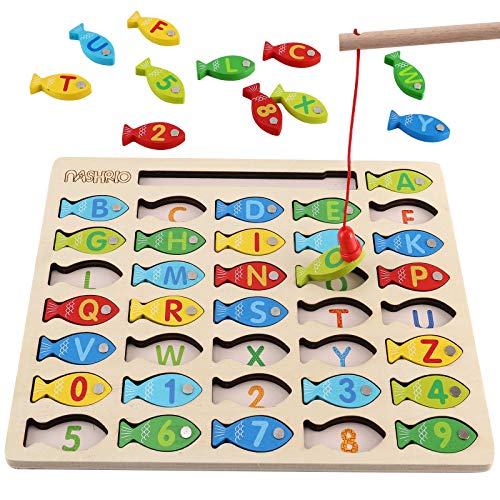
This wooden fishing game turns letter and number practice into a hands-on challenge. Children use a magnetic rod to pick up pieces, then name, sort, or count them. The action can improve hand-eye coordination while keeping the learning goal clear. It also gives parents many ways to change the game as a child develops.
For example, I might ask a child to catch the letter that starts a familiar word. Later, I could ask for a number, a color, or a short sequence. This flexible play makes the game useful for preschool learning at home. Small game pieces can present a choking risk, so an adult should supervise and store the set safely when younger children are nearby.
Pros:
- Combines movement with alphabet practice
- Can support early counting and number recognition
- Builds hand-eye coordination through fishing play
- Offers several simple game variations
- Wooden pieces create a classic tactile experience
- Works well for parent-child learning time
Cons:
- Magnetic play may need adult help at first
- Pieces can be misplaced during active play
- Not ideal for unsupervised play near toddlers
What Amazon Buyers Are Saying
Buyers of magnetic learning games often praise the fun theme, the hands-on design, and the way children can practice letters without a worksheet. Families may also like that adults can create new rules for different skill levels. The main concerns with this type of product often involve magnet strength, rod durability, or missing pieces after storage. Since experiences can differ by batch and use, review the latest customer comments before ordering.
My Recommendation
I recommend this game for a child who learns best while moving and touching objects. It has a clear learning purpose but does not feel too formal. It is one of the most versatile picks here for short family games and early alphabet review.
| Category | Rating |
|---|---|
| Alphabet practice | 4.5/5 |
| Motor-skill play | 4.5/5 |
| Game flexibility | 4.5/5 |
| Storage and durability | 4/5 |
| Overall Rating | 4.4/5 |
Take-Apart Dinosaur STEM Toy

This dinosaur toy lets children take apart and rebuild a dinosaur with child-focused tools. The activity links a popular theme with basic construction skills. A child must notice where parts fit, control the tool, and follow a simple order. That process can support fine motor control, focus, and early mechanical thinking.
The dinosaur theme may appeal to children who ignore traditional learning toys. I would begin with one short build and offer help when a piece feels tight. Rebuilding the same model can help a child gain confidence before trying a new approach. Adult supervision matters because the toy includes small parts and a tool, and families should check the product directions for safe use.
Pros:
- Uses dinosaur play to invite STEM learning
- Supports twisting, gripping, and hand control
- Teaches simple assembly and part placement
- Encourages patience and step-by-step thinking
- Offers repeat play through take-apart construction
- Can interest children who prefer active themes
Cons:
- Some children may need close adult guidance
- Parts can be frustrating if a child lacks hand strength
- The included tool and pieces need careful storage
What Amazon Buyers Are Saying
Reviews for take-apart dinosaur toys often focus on how much children enjoy the dinosaur theme and whether the tool is easy for small hands to use. Parents may value the chance to move a child from pretend play into simple building. Common concerns can include loose parts, difficult screws, or a build that needs more adult help than expected. Check recent reviews for comments on assembly, tool fit, and long-term use.
My Recommendation
I recommend this toy for a hands-on child who enjoys dinosaurs and likes to see how objects fit together. It offers a stronger build focus than the fishing game, but it may not suit a child who wants instant play. Buy it when you can offer a few minutes of patient support.
| Category | Rating |
|---|---|
| Fine-motor practice | 4.5/5 |
| STEM connection | 4.5/5 |
| Ease of assembly | 4/5 |
| Theme appeal | 4.5/5 |
| Overall Rating | 4.3/5 |
Montessori Number Counting Blocks

These counting blocks give preschoolers a visual way to explore numbers and quantity. A child can count pieces, match groups to numerals, sort items, and build simple patterns. Concrete objects often help young children understand that a written number represents a real amount. The set also supports one-to-one counting, which means touching or moving one item for each number said.
I see this as a good choice for families that want early math practice without screens. Start with small numbers and use everyday questions, such as “Can you make a group of four?” As the child gains skill, add simple comparisons like more, fewer, or equal. Keep the activity playful rather than turning every session into a test.
Pros:
- Builds early counting and number awareness
- Gives children physical objects for math practice
- Supports sorting, matching, and pattern play
- Works for short lessons or free exploration
- Can grow with a child’s early math skills
- Useful for parent-led preschool activities
Cons:
- Needs adult prompts for the best learning value
- Some children may prefer a more active toy
- Small pieces require safe storage and supervision
What Amazon Buyers Are Saying
Parents who choose counting blocks often want a simple way to make numbers visible and fun. They may praise clear number markings, easy activities, and a set that supports many rounds of play. Typical concerns can include piece size, paint or print wear, and whether the set includes enough guidance for a first-time user. I suggest checking the current listing and reviews for exact contents and finish quality.
My Recommendation
I recommend these blocks for a four-year-old who is learning to count or needs more practice linking numbers with amounts. They offer strong early math value, though an adult should guide play at first. This is a practical pick for home learning and preschool-style activities.
| Category | Rating |
|---|---|
| Counting practice | 4.5/5 |
| Number sense | 4.5/5 |
| Activity flexibility | 4.5/5 |
| Ease for beginners | 4/5 |
| Overall Rating | 4.4/5 |
How to Choose the Best Educational Toys for 4 Year Olds
Choosing the best educational toys for 4 year olds starts with the child, not the package. At four, children develop at different speeds. One child may enjoy letters, while another prefers building or pretend play. I look for toys that teach one clear skill, invite hands-on action, and allow more than one way to play. The best choice should also fit your space, your child’s attention span, and the amount of adult help you can offer.
1. Match the Toy to a Real Learning Goal
First, decide what you want the toy to practice. A tracing book suits early writing and pencil control. Counting blocks suit number sense. A fishing game can mix letter recognition with hand-eye coordination. A building set supports planning and problem-solving.
A toy does not need to teach every skill at once. In fact, a simple toy often works better because the child understands what to do. Choose a product that targets a current need while still leaving room for fun. If your child already knows most letters, focus on sounds, simple words, or fine motor play instead of buying another basic alphabet toy.
2. Check Age Fit, Parts, and Adult Support
Age labels provide a useful starting point, but they do not replace supervision. Look at the size of the parts, the tools included, and the steps needed to play. A four-year-old may manage a simple puzzle or fishing rod but need help with a take-apart construction toy. Some children can follow several steps, while others need one step at a time.
Read the safety notes before you buy. Keep small parts away from younger siblings. Inspect toys for cracks, loose pieces, sharp edges, or worn print. Also think about noise and mess. A compact workbook may work well in an apartment or during travel, while a large building set needs a clear play area.
3. Compare Repeat Play, Quality, and Value
The best educational toys for 4 year olds should offer repeat play. Ask whether the child can make a new design, create a new game, or move to a harder task. Open-ended building sets often score well here. Guided math blocks can also last longer when parents use new questions and challenges.
Look beyond the piece count. A box with many parts is not always better than a small, useful set. Check how easy the toy is to clean, store, and use without frustration. Compare the price with the number of activities it supports. Before ordering, review the current Amazon listing for included items, updated safety details, seller information, and buyer comments.
Final Verdict: Which Should You Buy?
My top all-around choice is the magnetic alphabet fishing game because it combines letters, numbers, movement, and fine motor play. Choose the counting blocks for early math, the workbook for writing, or the STEM sets for a child who loves to build.
The best educational toys for 4 year olds make practice feel like play. Pick one that fits your child’s interests, supervise small parts, and keep learning sessions short and positive.
FAQs Of best educational toys for 4 year olds
What are the best educational toys for 4 year olds?
The best options support a clear skill through play. Tracing books build early writing, counting blocks support number sense, fishing games practice letters and coordination, and building sets encourage STEM thinking.
Are educational toys safe for four-year-old children?
Many are designed for preschool use, but adults should read the age label and safety notes. Supervise toys with small pieces, magnets, tools, or removable parts, especially when younger children are nearby.
Which learning toy is best for teaching numbers?
Counting blocks are a strong choice because children can connect written numbers with real groups of objects. Adults can also use them for sorting, patterns, comparisons, and simple addition.
Which educational toy helps with early writing?
A reusable letter tracing workbook can help children practice lines, shapes, and letter strokes. Short sessions work best, and an adult should show the correct grip and direction without pressuring the child.
How can I keep a four-year-old interested in learning toys?
Use short activities, connect play to the child’s interests, and change the challenge often. Praise effort, allow free play, and stop before the child becomes tired or frustrated.