
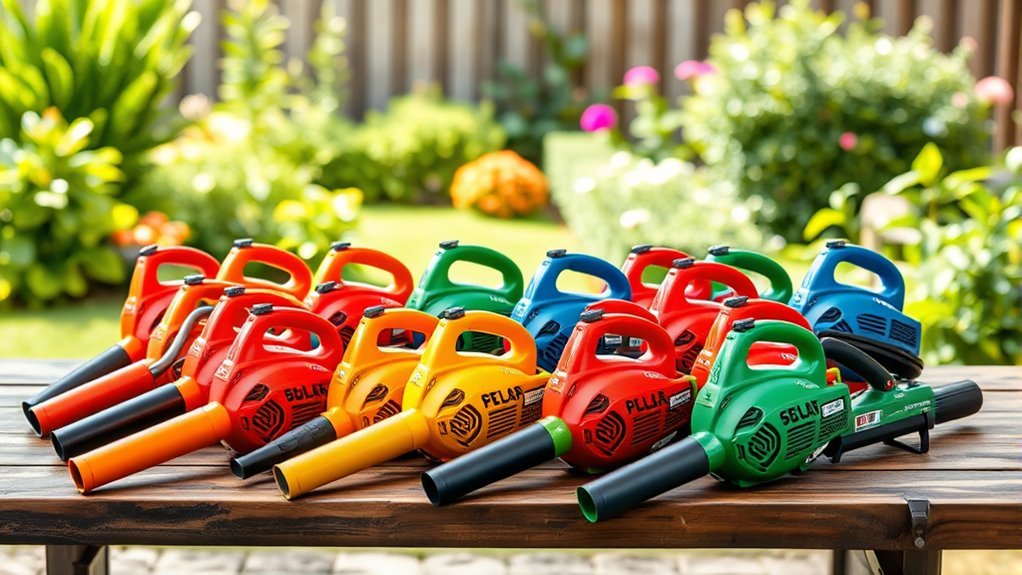
The best leaf blower for your U.S. home depends on four things: the size of your yard, the type of debris, your access to power, and local noise rules. Compare air volume (CFM), air speed (MPH), power source, weight, noise, runtime, and comfort before you buy. For most small yards, a light cordless blower is easy to use. Large lots and wet leaves may call for a stronger corded electric or gas model.
Introduction
A leaf blower can clear leaves, grass clippings, pine needles, and light yard debris in minutes. Yet a model with the highest advertised MPH is not always the best choice. A blower must match the work.
Start with the area you need to clear. Then check the type of debris, the distance from an outlet, the battery runtime, and the blower’s weight. Also check local rules. Some U.S. cities, towns, and homeowners’ associations limit gas-powered equipment or set seasonal noise hours.
This guide explains what the key ratings mean and how to choose a leaf blower without paying for power you will not use.

Start With Your Yard and Cleanup Jobs
The right leaf blower starts with the work, not the product label. A small patio needs less power than a half-acre lot. Wet leaves also need more force than dry leaves.
Consider these questions:
- How large is the area?
- Do you need to clear hard surfaces, grass, garden beds, or all three?
- Are the leaves dry, wet, packed, or mixed with twigs?
- Do you need to move leaves into a pile or carry them to a curb?
- Do you have access to a grounded outdoor outlet?
- Will you use the blower near neighbors?
- Do you already own batteries from a power-tool system?
A simple yard-size guide
| Yard or task | Usually suitable choice | Main reason |
|---|---|---|
| Small patio, porch, or driveway | Compact cordless or corded electric | Light, quiet, and easy to store |
| Small to medium suburban yard | Cordless handheld | Good balance of power and movement |
| Large yard with many trees | High-output cordless or gas handheld | More airflow and longer work capacity |
| Large property or frequent commercial work | Backpack gas or high-capacity battery model | Better for long sessions |
| Occasional light cleanup | Basic corded or cordless model | Lower cost and less maintenance |
| Wet leaves and heavy piles | High CFM model with strong air force | Moves dense debris better |
These are broad categories, not strict rules. Yard shape, leaf type, slope, and weather can change the answer. A small yard with heavy oak leaves may need more power than a larger yard with a few dry leaves.
Think about the surface
Hard surfaces such as driveways and sidewalks are easy to clear. Grass and mulch are harder because air can catch loose material. A very powerful blower may scatter mulch, soil, or gravel.
For garden beds, look for:
- Variable-speed control
- A low-power setting
- A narrow nozzle for control
- A wide nozzle for gentle sweeping
- A balanced design that does not twist your wrist
the goal is controlled movement. More power is useful only when you can direct it.
Understand CFM, MPH, and Air Force
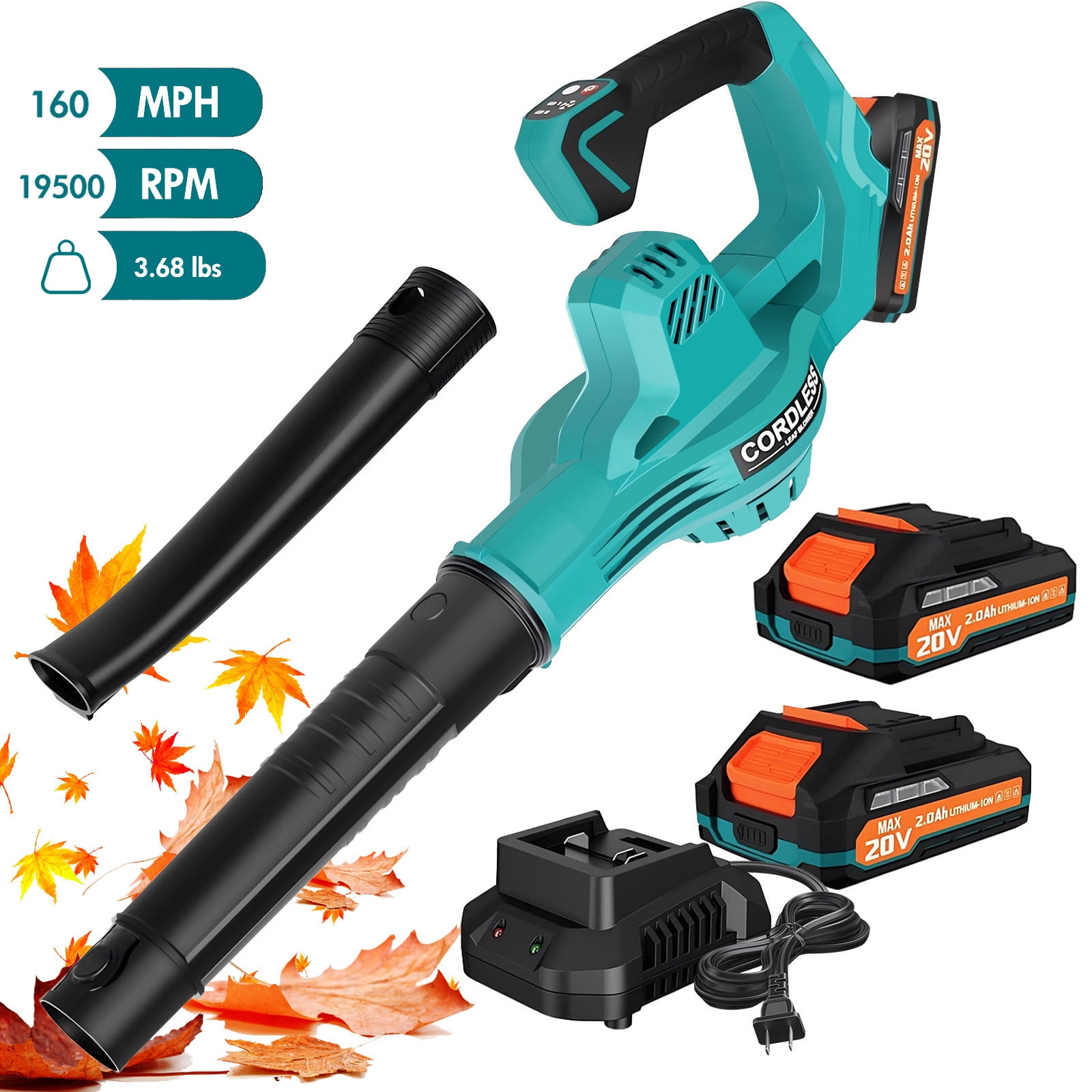
CFM tells you how much air the blower moves. MPH tells you how fast the air leaves the nozzle. Both ratings matter, but neither gives the full picture alone.
What CFM means
CFM, or cubic feet per minute, measures air volume. A higher CFM can move more debris across a wider area. It is often useful when you need to gather leaves into a pile.
A blower with high CFM may cover ground quickly. It may not, however, push through a dense or wet pile unless it also has strong air speed or force.
What MPH means
MPH measures air speed at the nozzle. High air speed can help loosen stuck leaves, pine needles, and small debris from cracks.
Manufacturers may measure MPH at different points or with different nozzles. For that reason, MPH figures are not always direct comparisons between brands.
What Newtons mean
Some manufacturers list blowing force in Newtons (N). This rating can offer a more useful view of push than MPH alone, but test methods can still differ. Check how the company measured the number before comparing models.
How to read the ratings together
Use this rule:
- Higher CFM: better for moving a large amount of loose material.
- Higher MPH: better for loosening stubborn debris.
- Higher Newtons: may indicate stronger push at the nozzle.
- Variable speed: better control across different surfaces.
Do not choose a blower from one number. A model with very high MPH but low CFM may produce a narrow jet that feels strong but moves less material overall.
A useful comparison example
Imagine two hypothetical blowers:
| Model | Air volume | Air speed | Likely strength |
|---|---|---|---|
| A | 450 CFM | 110 MPH | Broad leaf movement |
| B | 300 CFM | 145 MPH | Focused push and crack cleaning |
Model A may gather a large layer of dry leaves faster. Model B may work better on damp leaves stuck along a curb. The better choice depends on the job.
Treat advertised ratings as test results under stated conditions, not a guarantee of yard performance. No single industry-wide test makes every brand’s number perfectly equal.

Choose the Right Power Source
The main choices in the United States are cordless battery, corded electric, and gas. Each has a clear trade-off.
Cordless battery blowers
Cordless models use rechargeable lithium-ion battery packs. They offer good mobility and produce no exhaust at the point of use.
They are often a strong fit for:
- Small and medium yards
- Short cleanup sessions
- Homes without a convenient outlet
- Users who already own compatible batteries
- Areas with gas-equipment restrictions
Check the full kit. Some prices include the battery and charger. Others include only the bare tool. Battery cost can change the real purchase price.
Runtime depends on the battery size, speed setting, temperature, debris, and tool design. A larger battery often runs longer but adds weight. Use the manufacturer’s runtime claim as an estimate, not a promise.
Corded electric blowers
Corded models provide steady power while plugged in. They can work well for patios, small yards, and homes with a nearby outdoor outlet.
Their limits include:
- The reach of the extension cord
- Cord drag and snag risk
- The need for a suitable outdoor-rated cord
- Less freedom around trees and landscaping
Use an extension cord rated for outdoor use and suitable for the tool’s electrical load. Follow the blower manual and extension-cord instructions. Keep the cord away from water, heat, sharp edges, vehicles, and the nozzle.
Gas blowers
Gas models can offer long work time and strong output. They may suit large properties, heavy debris, or long cleanup sessions.
They also require more care:
- Fuel storage
- Engine maintenance
- Oil or fuel mixing for some two-stroke models
- Warm-up and starting
- Exhaust management
- More noise and vibration
Never run a gas blower in a garage, shed, basement, or other enclosed space. Carbon monoxide can build up quickly. The U.S. Consumer Product Safety Commission warns that fuel-burning engines should be used only outdoors and away from doors, windows, and vents. See the CPSC carbon monoxide safety guidance.
Power-source decision table
| Priority | Best starting point |
|---|---|
| Lowest maintenance | Cordless or corded electric |
| Maximum freedom of movement | Cordless or gas |
| Longest continuous work | Gas or spare cordless batteries |
| Lowest local exhaust | Cordless or corded electric |
| Lowest purchase cost in some cases | Corded electric |
| Large property and heavy debris | High-output cordless or gas |
Your local rules may decide the issue before performance does. Check city, county, state, and HOA requirements before buying a gas model.

Check Weight, Balance, and Handle Design
A leaf blower must feel manageable after several minutes, not just when you lift it in a store. Weight, balance, vibration, and grip shape all affect fatigue.
Look for:
- A centered motor
- A handle that keeps the nozzle from twisting
- A comfortable grip
- A trigger that does not need constant strain
- A lock-on button or cruise control
- A battery placed close to the body
- Adjustable speed control
- A shoulder strap for heavier models
Battery blowers can feel light without a battery and much heavier with one installed. Check the ready-to-use weight, including the battery, tube, and nozzle.
A heavier model may clear a pile faster, but a lighter model may be better if you have shoulder, wrist, or back limits. Stop if your hands become numb or your grip weakens. Fatigue makes it harder to control the airflow and avoid people, pets, windows, and loose objects.
Handheld or backpack?
A handheld blower is usually enough for home use. A backpack model spreads the load across your shoulders and may help during long sessions.
Choose a backpack design only if you need its longer work capacity or stronger output. It adds cost, storage needs, engine or battery weight, and more complex maintenance.
Pay Attention to Noise
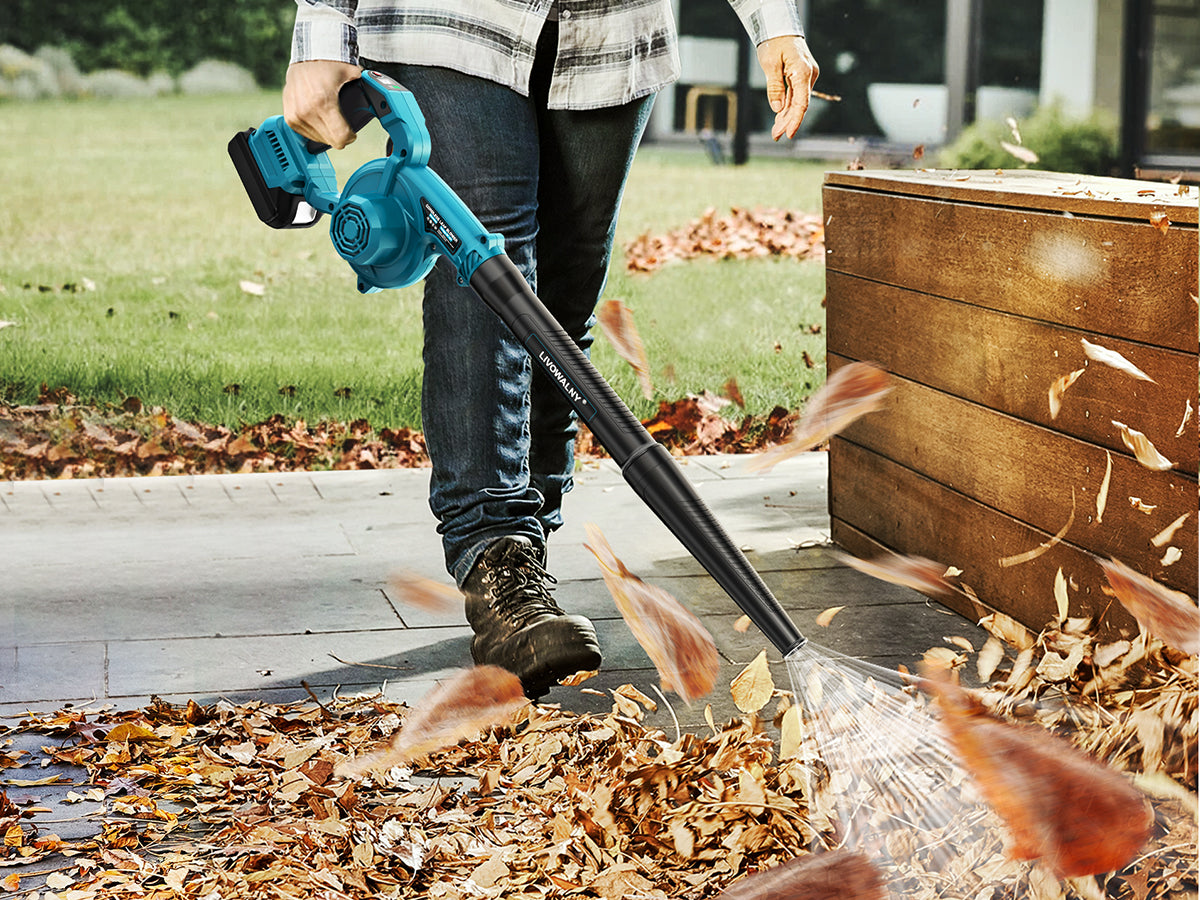
Noise affects comfort, neighbors, pets, and legal use. Gas blowers are often louder than electric models, but the exact level varies by model and operating speed.
Manufacturers may list sound in decibels (dBA). Decibels use a logarithmic scale, so a small number change does not represent a simple percentage change in perceived loudness. Compare products tested under similar conditions when possible.
Check:
- The listed sound rating
- The test condition and distance
- Whether the rating changes by speed
- Local time-of-day rules
- Local bans on gas-powered equipment
- HOA restrictions
The U.S. Environmental Protection Agency provides general information on noise and its effects through its noise pollution resources. Local ordinances remain the deciding rule for your property.
Wear hearing protection when the sound level is high or when you use the blower for an extended time. Earplugs or earmuffs do not make a loud tool safe to use around other people. Keep others away from the work area.

Look for Useful Controls and Attachments
Good controls can matter more than a small difference in advertised power. A variable-speed trigger lets you use low airflow near flower beds and full power on a driveway.
Useful features include:
Variable-speed control
This gives you a wider range of control. It can reduce battery use and help prevent mulch, gravel, or soil from scattering.
Cruise control or trigger lock
This can reduce hand strain during long jobs. It should not prevent you from stopping the tool quickly. Learn how to release it before use.
Turbo mode
Turbo can help with packed or wet debris. It also uses more battery power and may increase noise. It is a short-term setting, not always the best daily setting.
Interchangeable nozzles
A narrow nozzle focuses airflow. A wide nozzle spreads it over a larger area. Some tools include a scraper or flat nozzle for stuck leaves.
Vacuum and mulching functions
A blower-vac can collect leaves into a bag. Some models also mulch them. This can reduce the volume of dry leaves before composting or disposal.
These functions add weight and parts. They can also clog when used on wet leaves, twigs, stones, or large debris. If you mainly need to make piles, a standard blower may be simpler and lighter.
Battery platform
If you already own compatible outdoor tools, a bare blower may lower the cost. Confirm that:
- The battery voltage and platform match
- The charger is included or already available
- The battery fits the exact model
- The manufacturer allows the battery for outdoor use
- Replacement batteries are still sold
Voltage alone does not prove compatibility. Batteries from different platforms may have similar voltage but different connectors, controls, and electronics.

Compare Runtime, Charging, and Operating Cost
Runtime is one of the most important cordless blower details. A small battery may last long enough for a driveway but not for a full yard.
The real runtime depends on:
- Battery capacity
- Speed setting
- Turbo use
- Air resistance from the nozzle
- Temperature
- Battery age
- Leaf density
- Stopping and starting
A simple planning example
Suppose a manufacturer estimates 20 minutes of runtime at a low setting. Your cleanup takes 30 minutes and needs frequent high-speed use. One battery may not finish the task.
You could:
- Buy a larger battery
- Keep a charged spare
- Work in smaller sections
- Use a lower speed when possible
- Choose a corded or gas model
Do not compare battery voltage with watt-hours as if they mean the same thing. Voltage describes electrical potential. Watt-hours (Wh) describe stored energy. When battery capacity is listed, watt-hours can help compare packs within the same general system, though tool efficiency still differs.
For gas models, include fuel, oil, spark plugs, filters, and seasonal storage in the long-term cost. For corded models, include the cost of a safe outdoor extension cord if you do not already have one.

Consider Reliability, Maintenance, and Storage
A leaf blower should be easy to maintain and store. The best design depends on how often you will use it.
Battery models
Keep batteries dry and store them according to the manufacturer’s instructions. Avoid leaving a battery in extreme heat, direct sun, or a freezing vehicle. Inspect the pack for swelling, damage, or unusual heat. Stop using a damaged battery and follow the manufacturer’s disposal guidance.
Corded models
Inspect the power cord, plug, strain relief, and housing before each use. Do not use a cord with cuts, exposed wires, bent prongs, or heat damage.
Gas models
Follow the owner’s manual for:
- Fuel type
- Oil type
- Fuel mixing
- Air-filter care
- Spark-plug service
- Fuel storage
- Winter storage
Use fresh fuel as directed. Never modify a fuel system or remove a safety part. If the engine leaks fuel or produces unusual smoke, stop using it until the problem is corrected.
For any model, clean blocked air inlets and check that the tube is secure. Remove the battery or disconnect power before clearing a jam, and follow the manual’s shutdown steps.
Use a Leaf Blower Safely
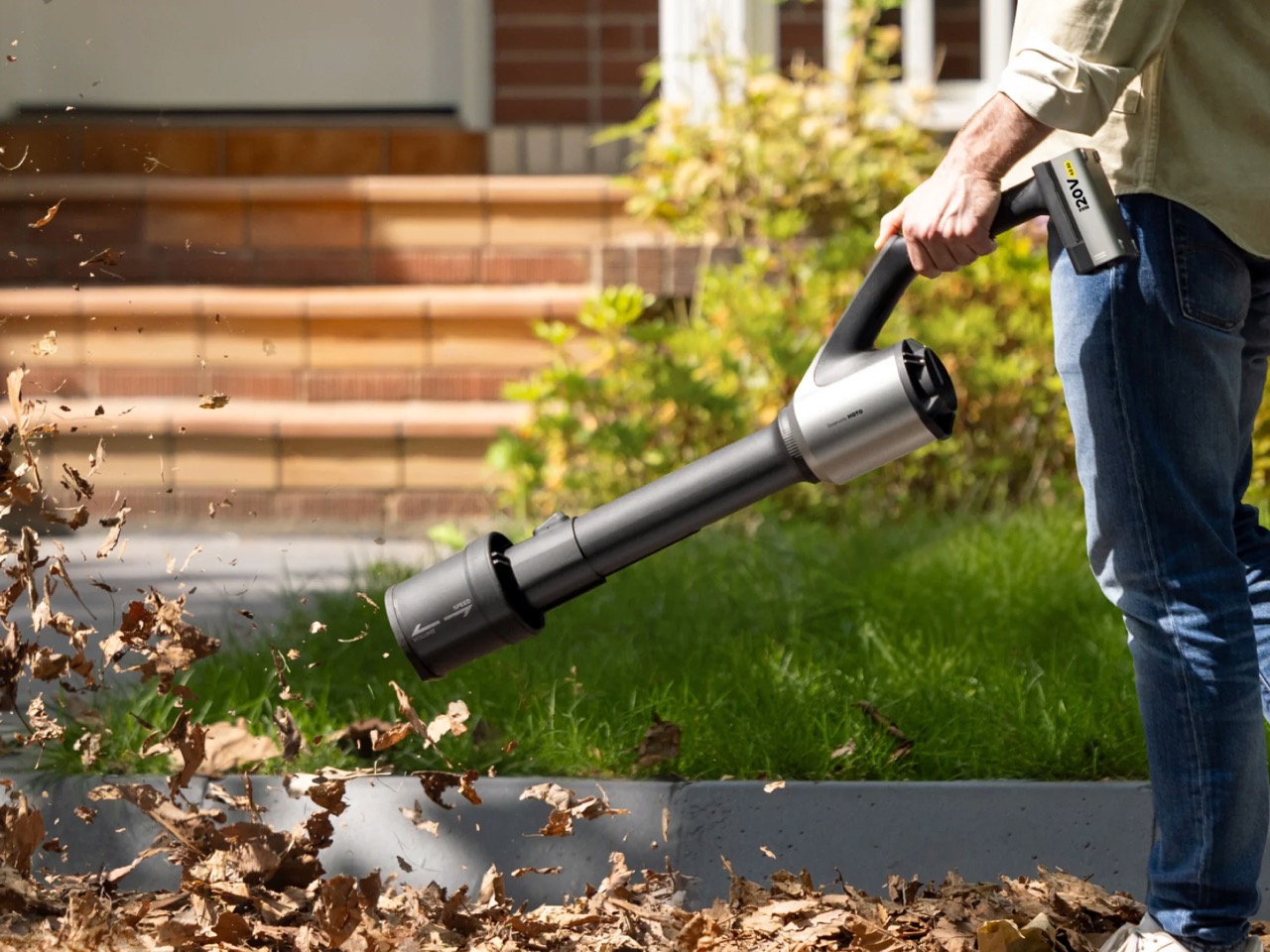
A leaf blower can throw stones, sticks, and other objects at high speed. Safety depends on both the machine and the way you use it.
Before starting:
- Read the owner’s manual.
- Check the work area for rocks, wire, glass, and toys.
- Keep children and pets away.
- Wear eye protection.
- Wear hearing protection when needed.
- Wear closed-toe shoes and long pants.
- Check the tube, battery, cord, or fuel system.
- Confirm that the airflow points away from people and property.
During use:
- Aim the nozzle downward and away from people.
- Use the lowest speed that moves the debris.
- Keep the nozzle away from windows, cars, and fragile plants.
- Do not blow dust toward roads or neighboring homes.
- Never point the blower at a person or animal.
- Do not use a gas blower indoors or in an enclosed space.
- Stop the tool before clearing a blockage.
- Do not use a blower to move burning leaves, hot ash, or fire.
The Occupational Safety and Health Administration provides workplace guidance on personal protective equipment and noise exposure. Home users should also follow the equipment manual and local safety rules. If dust, mold, or animal waste is present, avoid creating a cloud. Wet cleaning or manual removal may be safer than blowing it into the air.
Avoid Common Leaf Blower Buying Mistakes
Many poor purchases come from comparing one headline number or ignoring the work setting.
Mistake 1: Choosing MPH alone
High MPH does not always mean faster leaf gathering. Check CFM, air force, nozzle design, and speed control too.
Mistake 2: Buying a gas model without checking local rules
Some U.S. communities restrict gas-powered landscape equipment. Confirm the rule before you spend money.
Mistake 3: Forgetting the battery and charger
A tool-only price may not include either one. Add the cost of the complete operating kit.
Mistake 4: Ignoring ready-to-use weight
A listed tool weight may exclude the battery. Test or verify the full weight before buying.
Mistake 5: Buying more power than the yard needs
Extra power can mean more noise, weight, cost, and battery use. A smaller tool may be easier to control.
Mistake 6: Assuming a blower replaces a rake
A blower works best on dry, loose debris. Wet leaves, heavy mats, and leaves trapped in mulch may need a rake, broom, or manual removal.
Mistake 7: Using the turbo setting for every job
Turbo can drain a battery quickly and scatter debris. Use it only when the lower setting cannot do the work.

A Leaf Blower Buying Checklist
Before choosing a model, confirm these points:
- The power source fits your yard and local rules.
- CFM suits the amount of debris you move.
- Air speed or force suits wet and stuck debris.
- The full operating weight feels manageable.
- Runtime covers the job, or spare power is available.
- The model includes the battery and charger you need.
- Noise is acceptable for your home and neighbors.
- Variable speed helps protect mulch and garden beds.
- The tube and nozzle fit your cleanup style.
- Replacement batteries, filters, or parts are available.
- The warranty and return terms are clear.
- The manual is available before purchase.
- The tool can be stored in a dry, safe place.
When comparing two similar models, choose the one with the better balance of airflow, control, comfort, and support. A slightly lower rating may be the better buy if the tool is lighter and easier to use.

Frequently Asked Questions
Is CFM or MPH more important on a leaf blower?
Neither rating works alone. CFM helps move a large amount of loose debris, while MPH helps loosen stubborn debris. Look for a useful combination of both, plus variable-speed control.
What is the best type of leaf blower for a small yard?
A compact cordless or corded electric blower is often enough. Choose cordless if you need freedom around trees and garden beds. Choose corded if the work area is close to an outdoor outlet and you want steady power.
Are battery leaf blowers powerful enough for wet leaves?
Some are, but wet leaves are harder to move than dry leaves. A high-output cordless model with strong airflow may work well for light wet debris. Dense, packed piles may still need a rake or a more powerful gas model.
How long should a leaf blower battery last?
There is no single answer. Runtime changes with battery size, speed, temperature, debris, and tool design. Use the manufacturer’s estimate as a guide, then compare it with the time needed to clear your yard.
Can I use a leaf blower on gravel or mulch?
Yes, but use a low setting and keep the nozzle farther from the surface. High airflow can move gravel, mulch, and soil. Test a small area first.
Do leaf blowers need hearing protection?
Hearing protection is wise when the tool is loud or used for a long period. Check the manufacturer’s sound rating and follow local workplace or safety guidance. Also protect nearby people by keeping them away from the work area.
Conclusion
What to look for in a leaf blower comes down to fit. Match the tool to your yard size, debris type, power access, noise limits, and cleanup time.
For many U.S. homeowners, a cordless model with variable speed offers a practical balance of mobility and low maintenance. A corded model can provide steady power at a lower cost for small areas. Gas models may suit large properties and long jobs, but they bring more noise, fuel care, emissions, and local-rule concerns.
Before you buy, compare CFM, MPH or air force, full weight, runtime, noise, included accessories, and service support. The best leaf blower is not the one with the biggest number. It is the one you can control, maintain, and use safely for the work your yard actually requires.