
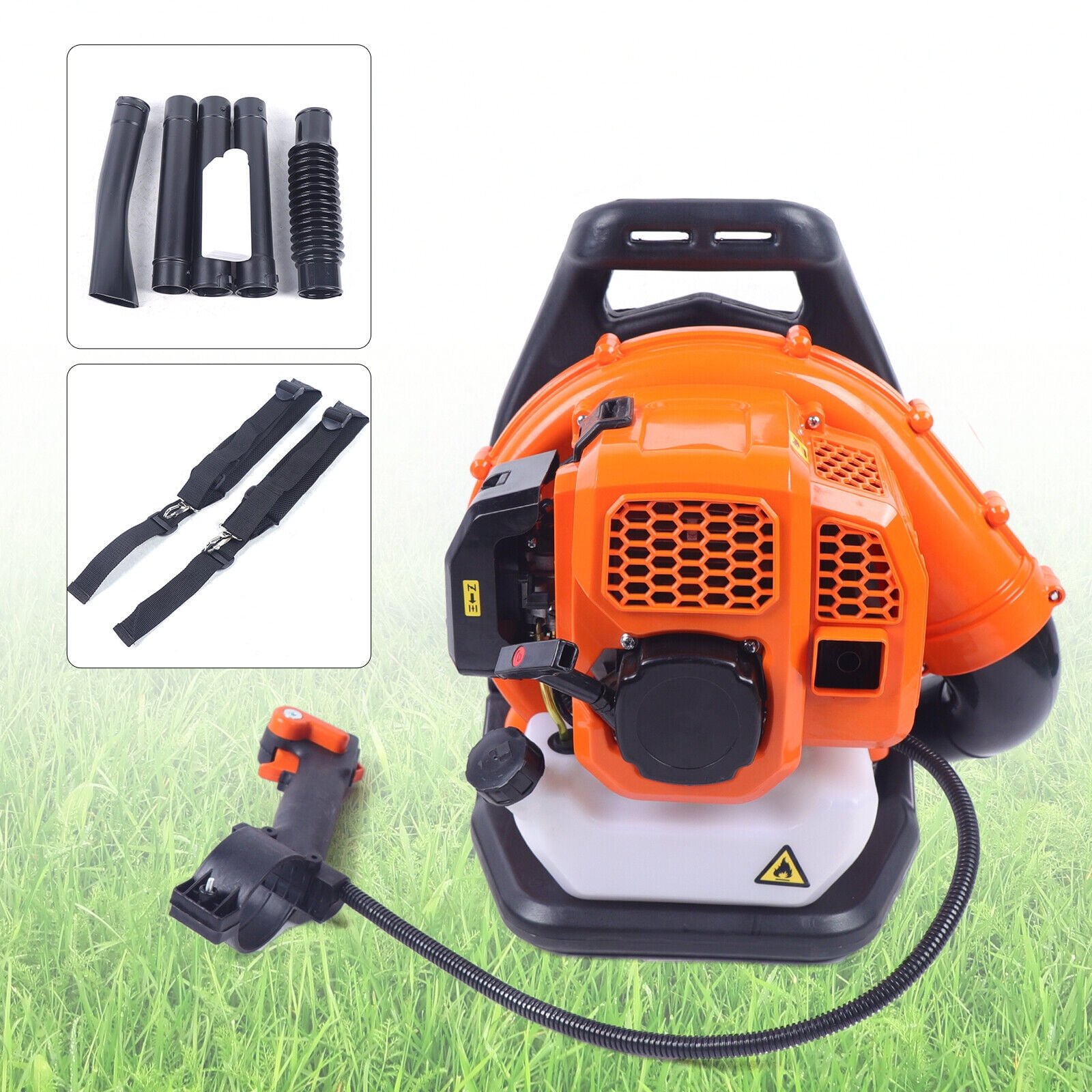
No. Not all leaf blowers are 2-stroke. In the United States, leaf blowers use one of three main power systems:
- Two-stroke gasoline engines
- Four-stroke gasoline engines
- Electric motors, powered by a cord or rechargeable battery
Two-stroke gas blowers remain common because they are light and powerful. However, battery blowers are now widely used for homes, and some gas models use four-stroke engines. The best choice depends on noise limits, yard size, maintenance needs, emissions, and access to fuel or charging.
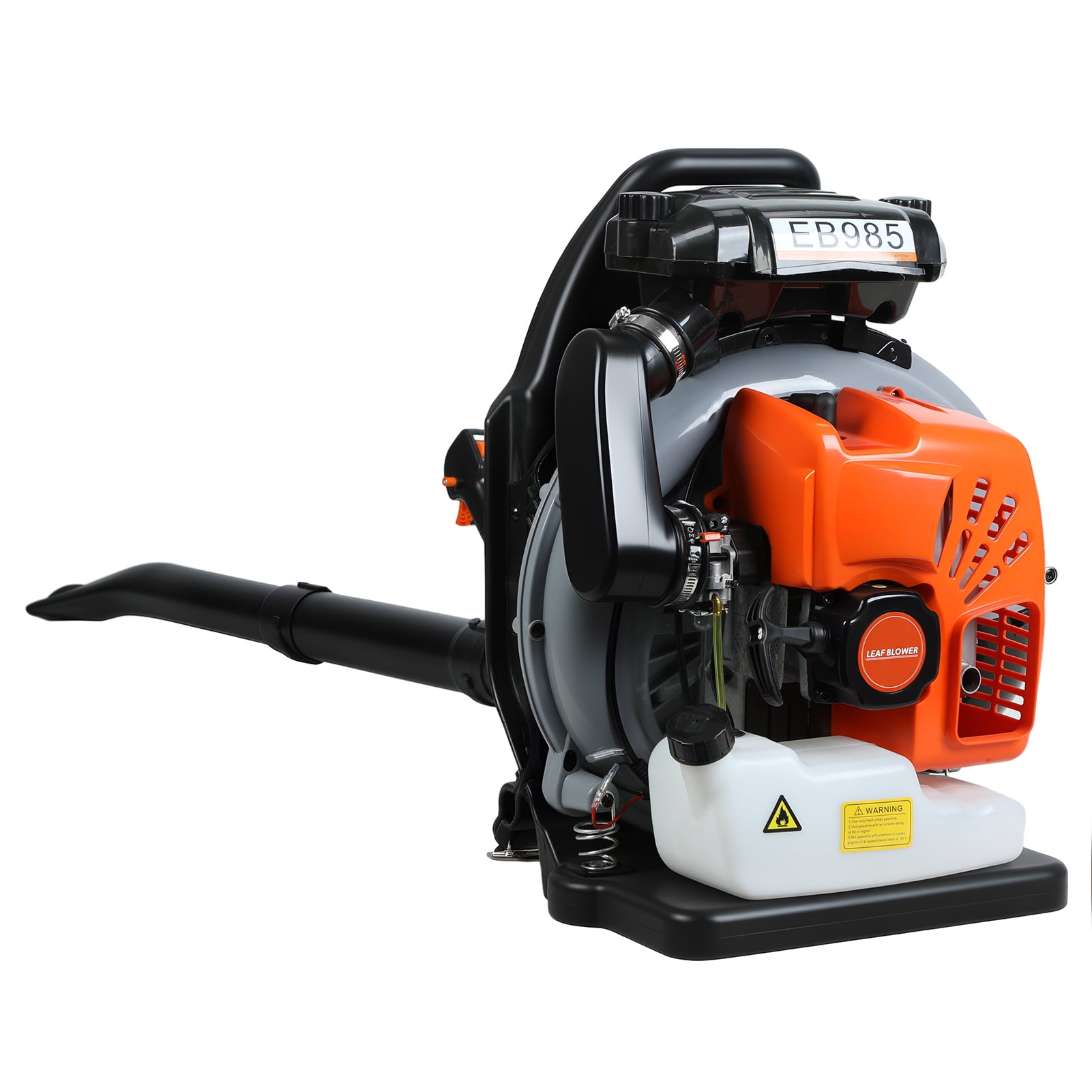
What Is a Two-Stroke Leaf Blower?
A two-stroke leaf blower uses a small gasoline engine that completes its power cycle in two piston strokes. The engine usually gets lubrication from oil mixed into the gasoline rather than from a separate oil tank.
This design has fewer moving parts than a four-stroke engine. That can make the blower light, compact, and strong for its size. These benefits explain why many handheld gas blowers use two-stroke engines.
A typical two-stroke blower needs a specific gas-to-oil mixture. Common ratios include:
- 50:1 gasoline to oil
- 40:1 gasoline to oil
- 32:1 gasoline to oil
The correct ratio depends on the engine. Always follow the owner’s manual or the fuel cap label. Using straight gasoline can cause severe engine damage. Adding too much oil can cause smoke, poor running, spark plug fouling, and carbon buildup.
A two-stroke blower is not the same as a four-stroke blower with mixed fuel. In a four-stroke engine, gasoline and crankcase oil normally go into separate places.
What Other Types of Leaf Blowers Are Available?
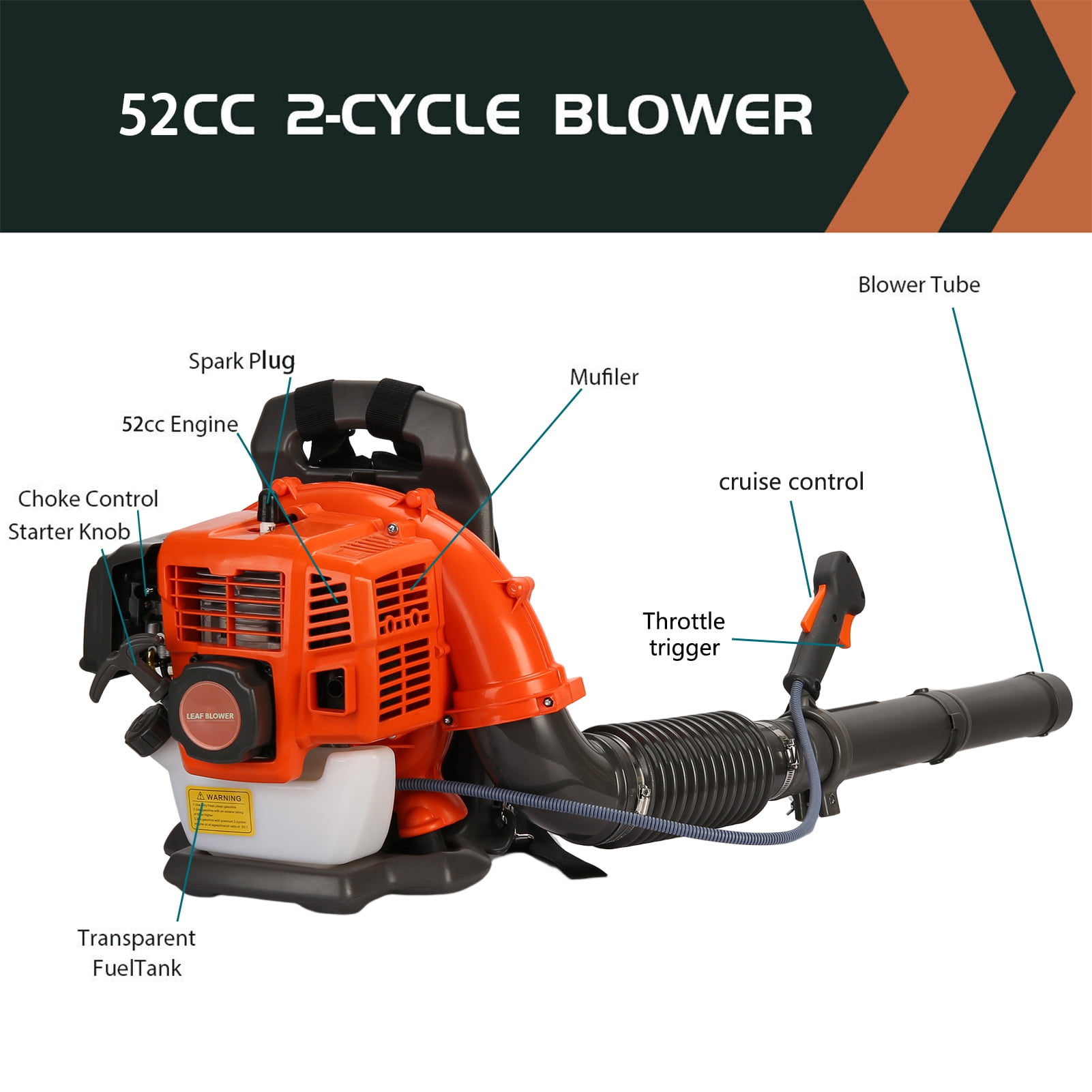
Leaf blowers are not limited to two-stroke engines. Electric and four-stroke models work in different ways and have different trade-offs.
Battery-powered leaf blowers
Battery blowers use an electric motor and a rechargeable battery. They do not use gasoline, engine oil, or fuel mix.
Their main benefits include:
- Simple starting with a button or switch
- Lower routine maintenance
- No fuel mixing
- No direct exhaust from the blower
- Usually less noise than a gas model
Their limits include battery run time, recharge time, and the cost of extra batteries. Runtime can also change with the power setting, battery size, temperature, and the condition of the battery.
Corded electric leaf blowers
Corded models use household electricity through an outdoor extension cord. They can run as long as power is available, but the cord limits movement.
Use only an extension cord rated for outdoor use and suitable for the blower’s current requirements. Keep the cord away from water, heat, sharp edges, and the blower tube. A ground-fault circuit interrupter, or GFCI, is especially important when using electric equipment outdoors.
Four-stroke leaf blowers
A four-stroke engine uses separate fuel and crankcase oil. It completes its power cycle in four piston strokes.
Four-stroke engines can offer quieter operation and lower fuel consumption in some designs. They may also produce less smoke because oil is not burned with the fuel. However, they are often heavier and more complex than two-stroke handheld blowers.
Four-stroke leaf blowers are less common than two-stroke models in the handheld residential market. They are more often associated with larger equipment or specialized outdoor power products.
Are there other gas engine designs?
Yes. Some manufacturers use special engine designs that do not fit the basic “classic two-stroke” description. For example, an engine may use fuel injection, stratified scavenging, or another method to improve fuel delivery and emissions.
The name on the product page is not enough to determine the engine type. Check the model specifications and manual.
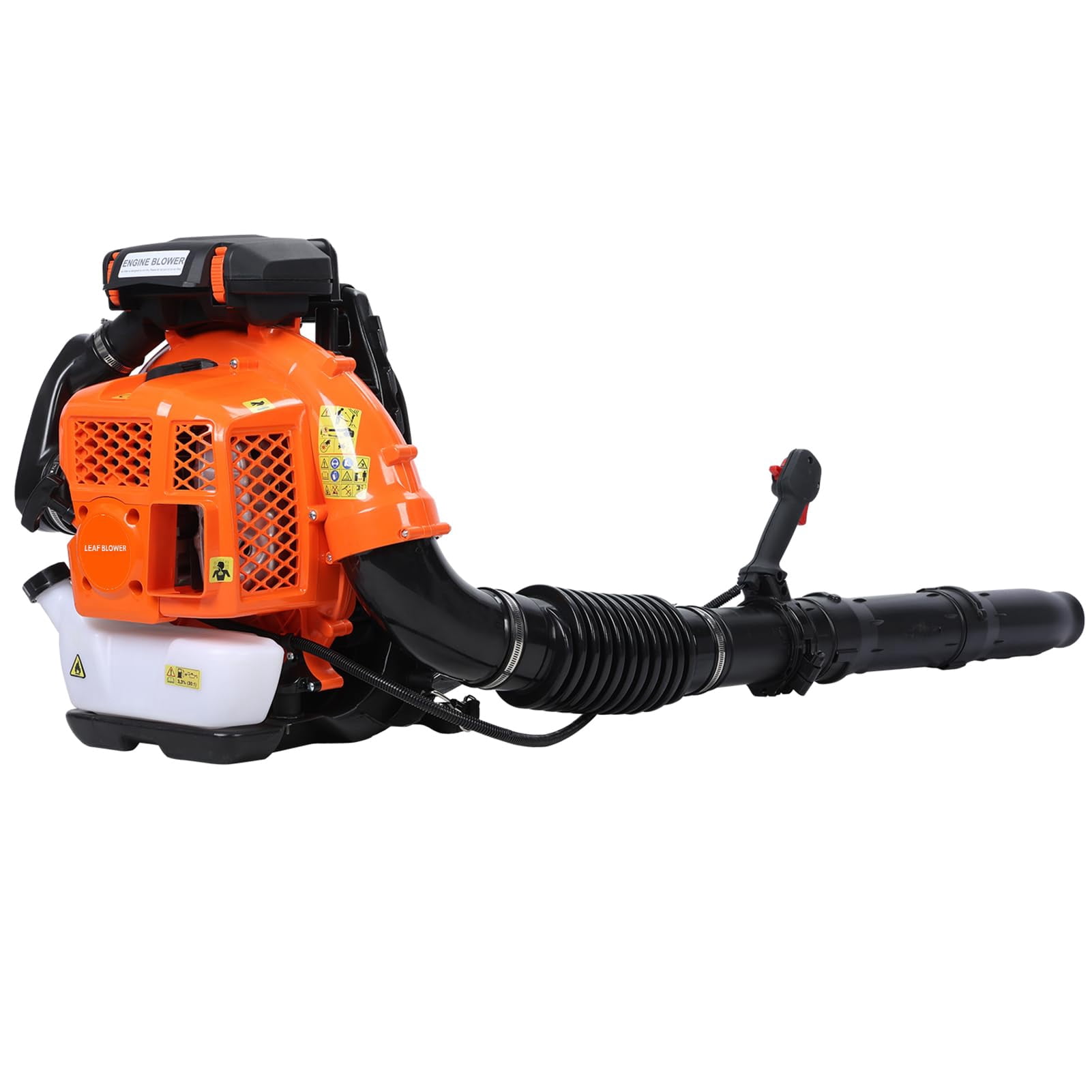
How Can You Tell Whether a Leaf Blower Is 2-Stroke?
The fastest way is to check the fuel instructions. Do not guess based only on the blower’s sound or size.
Use this process:
- Find the model number. Look on the housing, handle, engine cover, or product label.
- Read the fuel section in the manual.
- Check the fuel cap and nearby labels.
- Look for an oil-fill plug or dipstick.
- Confirm the instructions on the manufacturer’s website.
The following clues can help:
| Sign | Likely engine type |
|---|---|
| Says “mix gasoline and 2-cycle oil” | Two-stroke |
| Lists a fuel ratio such as 50:1 | Two-stroke |
| Has a separate engine-oil fill point and dipstick | Four-stroke |
| Has no fuel tank or exhaust | Electric |
| Uses a removable battery pack | Battery electric |
| Uses an extension cord | Corded electric |
A separate oil fill point strongly suggests a four-stroke engine, but the manual is still the final authority. Some equipment has unusual designs, and older machines may have missing or unclear labels.
Never pour mixed fuel into an electric blower. Never add two-stroke oil to a four-stroke crankcase unless the manufacturer specifically requires it.

Two-Stroke vs. Four-Stroke vs. Electric Leaf Blowers
The right type depends on the job. No single power system is best for every U.S. homeowner.
| Feature | Two-stroke gas | Four-stroke gas | Battery electric | Corded electric |
|---|---|---|---|---|
| Fuel needed | Gasoline and two-stroke oil | Gasoline and separate engine oil | No gasoline | No gasoline |
| Starting | Pull start or electric start | Pull start or electric start | Button or switch | Button or switch |
| Weight | Often light | Often heavier | Varies by battery size | Usually light |
| Maintenance | Moderate | Higher than two-stroke | Low | Low |
| Noise | Often high | Can be lower, model dependent | Usually lower | Usually lower |
| Run time | Long with fuel | Long with fuel | Limited by battery | Continuous near an outlet |
| Exhaust | Yes | Yes | No direct exhaust | No direct exhaust |
| Best fit | Larger yards and long work | Users who prefer separate oil service | Small and medium residential yards | Small yards near power |
This table describes common design differences, not guaranteed performance for every model. Fan design, tube shape, engine tuning, battery voltage, and air speed all affect actual results.
Which type is best for a small yard?
A battery or corded blower is often the simplest choice for a small U.S. yard. There is no fuel to mix, and startup is usually easy.
A corded model works well when the yard is close to an outdoor outlet. A battery model offers more freedom of movement but may need a second battery for longer jobs.
Which type is best for a large yard?
A two-stroke gas blower may be useful for large areas or long periods of work because refueling is quick. A high-capacity battery system can also work, but the owner may need multiple charged batteries.
Consider local noise rules before buying a gas blower. Some U.S. towns, counties, and planned communities restrict gas-powered lawn equipment by season, time of day, or equipment type.
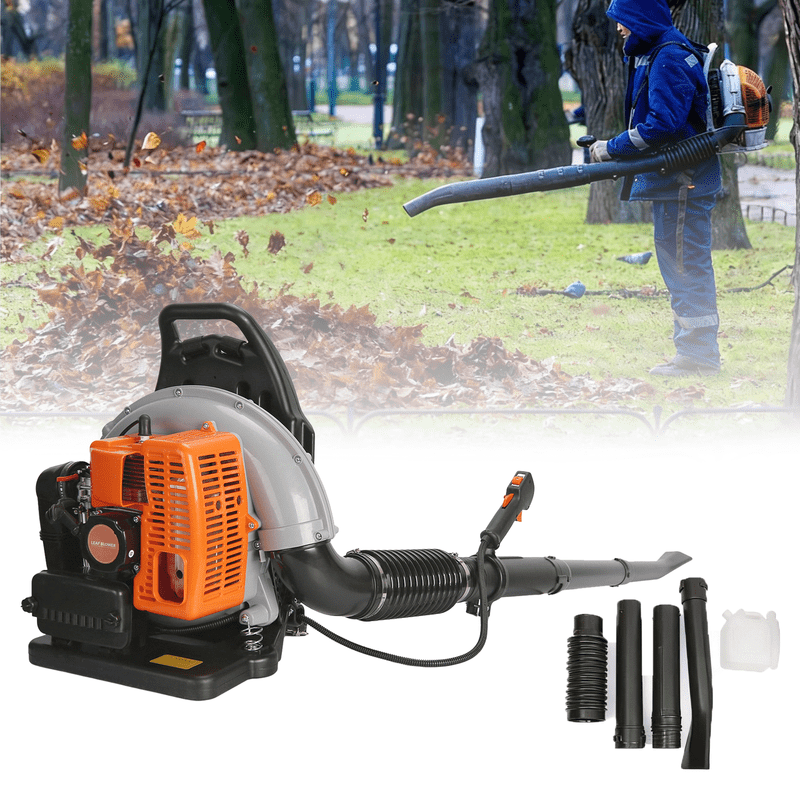
Do Two-Stroke Leaf Blowers Make More Noise or Pollution?
Two-stroke blowers often produce more noticeable exhaust and noise than electric models, but the exact difference depends on the product and operating conditions.
A two-stroke engine burns a fuel-and-oil mixture. Some of that oil can leave through the exhaust, which contributes to smoke and emissions. Modern engines may use design features that reduce emissions compared with older models, but they still produce exhaust.
The U.S. Environmental Protection Agency regulates emissions from nonroad engines and equipment. California may apply additional rules through the California Air Resources Board. Local rules can be stricter than federal requirements, so check the regulations that apply where the blower will be used.
Noise also depends on:
- Engine speed
- Fan and tube design
- Distance from the listener
- Surrounding buildings and hard surfaces
- Whether the blower is used at full throttle
Wear hearing protection when operating a loud blower. Keep bystanders, children, and pets away from the work area. Avoid blowing dust toward people, roads, windows, or neighboring property.
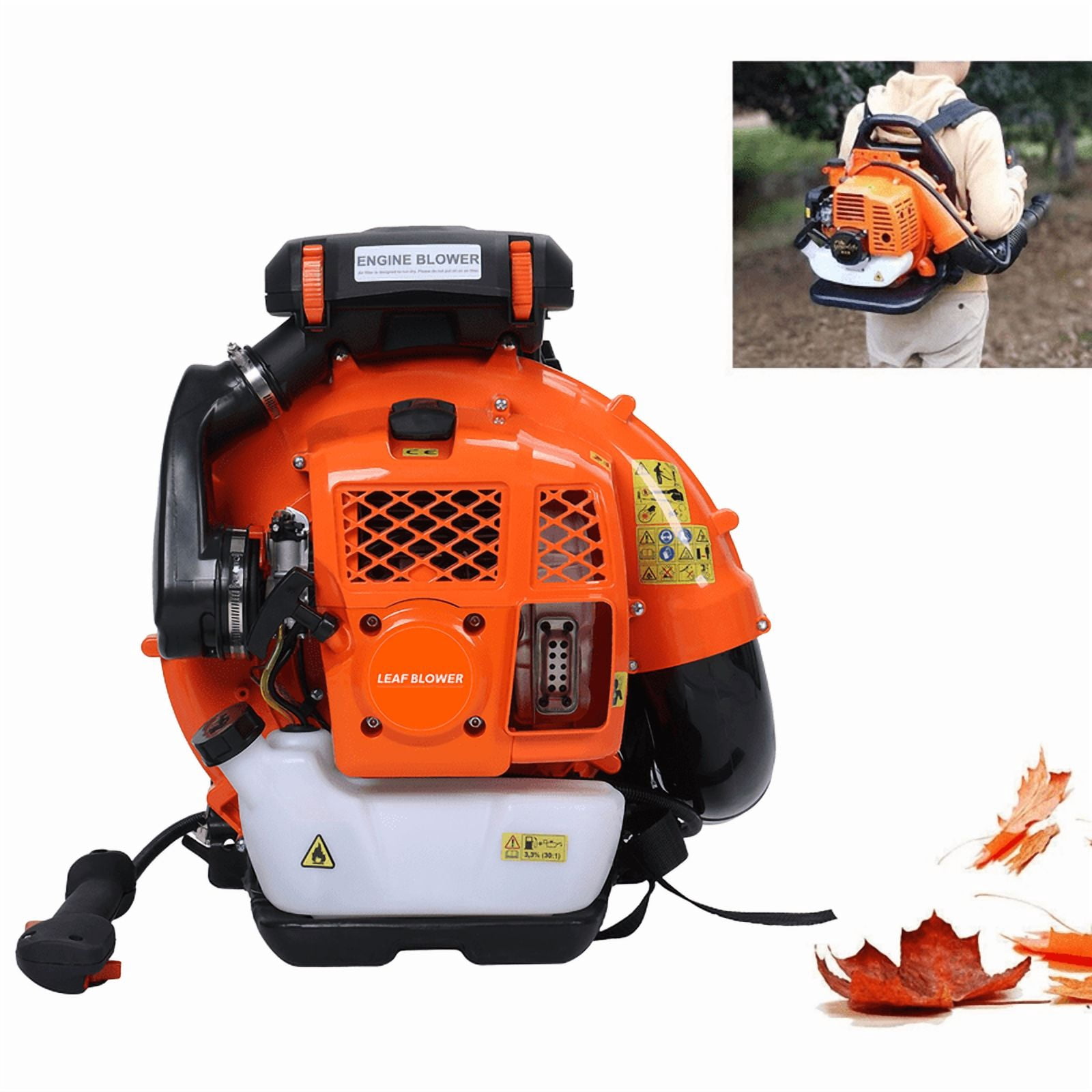
Fuel and Maintenance Tips for a Two-Stroke Blower
Correct fuel handling is the most important routine task for a two-stroke blower.
Use fresh gasoline and the exact two-stroke oil grade approved by the manufacturer. Measure the oil carefully. Do not estimate the ratio by sight.
For a hypothetical 50:1 mixture:
- 1 U.S. gallon of gasoline needs about 2.6 fluid ounces of two-stroke oil.
- 2 U.S. gallons need about 5.1 fluid ounces.
- 5 U.S. gallons need about 12.8 fluid ounces.
These figures apply only to a 50:1 ratio. They do not replace the instructions for a 40:1 or 32:1 engine.
Follow these practices:
- Use a clean, approved fuel container.
- Label the container as mixed fuel.
- Do not use an unmarked container.
- Avoid stale fuel.
- Store fuel away from heat, flames, and living areas.
- Follow the manual for storage periods and fuel stabilizer.
- Do not use fuel with more ethanol than the manual allows.
- Never use E15 in a nonroad engine or piece of equipment where federal labeling prohibits it.
Also inspect the air filter, spark plug, fuel lines, and cooling openings at the intervals listed in the manual. Shut off the engine and let it cool before servicing. Remove the spark plug wire only when the manual calls for it and when doing so is safe for that procedure.

Common Mistakes When Identifying or Using a Leaf Blower
Several mistakes can damage the blower or create a safety risk.
Mistaking “gas-powered” for “two-stroke”
A gas blower may use either a two-stroke or four-stroke engine. Check the fuel and oil instructions instead of relying on the word “gas.”
Using the wrong fuel mix
A fuel ratio that works for one blower may damage another. A 50:1 mix is not universal.
Putting mixed fuel in a four-stroke engine
Mixed fuel can cause smoke, poor performance, and possible damage in a four-stroke engine. Drain the tank only according to the manual or ask a qualified small-engine technician for help.
Using straight gas in a two-stroke engine
Straight gasoline does not provide the oil needed by most two-stroke engines. Continued use can cause overheating, scoring, or engine failure.
Confusing air speed with blowing power
A high miles-per-hour number does not tell the whole story. Air volume, often listed in cubic feet per minute, also affects how much material the blower can move. Wet leaves, pine needles, gravel, and heavy debris require more useful airflow than a single air-speed figure may suggest.
Ignoring local rules
A blower can be legal to sell but restricted in a particular city, county, season, or community. Check local rules before using a gas-powered model.

Frequently Asked Questions
Are all gas leaf blowers two-stroke?
No. Most handheld gas blowers are two-stroke, but some gas models use four-stroke engines. The owner’s manual will identify the required fuel and oil arrangement.
Can a two-stroke leaf blower run on regular gasoline?
Only when the gasoline is mixed with the correct two-stroke oil. Do not run a typical two-stroke blower on straight gasoline.
Can I use premixed fuel in a two-stroke blower?
Often, yes, if the premixed fuel has the correct ratio and meets the manufacturer’s fuel requirements. Check the label and manual first. Some premixed fuels are made for specific equipment or storage conditions.
Are battery leaf blowers better than gas leaf blowers?
Battery blowers are often easier to start, quieter, and simpler to maintain. Gas blowers may offer longer continuous use and quick refueling for large jobs. The better option depends on yard size, local rules, noise tolerance, and battery access.
How do I know whether a leaf blower is four-stroke?
Look for a separate engine-oil fill point, an oil dipstick, and instructions that tell you to add gasoline without mixing oil into it. Confirm the answer in the model’s manual.
Conclusion
Not all leaf blowers are 2-stroke. Two-stroke gas models are common, but four-stroke gas, battery, and corded electric blowers are also available in the United States.
Before using any blower, identify its power system and read the fuel instructions. If it requires a gas-and-oil mixture, use the exact ratio listed by the manufacturer. If it has a separate oil reservoir, do not mix oil into the gasoline. For a simple, low-maintenance option, consider electric power; for long jobs with fast refueling, a gas model may be more practical.
The next step is simple: find the blower’s model number, open the official manual, and verify whether it requires mixed fuel, separate engine oil, or no fuel at all.