
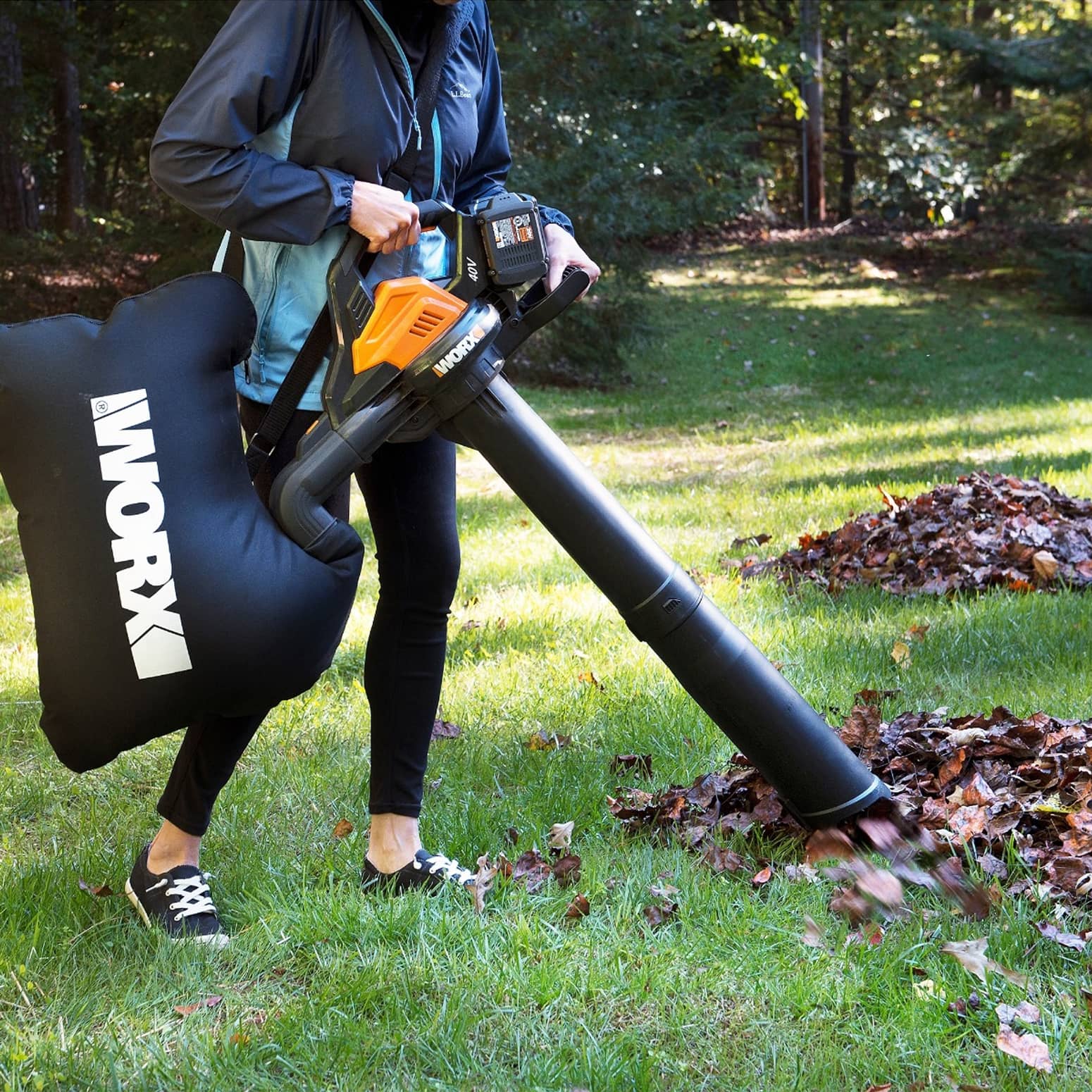
A leaf blower mulcher combines three tools in one: a blower, a yard vacuum, and a leaf shredder. In a typical U.S. yard, you switch from blower mode to vacuum mode, pull leaves into the intake, and let a fast-spinning impeller chop them into smaller pieces. The pieces then collect in a bag or move through a discharge tube.
The main benefit is less leaf volume. Shredded leaves take up less room in a bag or compost pile. They can also break down faster when mixed into compost or used as mulch. Results depend on the machine’s impeller design, the type of leaves, and how dry the material is.
What Is a Leaf Blower Mulcher?
A leaf blower mulcher is a combination tool with three functions:
- Blower: Pushes air through a nozzle to move leaves.
- Vacuum: Pulls leaves through an intake opening.
- Mulcher: Cuts or tears leaves into smaller pieces with an internal impeller.
Many models are sold as leaf blower vacuums or 3-in-1 leaf blowers. Some use a separate vacuum tube. Others require you to remove the blower nozzle and attach a vacuum tube and collection bag.
The tool does not usually grind leaves into fine powder. Instead, the impeller breaks them into smaller pieces. Some machines use metal blades, while others use reinforced plastic impellers. The owner’s manual will show which parts the model uses and which materials it can handle.
Blower mode
In blower mode, an electric motor or gas engine spins a fan. The fan draws in air and forces it through a narrow outlet. That smaller outlet increases air speed, which moves leaves across a driveway, lawn, or patio.
The blower does not lift every leaf. It works best when you guide leaves along a surface and use the air at a low or medium setting. High speed can scatter leaves and make cleanup harder.
Vacuum mode
In vacuum mode, airflow reverses direction. The intake pulls leaves into the housing. A vacuum tube guides the leaves toward the fan and impeller.
The collection bag catches the shredded material. Most bags use a fabric that lets air escape while holding the leaf pieces.
Mulcher mode
The impeller sits between the intake and the collection bag. As leaves pass through, the spinning blades tear them into smaller pieces.
Manufacturers may list a mulching ratio, such as 10:1 or 16:1. This means the machine claims to reduce the volume of a given amount of leaves to about one-tenth or one-sixteenth of the original volume under stated conditions. It does not mean every leaf becomes the same size or that all jobs will reach that ratio.
How Does a Leaf Blower Mulcher Work Step by Step?
A leaf blower mulcher works by changing the direction of air and moving leaves through a cutting chamber.
1. The motor creates rotation
The motor turns a fan or impeller at high speed. Electric models use a cord or battery. Gas models use a small internal combustion engine.
The motor must provide enough power to move both air and leaves. Wet leaves, twigs, and heavy debris place more load on the system than dry leaves.
2. Air creates suction
When you select vacuum mode, the fan draws air through the vacuum tube. This air carries leaves into the housing.
A wide tube helps the machine move larger leaves. A narrow or blocked tube reduces airflow. That can lower suction and increase the chance of a clog.
3. The impeller breaks up leaves
The impeller is the key mulching part. It spins inside a chamber and strikes the leaves as they pass through.
The impeller may:
- Tear leaves against fixed edges
- Cut leaves with blade-like surfaces
- Crush leaves through repeated contact
- Break small twigs into shorter pieces
The exact process varies by model. The manual may call the part a fan, impeller, mulcher, or shredding blade.
4. Air separates from the material
After shredding, the air continues through the collection system. The fabric bag allows air to pass out while the leaf pieces stay inside.
A full or clogged bag restricts airflow. When this happens, suction often drops. Empty the bag before it becomes packed tight.
5. The bag collects the mulch
The bag stores the shredded leaves. You can empty it into:
- A compost bin
- A garden bed
- A paper yard-waste bag
- A municipal leaf collection area
- A lawn area where the mulch will remain
Check local rules before placing yard waste at the curb. U.S. cities and counties often set different rules for bags, loose leaves, and compostable material.

What Parts Does a Leaf Blower Mulcher Have?
The main parts work together as an airflow and cutting system.
| Part | Main job | What can affect performance |
|---|---|---|
| Motor or engine | Powers the fan and impeller | Power source, load, maintenance |
| Fan or impeller | Moves air and shreds leaves | Blade design, wear, clogs |
| Blower nozzle | Directs air outward | Nozzle size and position |
| Vacuum tube | Guides leaves into the machine | Blockage, cracks, poor fit |
| Collection bag | Holds shredded leaves | Fullness, fabric condition |
| Mode selector | Changes airflow direction | Incorrect installation |
| Intake screen | Helps protect the fan area | Debris buildup |
| Trigger or speed control | Adjusts airflow | Battery level or engine speed |
Some models have a metal impeller. Others use plastic. A metal impeller may resist wear from small debris, but it can still be damaged by rocks, screws, glass, or large branches.
How to Use a Leaf Blower Mulcher
Use the correct setup for each mode. Never operate vacuum mode with the wrong tube, missing cover, or loose collection bag.
Before you start
- Read the owner’s manual.
- Check the yard for rocks, wire, glass, and large sticks.
- Wear safety glasses and hearing protection.
- Wear sturdy shoes and long pants.
- Keep children and pets away from the work area.
- Inspect the tube, bag, cord, battery, and guards.
- Confirm that all parts are locked in place.
For a corded model, use an outdoor-rated extension cord that matches the manual’s requirements. Keep the cord away from the intake and cutting area.
To blow leaves into a pile
- Install the blower nozzle.
- Start on a low speed.
- Aim the air behind the leaves, not directly at the top of the pile.
- Move in one direction.
- Raise the speed only when needed.
- Gather leaves on a lawn or other surface where they will not damage property.
A low angle works well. Blowing straight down can press leaves into grass or scatter them in several directions.
To vacuum and mulch leaves
- Turn off the machine.
- Install the vacuum tube and collection bag as the manual directs.
- Check that the bag zipper or opening is closed.
- Start the machine away from loose clothing and debris.
- Hold the tube slightly above the leaves.
- Move slowly across the pile.
- Empty the bag when airflow drops or the bag becomes full.
- Turn off and disconnect the machine before clearing a clog.
Do not force the tube into a thick pile. A steady, light pass lets air carry leaves into the impeller.
Signs that the process is working
A working leaf blower mulcher usually shows these signs:
- The tube pulls leaves inward.
- The bag inflates slightly as air passes through it.
- Leaf pieces in the bag are smaller than the original leaves.
- The motor runs without a sharp change in sound.
- Airflow remains steady.
- The machine does not vibrate heavily.
Stop if the machine makes a grinding sound, smells hot, vibrates sharply, or loses power without an obvious cause.

What Affects Mulching Performance?
Dry, light leaves usually mulch more easily than wet or mixed debris. Leaf type also matters. Large, tough leaves may need more than one pass.
Leaf moisture
Wet leaves stick together. They can block the tube, overload the impeller, and clog the collection bag.
For better results, let damp leaves dry when weather and local conditions allow. Do not delay cleanup if wet leaves create a slipping hazard or block drains.
Leaf size and type
Small leaves pass through the system more easily. Large leaves may fold over and reduce airflow.
Thick leaves, pinecones, acorns, and small twigs can also increase wear. Use the material limits stated in the manual.
Airflow
A full bag, clogged tube, dirty intake, or damaged seal can reduce airflow. Lower airflow means less suction and weaker mulching.
Impeller design
The impeller controls much of the shredding action. Blade shape, clearance, speed, and chamber design all affect the result.
Do not compare mulching ratios alone. A higher advertised ratio does not always mean faster work. Collection-bag size, suction strength, clog resistance, and ease of emptying also matter.
Battery condition
Battery-powered models may lose performance as the battery charge falls. Cold temperatures can also affect some batteries. Use the battery type and charger approved by the manufacturer.
Power source comparison
| Power source | Main strengths | Main limits |
|---|---|---|
| Corded electric | Light, quiet compared with gas, no fuel mixing | Limited by cord length and outlet access |
| Battery electric | No cord, simple start, lower routine maintenance | Limited run time and battery charging |
| Gas | Long work periods with fuel, often suited to large areas | More noise, fumes, fuel, and engine maintenance |
These are general differences. The actual performance depends on the model.

Can a Leaf Blower Mulcher Handle Twigs and Acorns?
Most leaf blower mulchers can handle small amounts of small, dry twigs, but limits vary by model. Acorns, pinecones, stones, and thick sticks can damage the impeller or block the tube.
Remove hard objects before vacuuming. Do not use the machine to pick up:
- Rocks
- Glass
- Metal
- Wire
- Plastic
- Large branches
- Animal waste
- Hot ashes or burning material
- Liquids
A leaf blower mulcher is made for light yard debris. It is not a chipper, wet vacuum, or garbage disposal.
Why Is My Leaf Blower Mulcher Not Working?
Start with safe, simple checks. Turn off the machine and disconnect the power source before reaching near the tube, impeller, or intake.
| Symptom | Likely causes | Safe check |
|---|---|---|
| Weak suction | Full bag, wet leaves, blocked tube | Empty the bag and inspect the tube |
| No suction | Wrong mode, loose tube, open cover | Refit parts according to the manual |
| Frequent clogs | Wet leaves, large debris, packed pile | Use dry leaves and smaller passes |
| Poor shredding | Worn impeller or unsuitable material | Inspect only when power is disconnected |
| Heavy vibration | Damaged or jammed impeller | Stop use and inspect safely |
| Motor stops | Overload, low battery, hot motor | Let it cool and check the manual |
| Dust escaping | Damaged bag or poor seal | Replace the bag or close the connection |
| Machine will not start | Low battery, bad cord, safety switch | Check power and safety interlocks |
Do not insert your hand into the vacuum tube. Even when the machine is off, stored movement or a connected battery can create a hazard. Use the tool or method specified by the manufacturer to clear blockages.
If the impeller is cracked, bent, or badly worn, stop using the machine. Replace the part through the manufacturer or have the tool serviced by a qualified repair provider.

Is Mulched Leaf Material Good for a Lawn or Garden?
Shredded leaves can be useful, but the best use depends on the material and the amount.
Fine leaf mulch can break down faster than whole leaves. On a lawn, a thin layer of chopped leaves may decompose in place if the grass remains visible and the material does not form a thick mat.
In garden beds, shredded leaves can serve as a surface mulch. Keep mulch away from plant stems and building siding. Too much wet material can hold moisture against plants or encourage decay.
For compost, mix leaves with nitrogen-rich material such as fresh grass clippings or suitable food scraps. A large pile of dry leaves alone may break down slowly.
Do not mulch leaves that may contain trash, chemical residue, or diseased plant material unless local guidance supports that use. Follow local composting and yard-waste rules.
Leaf Blower Mulcher Safety Rules
A leaf blower mulcher has fast-moving parts and can throw debris. Use it with the same care as other powered yard equipment.
- Wear eye protection.
- Use hearing protection around loud gas or electric models.
- Keep hands away from the tube, intake, and impeller.
- Stop the motor before changing modes or attachments.
- Disconnect the battery or unplug the cord before clearing a clog.
- Refuel gas models only when the engine is cool.
- Use gas equipment outdoors, never in a garage or enclosed space.
- Keep the exhaust away from people and animals.
- Avoid blowing dust toward roads, neighbors, open windows, or workers.
- Follow local rules for gas-powered equipment and noise.
The U.S. Occupational Safety and Health Administration provides general landscaping safety information, and the U.S. Environmental Protection Agency regulates emissions from many nonroad engines. Local rules may be stricter than federal requirements.

Leaf Blower Mulcher vs. Separate Tools
A combination unit saves storage space and can handle routine leaf cleanup with one machine. It also lets you blow leaves into a pile before vacuuming them.
Separate tools may work better when you need long periods of blowing, strong vacuuming, or heavy-duty shredding. Changing tubes and bags can also take time on some combination models.
Choose a leaf blower mulcher when:
- You have a small or medium yard.
- You want one tool for several tasks.
- You need to reduce leaf volume.
- You have limited storage space.
- You can work within the machine’s debris limits.
Consider separate tools when:
- You regularly move large amounts of wet leaves.
- You need to vacuum large debris.
- You already own a strong blower.
- You want to avoid changing attachments.
- Your yard requires a dedicated chipper or shredder.
The right choice depends more on debris volume and working conditions than on the number printed in the product description.
Frequently Asked Questions
Does a leaf blower mulcher really reduce leaf volume?
Yes. The impeller tears leaves into smaller pieces, so the material occupies less space. The actual reduction varies with leaf type, moisture, machine design, and how full the collection bag becomes.
Can I use a leaf blower mulcher on wet leaves?
You can, but wet leaves often clog the tube and bag. They also place more load on the motor. Dry leaves usually provide better airflow and easier mulching.
Does a leaf blower mulcher make compost?
No. It only cuts or tears leaves into smaller pieces. Composting requires moisture, air, time, and a suitable mix of carbon-rich and nitrogen-rich materials.
Is a metal impeller better than a plastic impeller?
Not in every situation. Metal and plastic designs have different weight, wear, noise, and damage characteristics. Neither type makes it safe to vacuum rocks, glass, or large sticks.
How often should I clean a leaf blower mulcher?
Inspect it after each use. Remove leaf dust from vents and the housing area as the manual allows. Empty and dry the bag. Follow the manufacturer’s schedule for air filters, spark plugs, lubrication, and other service parts.
Key Takeaways
- A leaf blower mulcher uses airflow to pull leaves into an impeller.
- The impeller tears leaves into smaller pieces before they enter the collection bag.
- Dry leaves usually mulch better than wet leaves.
- Hard debris can damage the impeller or create dangerous blockages.
- Use the correct tube, bag, and mode for each task.
- Disconnect power before clearing a clog or inspecting internal parts.
- Mulched leaves can support lawn care, garden mulch, or compost when used properly.
Conclusion
A leaf blower mulcher works by reversing airflow, pulling leaves through a tube, and sending them across a fast-spinning impeller. The impeller breaks the leaves into smaller pieces, and a collection bag catches the result.
For the best performance, clear hard debris first, work with manageable amounts of leaves, keep the bag from overfilling, and follow the owner’s manual. If the machine vibrates, overheats, or makes an unusual sound, stop using it and inspect it only after disconnecting the power source.