Newborns experience the world in blurry shades of gray, making high-contrast items essential for visual stimulation. By using black and white baby toys, you strengthen their optic nerves, improve focus, and jumpstart cognitive growth during these critical early months.
When you walk into a nursery in 2026, you will likely notice a trend that has stood the test of time: bold, geometric black and white patterns. From crib mobiles to soft activity books, these stark colors are everywhere. If you have ever asked, “Why are baby toys black and white?” you are not alone. It is a common question for new parents who want to provide the best tools for their little one’s growth.
The truth is that newborns do not see the world exactly the way we do. While we perceive a vibrant landscape of color, a baby’s world is initially much softer and blurrier. Black and white toys act like a beacon for their developing eyes, helping them make sense of the new environment around them. Understanding this visual milestone can change the way you play with your infant and provide them with the early stimulation they crave.
Key Takeaways
- Visual Development: Newborns have limited color perception, making high-contrast black and white toys the most visible items to them.
- Brain Stimulation: These bold patterns send strong signals to the brain, which helps build neural pathways and improve attention spans.
- Focus and Tracking: High-contrast images encourage babies to practice visual tracking, a key skill for later development.
- Gradual Transitions: While newborns love monochrome, they typically begin seeing primary colors around three to four months of age.
- Engagement Tools: Using black and white flashcards, mobiles, and books provides a perfect way to bond and calm an overstimulated baby.
The Science of Infant Vision
To understand the popularity of monochrome toys, we have to look at the biology of the eye. When a baby is born, their eyes are fully formed, but their brain is still learning how to process visual information. During the first few weeks, a baby can only focus on objects about 8 to 12 inches away. This is roughly the distance from their face to yours while you are holding them.
Why High Contrast Matters
Because their vision is still developing, babies struggle to distinguish between similar colors. If you hold up a pastel yellow toy against a white wall, the baby sees a fuzzy blur. However, placing a black and white image in their line of sight creates a sharp contrast. This contrast is much easier for the retina to pick up and for the brain to process.
Think of it like a radio signal. A pastel color is like a static-filled, low-volume broadcast. Black and white patterns are like a crystal-clear, high-volume signal. By providing high-contrast visual input, you are essentially giving your baby’s visual system a clear target to focus on, which reduces frustration and encourages longer periods of alert observation.
Building Neural Pathways
Everything a baby looks at in those first few months helps wire their brain. When a baby gazes at a high-contrast pattern, they are practicing their focus. Every time they look back and forth, they are strengthening their eye muscles. This consistent practice is vital for building the neural pathways between the eyes and the brain. As these pathways grow stronger, the baby’s ability to track moving objects and distinguish fine details improves rapidly.
Beyond Black and White: The Developmental Timeline
You might wonder if you should only stick to black and white toys forever. The short answer is no. As your baby grows, their visual needs will change. By the time they reach their third or fourth month, their color vision starts to wake up. They will begin to notice primary colors, especially bright reds and blues, which are the next easiest colors for them to perceive.

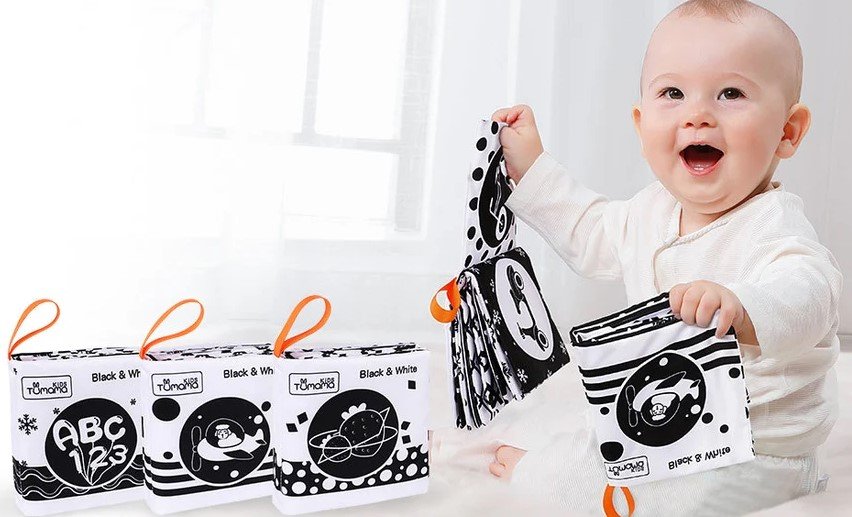
Visual guide about Why Are Baby Toys Black and White
Image source: babyproducts.co.za
The Transition to Color
Around month four, you can start introducing more colorful items into their playtime routine. You will notice that your baby starts to show preferences for specific patterns or colors. This is an exciting milestone! It shows that their color perception is maturing. By six months, most babies have vision that is close to that of an adult, though their depth perception is still catching up.
Why Stick With Monochrome Early On?
Even as they start seeing colors, babies often remain attracted to black and white patterns. These high-contrast images remain “soothing” for them because they are so easy to see. If your baby seems fussy or overwhelmed, pulling out a black and white book can provide a familiar, grounding focal point. It is a tool you can rely on for several months of early development.
Practical Ways to Use High-Contrast Toys
Now that you know the answer to “Why are baby toys black and white?” you might be looking for ways to use them effectively. It is not just about having the toys; it is about how you present them. Interaction is the secret sauce to making the most of these visual tools.
Strategic Placement
If you have a mobile hanging over the crib, make sure it is within that 8-to-12-inch range. If it is too far away, it will just look like a blurry blob. You can also place black and white cards around the changing table. Tummy time is another perfect opportunity.
Propping up a high-contrast book in front of your baby during tummy time can act as a distraction, encouraging them to lift their head for a few extra seconds to look at the interesting shapes.
Engage Through Movement
Babies are naturally attracted to motion. Hold a black and white toy and move it slowly from side to side. Watch as your baby’s eyes follow the object. This tracking practice is essential for hand-eye coordination. Do not move the toy too fast, as this can make it hard for them to lock onto it. Keep it smooth, slow, and rhythmic.
Common Myths About Baby Vision
There is a lot of advice floating around on social media in 2026, some of which is better than others. Let’s clear up a few misconceptions regarding infant vision and toy choices.
Myth: Black and White Toys Are Boring
Some parents worry that black and white toys seem “depriving” or “bland” compared to bright, noisy plastic toys. However, from the baby’s perspective, these simple designs are much more exciting because they are actually visible. A complex, multi-colored toy might look like a chaotic mess to a newborn. The simplicity of monochrome is actually a feature, not a bug.
Myth: You Need Expensive Gear
You do not need to break the bank to provide high-contrast stimulation. While store-bought toys are great, you can easily make your own. Simply printing simple black shapes—like circles, stripes, or stars—on white paper and taping them to the wall can provide hours of engagement. Your baby cares about the contrast, not the price tag.
Creating a Stimulating Environment
A balanced environment is key to a happy baby. While high-contrast toys are great, do not feel like you have to turn your entire home into a black and white gallery. Use these toys as tools during active playtime, but allow your baby to observe the rest of their environment as well.
When to Rotate Toys
Babies can get bored, just like adults. Rotate your high-contrast toys every few days to keep them interested. If you have a specific mobile, swap it out for a different set of flashcards or a soft book. By keeping the visual stimulation fresh, you encourage your baby to stay curious and alert during their wake windows.
Combining Senses
Pairing high-contrast visuals with other senses can enhance the experience. Talk to your baby while they are looking at a black and white pattern. If the toy makes a gentle crinkle sound, even better! Multisensory play helps the brain make stronger connections, turning a simple visual exercise into a full developmental session.
Conclusion
So, why are baby toys black and white? They are the ultimate visual bridge for a newborn. These toys provide the clarity and focus needed to build essential visual skills, support brain development, and keep your baby calm during their first months of life. By understanding how your baby sees, you can choose toys that truly help them learn about their new world.
Remember that every baby develops at their own pace. Do not stress if your little one seems more interested in your face than their high-contrast cards. Your face is their favorite object to look at, and that social connection is just as important as any toy. Enjoy these quiet, focused moments of discovery. They go by faster than you think!
Frequently Asked Questions
Do newborns really only see in black and white?
Yes, newborns have very limited color vision and primarily perceive the world in shades of gray. High-contrast colors like black and white stand out against this blurry background, making them the most effective visual stimuli for a new baby.
At what age should I stop using black and white toys?
There is no “stop” age, as babies often continue to enjoy these patterns for several months. However, you can start introducing primary colors around three to four months as their color vision begins to mature.
Are black and white toys better than colorful ones for newborns?
For a newborn, yes, they are significantly more effective. Colorful, pastel toys are often too low-contrast for a young baby to distinguish, whereas black and white patterns provide a clear, bold image that is easy for them to track.
How far away should I hold these toys from my baby?
Newborns focus best on objects that are about 8 to 12 inches away from their face. This is the optimal range for them to clearly see and engage with high-contrast patterns.
Can I make my own high-contrast toys at home?
Absolutely! You can create simple, effective high-contrast tools by printing geometric shapes on white paper or using black electrical tape to make patterns on cardstock. It is an affordable and highly beneficial way to support your baby’s development.
Why do babies stare at black and white patterns for so long?
They stare because these patterns are visually stimulating and “easy” for their developing brain to process. The clear contrast helps them practice focusing and tracking, which provides a sense of accomplishment and calm during their early, sensory-filled days.