If your dog is eating his toys, it is often a sign of boredom, anxiety, or a natural instinct gone wrong. This behavior can lead to serious health risks like intestinal blockages, so it is crucial to identify the root cause and provide safer, more stimulating alternatives to keep your pet happy and healthy.
Every dog owner knows the sight: you walk into the living room and find your pup surrounded by a battlefield of shredded plush fabric and broken squeakers. While watching your dog play is one of the greatest joys of pet ownership, things take a stressful turn when you realize they are not just shredding the toy, but actually eating the pieces. It is a common question in 2026: Why does my dog eat his toys? If you are feeling frustrated or worried, know that you are not alone.
Understanding why your dog eats his toys is the first step toward correcting the behavior. Dogs do not have the same concept of “edible” versus “inedible” that humans do. For them, a toy is an object to be manipulated, tasted, and sometimes consumed. By peeling back the layers of your dog’s behavior—looking at their age, their temperament, and their daily routine you can help them break this habit before it becomes a dangerous medical emergency.
Key Takeaways
- Boredom and Energy: Many dogs chew toys excessively simply because they lack enough physical exercise or mental stimulation.
- Anxiety and Stress: Separation anxiety often manifests as destructive chewing and the consumption of non-food items.
- Teething and Puppy Development: Puppies explore the world through their mouths, making them highly prone to eating parts of their toys.
- Medical Concerns: Underlying nutritional deficiencies or gastrointestinal issues can sometimes drive dogs to consume inedible materials.
- Safety First: Swallowing toy fragments can cause life-threatening obstructions that require immediate veterinary intervention.
- Prevention Strategies: You can manage the behavior by rotating toys, providing durable options, and increasing daily interactive play.
Understanding the Instinctual Drives
To stop the behavior, we first have to look at the canine perspective. For dogs, their mouths are their primary tools for interaction. They use their teeth to investigate textures, smells, and sounds. When a dog eats his toys, it is often a continuation of natural predatory instincts that have gone sideways.
The Prey Drive Factor
Many dogs, especially terriers and working breeds, have a high prey drive. A squeaky plush toy mimics the sound of small game. When your dog shreds that toy, they are essentially engaging in a simulated hunt. If they swallow a piece, it is often an accidental byproduct of their intense focus on “killing” the prey. It is not necessarily that they are hungry, but rather that their instinctual drive is so high that they lose control.
Teething and Oral Exploration
If you have a puppy, the answer is often simple: they are teething. Just like human infants, puppies go through a painful period where their adult teeth are coming in. Chewing provides relief from sore gums. If the toy is soft or easily broken, they might swallow the debris simply because it is already in their mouth while they are focused on the act of chewing.
Boredom and Lack of Stimulation
In 2026, our lives are busier than ever, and sometimes our dogs pay the price for that lack of time. If a dog is left alone for long periods with nothing to do, they become creative but their creativity often leads to destruction. Eating toys is a classic symptom of a dog that is under-stimulated.
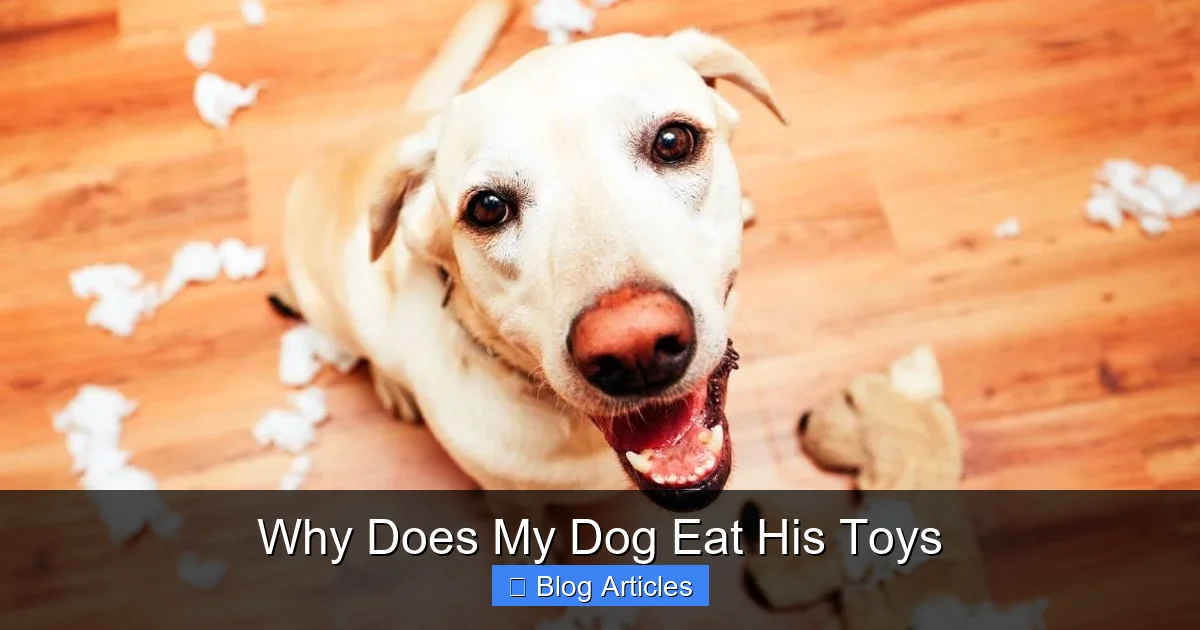
Visual guide about Why Does My Dog Eat His Toys
Image source: k9ofmine.com
The Need for Cognitive Challenges
A dog who is bored will look for any way to occupy his mind. If he has finished his walks and there are no puzzles to solve, he might turn his attention to the toy bin. Unfortunately, if he learns that shredding a toy releases a “reward” (the feeling of tearing something apart), he will keep doing it. This is a self-reinforcing cycle. To fix this, you need to provide brain-teasing toys like food-dispensing puzzles that require focus rather than destruction.
Managing Energy Levels
Some breeds, such as Border Collies or German Shepherds, have limitless energy. If this energy is not spent in productive ways, it turns into destructive behavior. A tired dog is a good dog. If your dog eats his toys, try increasing his physical exercise with longer walks, games of fetch, or even agility training in the backyard to ensure he is too tired to engage in destructive habits when left alone.
Anxiety and Emotional Triggers
Sometimes, the habit of eating toys is not about boredom, but about emotional regulation. Dogs are social animals, and they can feel profound stress when they are separated from their humans. This is commonly known as separation anxiety.
Soothing Mechanism
Chewing is a natural way for dogs to release stress hormones. By gnawing on an object, a dog releases endorphins that help him feel calm. If your dog suffers from anxiety, he may focus that nervous energy on his toys. The act of chewing and swallowing can become a compulsive behavior. This is an attempt to “self-soothe” in your absence.
Signs of Distress
If you notice your dog only eats his toys when he is left alone, or if he also paces, whines, or has accidents while you are away, he is likely struggling with anxiety. In these cases, simply taking the toys away is not enough. You must address the underlying anxiety through training, consistent routines, or sometimes professional help from a behaviorist.
Medical and Nutritional Deficiencies
While behavioral issues are the most common cause, we must never rule out medical concerns. If your dog suddenly develops a habit of eating non-food items, it could be a sign of a condition called pica. Pica is the persistent craving and consumption of non-food items.
Nutritional Imbalances
Sometimes, a dog will eat objects because his body is signaling that he is missing something essential in his diet. If your dog is not receiving the right balance of vitamins or minerals, his instinct might drive him to look for other sources, even if those sources are not actually food. A quick trip to the vet for a blood panel can rule out anemia or other deficiencies.
Gastrointestinal Issues
Issues like upset stomachs or absorption problems can also trigger this behavior. If your dog feels like he cannot get enough nutrition from his food, he might start trying to consume whatever is available. Always consult with your veterinarian if the behavior is sudden or extreme.
Prevention and Safety Strategies
The most important part of this conversation is keeping your dog safe. An intestinal blockage is a medical emergency that can be fatal if not treated quickly. If you know your dog is a “toy eater,” you must change how you manage his environment.
Choosing the Right Toys
Ditch the cheap, plush toys with loose stuffing if your dog is an aggressive chewer. Opt for rubber toys that are specifically labeled as “indestructible” or “heavy-duty.” These are designed to withstand significant force. Look for brands that offer replacement guarantees, as these companies usually prioritize durability.
Supervision and Rotation
Do not leave your dog unattended with toys that could potentially be torn into small pieces. When you are not there to supervise, keep toys in a closet or a bin. Furthermore, use the toy rotation method. Keep only two or three toys out at a time, and swap them every few days. This keeps the toys feeling “new” and exciting, which reduces the urge to mindlessly destroy them.
When to See a Veterinarian
If you suspect your dog has swallowed a significant amount of toy material, do not wait and see. Watch for symptoms like vomiting, lack of appetite, lethargy, or signs of abdominal pain. If you see these, go to the vet immediately. They can perform X-rays to see if a blockage is forming.
A Positive Future
By shifting your approach, you can curb this destructive habit. Focus on redirection: if you catch him chewing a toy, offer him a safe alternative or a treat-filled kong. With patience, supervision, and the right tools, you can ensure that playtime remains a safe and fun bonding experience for both you and your loyal companion. Remember, understanding the “why” is the bridge to the “how” of solving this problem for good.
Frequently Asked Questions
What are the signs of an intestinal blockage?
Common signs include frequent vomiting, loss of appetite, lethargy, diarrhea, and visible abdominal pain or tenderness. If you suspect your dog has swallowed a piece of a toy, contact your veterinarian immediately for guidance.
Should I punish my dog for eating his toys?
No, punishment is ineffective and can increase anxiety, which might make the behavior worse. Instead, use positive redirection to a safe toy or treat, and focus on environmental management by removing unsafe items.
Are plush toys safe for all dogs?
Plush toys are generally only safe for dogs who carry them gently and do not attempt to rip them apart. If your dog is a “destroyer,” you should stick to thick rubber or nylon toys to prevent accidental ingestion.
Can I fix this behavior with training?
Yes, teaching “leave it” and “drop it” commands is highly effective for controlling what your dog puts in his mouth. Consistency in training combined with increased mental stimulation usually yields great results.
Why does my puppy eat everything in sight?
Puppies explore the world through their mouths and are often teething, which causes discomfort they try to soothe through chewing. Supervised play and providing plenty of appropriate chew toys are essential during the first year.
Are there toys designed specifically for aggressive chewers?
Yes, many companies manufacture heavy-duty rubber toys that are nearly impossible to shred. Look for labels like “power chewer” or “extreme durability” and always check the toy for signs of wear and tear daily.