Playing with your dog does not require expensive gear or a mountain of gadgets. By using your imagination and your dog’s natural instincts, you can create endless hours of fun and mental stimulation without ever picking up a rubber ball or squeaky toy.
We have all been there. You get home after a long day, ready to have some fun with your furry best friend, only to realize the toy bin is empty or the favorite tennis ball has vanished under the sofa. You might think the play session is canceled, but I have good news for you. You can learn how to play with your dog without toys and actually have even more fun in the process.
In 2026, the focus for pet owners has shifted toward meaningful engagement and deep connection. While toys are great, they can sometimes act as a buffer between you and your pup. When you strip away the gadgets, you are left with just you and your dog, which is exactly how a strong partnership is built. Whether you are at home, in the yard, or out on a quiet trail, you have everything you need to keep your dog happy and entertained.
Key Takeaways
- Bonding benefits: Playing without toys forces you to engage directly, which strengthens your unique bond and improves communication.
- Mental exercise: Games like hide-and-seek or scent work provide better brain fatigue for your dog than physical activity alone.
- Cost-effective fun: You can utilize your environment and natural behaviors to entertain your pup for free.
- Safety first: Always monitor your dog’s energy levels and ensure the play area is clear of hazards before starting.
- Impulse control: Many toy-free games naturally teach your dog patience and how to follow cues, making them better behaved.
Understanding the Power of Human-Dog Interaction
When you play with your dog without toys, you become the primary source of entertainment. This is incredibly rewarding for a dog. Most breeds are hardwired to work and play alongside humans. By using your hands, your voice, and your movement, you tap into their natural desire to collaborate with you.
Building Better Communication
Toys can often lead to possessiveness or simple “fetch and release” cycles. When you engage in interactive play—like chasing games or training-based activities—you learn to read your dog’s body language better. Are they wagging their tail? Are they leaning in? By paying attention to these signals, you become a much better communicator. You will notice that your dog starts looking to you for cues, which makes them more attentive during walks and training sessions.
Mental Stimulation Over Physical Burn
Many people mistake exhaustion for good behavior. A tired dog is a good dog, right? But physical running is not the only way to tire them out. Mental work is actually much more draining. Playing games that require your dog to think, search, or wait will tire them out faster than a game of fetch ever could. Since you are not relying on a ball to do the work, you are naturally incorporating more mental challenges into your playtime.
The Classic Game of Hide-and-Seek
Hide-and-seek is a timeless game that is perfect for indoors or outdoors. It utilizes your dog’s sense of smell and their drive to find their “pack member.” It is a fantastic way to build recall skills while having a blast.
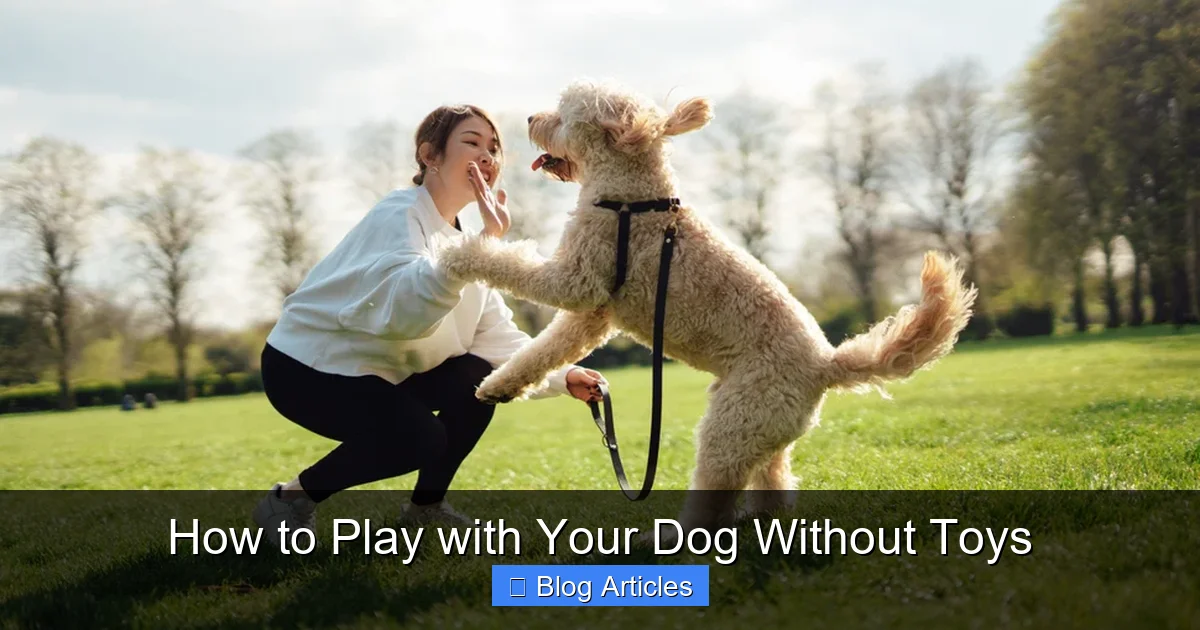
Visual guide about How to Play with Your Dog Without Toys
Image source: cdn.mos.cms.futurecdn.net
How to Start
Start by having your dog stay in one room. If they have not mastered the “stay” command, have a friend or family member gently hold their collar. Run to another room or hide behind a tree in your yard. Call your dog’s name once in a happy, excited voice. When they find you, reward them with lots of praise, belly rubs, and excitement. That excitement is the “payoff” for the game.
Adding Complexity
As your dog gets better at the game, make your hiding spots more difficult. Hide behind a curtain or crouch behind a bush. You can even combine this with the “stay” command to practice obedience. The more you do this, the more your dog will value your presence. They start to understand that the fun happens when they are searching for you, which makes them less likely to wander off during off-leash play later on.
Developing Scent Games and “Find It”
Your dog’s nose is their most powerful tool. You can play with your dog without toys by turning their keen sense of smell into a game. These activities are excellent for rainy days when you are stuck inside.
The Hand Game
This is the simplest way to get started. Take a small, high-value treat (or just a piece of their kibble) and show it to your dog. Close your fist tightly around it. Present both fists to your dog and let them sniff. When they nudge the hand with the treat, open your hand and let them have it. It is simple, but it encourages them to use their nose rather than their paws or teeth.
Hidden Treasures
Hide a treat somewhere in the room while your dog is watching, then say “Find it!” Once they get the hang of it, make them stay in another room while you hide a few treats around the house. When you release them, they will have to sniff out every corner to find the rewards. This keeps them focused, calm, and mentally engaged for long periods.
Movement Games: Chase and Follow
If you have a high-energy dog, they likely enjoy chasing things. You can play with your dog without toys by becoming the “thing” they chase. This mimics the natural play-fighting and chasing behaviors seen in the wild among pack members.
The “Tag” Method
Gently encourage your dog to chase you by running a few steps and then turning away playfully. When they get close, stop and initiate a bit of gentle wrestling or belly rubbing. This reinforces that you are a play partner, not just a dispenser of snacks. Make sure to keep the energy levels fun and not overly aggressive; you want to ensure the play remains lighthearted.
The “Follow Me” Game
When you are out on a walk, change your pace or direction suddenly. If your dog is off-leash or on a long training lead, they will have to pay attention to your body language to see where you are going. When they catch up or follow your lead, shower them with praise. This makes the walk a collaborative game rather than just a chore, and it keeps their focus on you rather than the distractions of the environment.
Teaching Tricks as Playtime
Who says training is not play? When you remove the pressure of formal “obedience school,” teaching tricks can be one of the most engaging ways to spend time with your pet. Teaching a trick like “spin,” “roll over,” or “shake” is essentially just a game of communication and rewards.
Keep it Light and Short
The goal is to play, not to drill commands. If your dog seems bored, switch to a different trick. Use lots of positive reinforcement. If they successfully perform a trick, engage in a mini-celebration—perhaps a quick game of tag or some extra affection. By integrating tricks into your play sessions, you keep the dog’s brain sharp while reinforcing that interaction with you is the most rewarding thing in the world.
Using Body Signals
Try teaching your dog to respond to hand signals instead of words. Since you are not using toys, you can use your hands to gesture. This creates a silent, high-level interaction that makes you both feel more connected. It is a subtle way to deepen your relationship and improve their focus on your physical cues.
Conclusion: The Best Reward is You
Learning how to play with your dog without toys is one of the most liberating experiences for a pet parent. You realize that you do not need to rely on the pet store to have a great afternoon with your companion. You are the center of your dog’s universe, and your time, attention, and interaction are the greatest rewards they could ever receive.
Whether you are playing hide-and-seek, working on scent games, or simply running around the backyard, you are reinforcing the bond that makes life with a dog so special. By focusing on these interactive, toy-free games, you are building a more attentive, mentally stimulated, and happy dog. So, the next time the toy bin is empty, do not worry. Just get down on the floor, call your dog’s name, and get ready to have the best time together.
Frequently Asked Questions
Is it safe to wrestle with my dog without a toy?
Wrestling can be safe if you keep it gentle and maintain control, but you must avoid roughhousing if your dog tends to nip or become overstimulated. Always stop if the energy becomes too intense or if your dog’s body language changes to show signs of aggression or fear.
How can I tire out a high-energy dog without toys?
Mental games like “find the treat” or scent work are far more tiring than simple fetch. By engaging your dog’s brain and nose for 20 minutes, you can achieve the same level of exhaustion as an hour of physical running.
Do I need treats to play without toys?
Treats are great for motivation, but they are not strictly necessary if your dog is highly praise-driven. Many dogs are perfectly happy to play if they receive lots of verbal encouragement, belly rubs, and your undivided attention.
Can playing without toys help with my dog’s obedience?
Yes, absolutely! Games like hide-and-seek or recall training through chase naturally improve your dog’s focus and responsiveness to your commands. It turns obedience into a positive, rewarding game rather than a dull chore.
How long should these play sessions last?
Toy-free play sessions are often more intense for your dog’s brain, so 10 to 15 minutes is usually enough. It is better to have several short, fun interactions throughout the day than one long, exhausting session that might cause frustration.
What if my dog doesn’t seem interested in playing without toys?
If your dog is used to toys, they might need time to adjust to a new style of interaction. Start with high-value rewards like smelly treats to build excitement, and keep the games short and very energetic until they realize that playing with you is fun.