
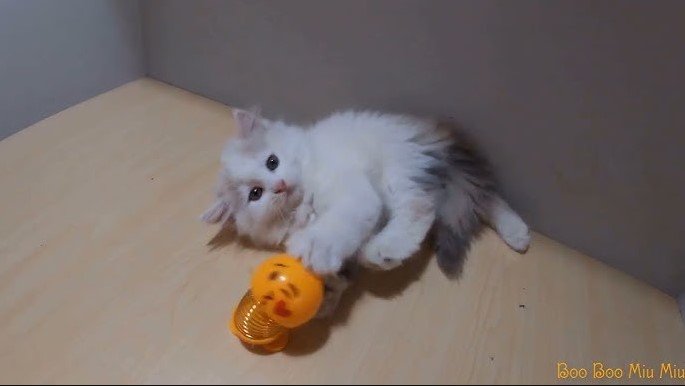
Why do cats love spring toys so much? These bouncy, plastic coils perfectly mimic the unpredictable movement of real prey, triggering your cat’s natural hunting instincts. Their lightweight design makes them easy to bat, chase, and carry, providing endless hours of engaging, low-cost feline entertainment.
If you have ever tossed a brightly colored plastic coil across the living room, you know exactly what happens next. Your cat’s pupils dilate, their tail begins that tell-tale twitch, and suddenly, they are a furry blur of motion.
Why do cats love spring toys? It seems like such a simple object, yet these colorful, squishy coils are often the most beloved items in a feline’s toy box. In a world full of expensive electronic mice and automated laser pointers, the humble spring toy remains the undefeated champion of cat playtime in 2026.
The obsession is real, and it is fascinating to watch. Whether your cat is a senior who prefers a gentle nudge or a wild kitten who loves to perform mid-air acrobatics, the spring toy fits the bill. It is lightweight, bounces in ways that defy physics, and makes a satisfying skittering sound on hard floors. Understanding why our cats are so drawn to these specific toys can actually help us become better playmates for our four-legged friends.
Key Takeaways
- Mimicking Prey: The erratic bouncing of spring toys stimulates a cat’s predatory drive better than static plushies.
- Affordable Entertainment: Spring toys are incredibly cost-effective while offering more engagement than high-tech gadgets.
- Active Exercise: These toys encourage high-energy play, helping indoor cats burn off excess calories.
- Tactile Satisfaction: The plastic texture and flexibility provide a unique sensory experience during pouncing.
- Independence: Cats can easily bat these toys around solo, making them perfect for playtime when you are busy.
- Safety First: Always inspect spring toys for wear and tear to ensure your cat stays safe during playtime.
The Science of the Pounce: Why Movement Matters
Triggering the Predatory Instinct
At their core, domestic cats are still tiny tigers. Even the most pampered house cat retains the biological wiring of their wild ancestors. In nature, prey does not move in straight lines. A mouse zigs, zags, darts under a leaf, and leaps over an obstacle. This is exactly what a spring toy does when it hits the floor. The moment the toy bounces, it mimics the sudden, erratic movements of small, skittish creatures.
When you ask why do cats love spring toys, the answer lies in their vision. Cats are motion-sensitive predators. They might ignore a stationary plush mouse sitting in the corner, but they cannot resist something that suddenly darts across their field of vision. The spring toy provides that instant feedback loop that satisfies their internal need to hunt, capture, and “kill” their prey.
The Physics of the Bounce
Unlike a ball, which rolls in a predictable path, a spring toy is delightfully chaotic. Because of its cylindrical, coiled shape, it hits the floor and sends itself flying in a random direction. This makes the toy feel “alive” to your cat. Every pounce results in a new, unexpected movement, forcing your cat to stay alert and adjust their strategy in real time. It is a puzzle that keeps their brain active and their reflexes sharp.
Sensory Engagement: The Texture and Sound
The Importance of Auditory Feedback
Have you ever noticed your cat perking their ears up when you flick a spring toy against the wall? Cats have incredible hearing. The sound of a plastic spring hitting a hardwood floor or sliding across a carpet creates a high-frequency vibration that catches their attention immediately. This noise acts as a signal that the “prey” is on the move. For a cat, the sound of the toy is just as important as the sight of it.
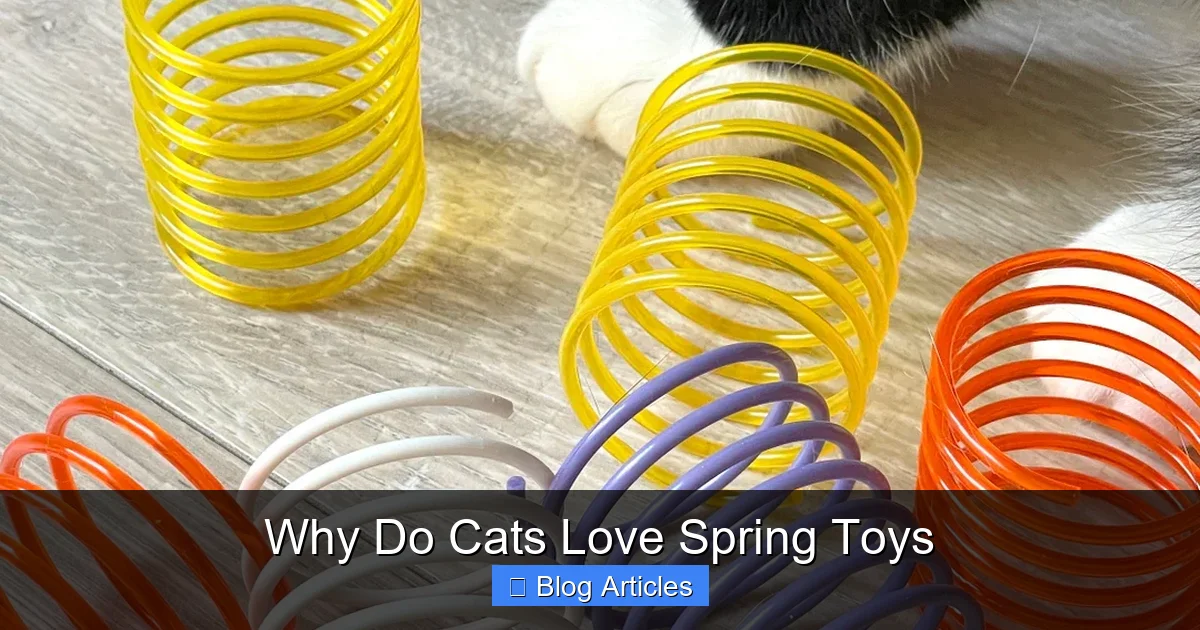
Visual guide about Why Do Cats Love Spring Toys
Image source: i.etsystatic.com
Texture and Mouthfeel
Cats use their mouths to explore the world. Spring toys are usually made from a specific type of smooth, slightly flexible plastic. This texture is very satisfying for cats to grab with their teeth. Because the toys are lightweight, cats can easily pick them up, carry them around the house, and stash them in their favorite hiding spots. It mimics the act of bringing prey back to a den, which is a deeply ingrained feline behavior.
The Benefits of Active Play for Indoor Cats
Physical Health and Weight Management
In 2026, we are more conscious than ever about our pets’ health. Obesity is a common issue for indoor cats who lead sedentary lives. Because spring toys encourage sprinting, jumping, and lunging, they are excellent tools for cardiovascular health. A ten-minute session of batting springs around the house can burn off a significant amount of energy, helping your cat maintain a healthy weight and strong muscles.
Mental Stimulation and Boredom Relief
A bored cat is often a destructive cat. When a cat has nothing to do, they might scratch furniture or meow incessantly. Spring toys offer a simple, effective way to keep your cat mentally engaged. By providing an interactive challenge trying to catch a moving object you are giving their brain a workout. This is essential for preventing anxiety and behavioral problems, especially in single-cat households.
Maximizing Playtime: Tips for Success
How to Engage Your Cat Properly
While cats can play with spring toys alone, you can make the experience much better by participating. Use the spring toy like a wand; flick it gently so it bounces off the baseboards or furniture. Try hiding it behind a door or under a rug so your cat has to “stalk” it before pouncing. By acting as the “prey mover,” you strengthen your bond with your cat and turn playtime into a social activity.
Creating a “Hunting” Circuit
To keep the novelty alive, don’t leave all your spring toys out at once. If you scatter twenty of them around the floor, your cat will get used to them, and they will become “background noise.” Instead, rotate the toys. Keep a stash of springs in a drawer and bring out two or three at a time. When they get bored, swap them out for fresh ones. This makes the “discovery” of the toy feel new and exciting every single time.
Safety Considerations for Spring Toy Fans
Monitoring Play and Wear
Though these toys are generally safe, we must always keep an eye on them. Over time, a heavily chewed plastic spring might develop sharp edges or cracks. If you notice a spring is damaged, toss it in the recycling bin and grab a new one. It is a small price to pay for your cat’s safety. Always ensure the material is non-toxic and durable enough for your cat’s specific play style.
Avoiding Potential Hazards
Cats love to hide their “prey” under the refrigerator or behind heavy furniture. While this is cute, keep in mind that if your cat constantly tries to wedge their paw into tight gaps to retrieve a toy, they could get stuck or injured. Periodically check those “secret stashes” to ensure your cat isn’t getting into precarious situations while trying to hunt their favorite plastic spring.
Why the Simple Toy Wins?
In an age where we have smart-home cameras and automated treat dispensers, it is refreshing to see how much joy a simple piece of plastic can bring to a cat. We often overthink what our pets need. We assume they need the latest gadgets, but really, they just need to express their nature. They need to chase, pounce, and feel that rush of a successful hunt.
So, why do cats love spring toys? They love them because they are honest. They don’t try to be anything other than a bouncy, noisy, fun little object that moves exactly like a wild thing. They allow our cats to be who they were meant to be, even if they are just doing it in our living rooms.
Next time you see your cat wrestling with that familiar colorful coil, take a moment to watch. It is a beautiful display of instinct, energy, and pure, unfiltered joy. If you haven’t stocked up on a pack of springs lately, do yourself and your cat a favor. They are inexpensive, easy to store, and guaranteed to provide hours of entertainment. It is the ultimate low-tech solution to the high-energy needs of your beloved feline. Give your cat the gift of the pounce, and watch them light up with excitement.
Frequently Asked Questions
Are spring toys safe for kittens?
Yes, spring toys are generally safe for kittens, provided they are made of non-toxic plastic and are not small enough to be a choking hazard. Always supervise your kitten during their first few play sessions to ensure they are playing appropriately.
How often should I replace my cat’s spring toys?
You should inspect the toys weekly for signs of cracks, sharp edges, or heavy bite marks. If the plastic begins to splinter or lose its shape, replace it immediately to prevent potential ingestion or injury.
Why does my cat hide their spring toys under the fridge?
This is a natural “caching” behavior where cats hide their prey to return to it later or keep it safe. It is a sign that they view the spring toy as a legitimate “kill” that they want to protect and store for the future.
Can spring toys help an overweight cat lose weight?
Absolutely, spring toys encourage rapid movement, sprinting, and jumping, which are great for burning calories. A few daily sessions of active play with springs can significantly increase your indoor cat’s activity level.
Are there different types of spring toys available?
While most are standard plastic coils, you can find them in various sizes, thicknesses, and even different materials like extra-durable polymers. Some even come with bells or catnip-infused textures to add another layer of sensory stimulation.
Do cats get bored of spring toys over time?
They can, which is why it is recommended to rotate the toys rather than leaving them all out at once. By hiding some away and bringing them back out later, you keep the “prey” feeling new and exciting for your cat.