
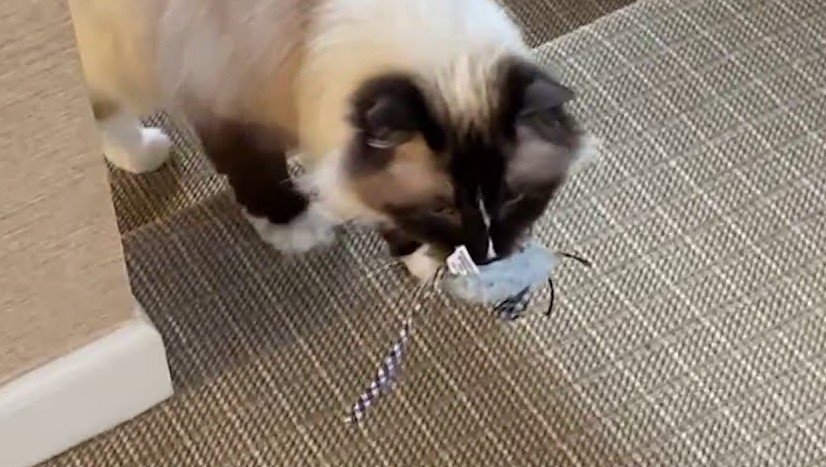
When your cat meows with a toy in its mouth, it is often displaying a mix of hunting pride and social bonding. This behavior serves as a whimsical feline communication method, inviting you to share in their “success” or seek comfort during quiet times.
Have you ever been relaxing on your sofa when suddenly your cat walks into the room, muffled meows echoing through a plush mouse held firmly in its jaws? It is a scene that is both adorable and slightly confusing. Many cat owners stop and ask themselves, why do cats meow with toys in their mouth? If you have experienced this, you are certainly not alone. It is a classic quirk that has delighted and puzzled feline lovers for generations.
In 2026, we have learned more than ever about feline psychology. When your cat parades around with a toy, they are doing much more than just carrying a piece of fabric. They are communicating with you in their own unique language. Understanding this behavior can help you build a stronger bond with your pet and provide them with the mental stimulation they crave. Let us explore the fascinating reasons behind this vocal habit.
Key Takeaways
- Hunting Instincts: Many cats carry toys to simulate bringing home prey to their family or “pride.”
- Attention Seeking: Cats often vocalize while holding a toy to ensure you notice their accomplishment or want to play.
- Social Bonding: This behavior is a way for your pet to express trust and strengthen the emotional connection with their human.
- Security and Comfort: Some cats use a favorite toy as a comfort object, meowing to announce they are settled and safe.
- Maternal Behavior: Female cats may carry objects to mimic the instinctual process of teaching kittens how to handle prey.
- Age Factors: Both kittens and senior cats engage in this for different reasons, ranging from play practice to seeking companionship.
The Evolutionary Roots of the Hunting Instinct
At the heart of the mystery is your cat’s wild ancestry. Even though your fluffy companion spends most of their day lounging in the sunlight, they are still hardwired as hunters. In the wild, cats are solitary hunters, but they are also part of a social structure where they may share their catch.
Simulating the “Kill”
When your cat catches a toy, their instincts tell them they have successfully hunted prey. By meowing while holding the toy, they are essentially broadcasting their success to the rest of their “pride”—which in this case, is you. The meowing is muffled because the toy is blocking their mouth, but the intent remains clear: “Look what I have done!”
Teaching and Mentoring
Female cats in the wild often bring prey back to their kittens to teach them how to interact with food. Even if your cat has been spayed or neutered, these ancient biological triggers remain active. When they carry a toy to you and vocalize, they might be attempting to “mentor” you, showing you how to handle the “prey” they have just caught.
Seeking Attention and Social Connection
Sometimes, the reason is much simpler than ancient hunting habits. Cats are social creatures who crave interaction, even if they sometimes pretend otherwise. When a cat wants your attention, they will look for the most effective way to get it, and holding a toy is a high-value item.
The “Play With Me” Request
If you see your cat walking toward you with a toy, they are often explicitly inviting you to play. The meow is their way of saying, “I have this toy, now throw it!” It is a direct request for engagement. If you respond by tossing the toy or teasing them with a string, you are reinforcing this positive social interaction. This strengthens your friendship and keeps your cat mentally sharp.
Announcing Presence
Have you noticed your cat does this when you first walk through the door? It is a common greeting ritual. Your cat is saying, “I am here, and I have found something interesting.” It is their way of telling you that they missed you and are excited to have you back home. It is a sign of affection and a way to re-establish your social bond after being apart.
The Role of Comfort and Security
Not every toy-carrying session is about hunting or playing. For many cats, a specific toy can become a “security blanket.” You might notice that your cat brings the same toy to your bed or to a secluded spot in the house.
Self-Soothing Behaviors
Cats sometimes feel anxious or overstimulated. Carrying a familiar, scent-heavy item helps them feel grounded. The muffled meowing in these moments is usually softer and more rhythmic, acting almost like a hum. It is a way for the cat to signal that they are settling down and feeling secure in their environment.
Signs of Attachment
If your cat brings their toy to your bedroom specifically, they are likely expressing a deep sense of trust. By bringing their “prized possession” into your sleeping area, they are showing that they consider you part of their safe circle. It is a massive compliment, even if it happens at three in the morning!
Is It a Cause for Concern?
Generally, this behavior is perfectly normal and healthy. However, as pet owners, we should always be observant. If the behavior changes suddenly, it might be a sign that something else is going on.
When to Consult a Vet
If your cat begins meowing with a toy in their mouth constantly, or if they seem distressed, vocalizing loudly without the toy, it could be a sign of pain or confusion. Senior cats, in particular, may develop cognitive issues where they feel disoriented and meow to find their owners. If the toy-carrying becomes obsessive or if your cat seems unable to settle down, a quick chat with your veterinarian is a wise idea.
Providing Enrichment
If your cat is doing this because they are bored, consider increasing their daily playtime. A cat with plenty of toys and interactive sessions is less likely to feel the need to “hunt” your slippers or carry around old toys for hours on end. Try rotating their toys to keep things fresh and exciting.
Interpreting the Different Types of Meows
Not all meows sound the same, and when combined with a toy, the tone gives us a clue to the cat’s mood. Learning to listen closely will help you understand your feline friend better.
The Happy Trill
If the sound is more of a chirp or a trill, your cat is likely feeling very happy and confident. This is the “look at me, I am great” sound. It is a sign of a high-spirited, well-adjusted pet that wants to show off their win.
The Low-Frequency Wail
A deeper, more drawn-out meow while carrying a toy can sometimes indicate frustration. They might be unable to find the right place to put the toy, or they are waiting for you to help them initiate a game. Watch their body language—are their ears flattened or perked? This will tell you if they are content or impatient.
Practical Tips for Cat Owners
If you want to encourage this behavior or simply respond to it in a way that makes your cat happy, follow these simple tips.
- Acknowledge them: Even if you are busy, give your cat a quick pet or a verbal “good job.” They worked hard to bring you that toy!
- Play the game: If they bring you a toy, take a minute to engage. Toss it, hide it, or wiggle it on the floor. It pays off in long-term cat happiness.
- Keep the area clean: If your cat has a specific “trophy” spot, make sure it stays relatively tidy so they feel comfortable continuing their ritual.
- Rotate toys: Keep their interest high by swapping out toys every few days. This prevents boredom and keeps the hunting instinct sharp.
In conclusion, when you ask yourself why do cats meow with toys in their mouth, remember that it is a beautiful blend of history and affection. Your cat is an animal with deep-seated instincts, yet they choose to share their little “victories” with you. Whether it is an invitation to play, a way to seek comfort, or a simple greeting, it is a gesture of love. Cherish these moments, as they are a clear sign that your cat feels safe, happy, and connected to you.
Frequently Asked Questions
Is this behavior normal for all cat breeds?
Yes, this is a natural feline behavior observed across almost all breeds, as it is rooted in universal hunting instincts. While some individual cats may be more vocal than others, most will exhibit this at some point in their lives.
Should I stop my cat from carrying toys in their mouth?
No, there is no reason to stop this behavior as it is a healthy way for your cat to express their instincts. It provides mental stimulation and is a harmless, adorable way for your cat to bond with you.
Why does my cat only do this at night?
Cats are naturally crepuscular, meaning they are most active during dawn and dusk. Nocturnal toy-carrying often happens because your cat has a burst of energy at night and is looking for a play partner.
Can this lead to dental issues?
Under normal circumstances, carrying lightweight plush or plastic toys will not damage your cat’s teeth. However, ensure the toys are cat-safe and do not have small parts that could break off and become choking hazards.
Does it mean my cat is lonely?
Not necessarily, but it does indicate that your cat is seeking social engagement. Providing extra interactive play sessions can satisfy their desire for company and keep them feeling secure.
What if my cat is just crying with the toy but not playing?
If the meow sounds more like a distressed cry, observe your cat’s overall behavior to check for illness or confusion. If they are eating, drinking, and acting normally, they may just be seeking your attention for comfort rather than play.