Educational toys are vital tools that transform playtime into powerful learning experiences. By blending fun with developmental goals, these toys help children build essential skills like critical thinking, problem-solving, and emotional intelligence that last a lifetime.
As we navigate through 2026, the world is moving faster than ever before. We see technology evolving at lightning speed, changing how we work, communicate, and live. As parents, educators, and mentors, we often find ourselves wondering how we can best prepare our children for this dynamic future.
While digital literacy is certainly important, the foundation of early childhood development remains grounded in a simple, timeless activity: play. You might be wondering, why are educational toys so important in this modern age? It is not just about keeping a child busy for an hour.
It is about choosing tools that turn curiosity into competence. When a child engages with a toy designed to teach, they are not just having fun; they are building the neural pathways that will define their problem-solving abilities for years to come. Let’s dive into why these items are essential components of a healthy, growing mind.
Key Takeaways
- Cognitive Growth: Educational toys stimulate brain development by challenging children to recognize patterns, solve puzzles, and understand cause-and-effect relationships.
- Skill Development: Playing with specialized toys enhances fine motor skills, hand-eye coordination, and spatial awareness through hands-on interaction.
- Social Intelligence: Collaborative toys encourage kids to practice empathy, turn-taking, communication, and teamwork with their peers.
- Creativity Unleashed: Open-ended toys allow children to explore their imaginations, fostering innovation and the ability to think outside the box.
- Academic Readiness: Early exposure to STEM-focused toys builds a solid foundation for future success in math, science, and literacy.
- Confidence Building: Successfully completing tasks or mastering a new toy boosts self-esteem and creates a positive attitude toward learning.
The Science of Play-Based Learning
It is easy to look at a box of blocks or a set of magnets and see them as mere distractions. However, science tells us a much more fascinating story. Play is the primary way that children learn about the world around them. When they touch, stack, take apart, and assemble objects, they are performing their own mini scientific experiments. This is the essence of why educational toys are important; they act as a bridge between abstract concepts and concrete reality.
Brain Development and Neuroplasticity
During the early years, a child’s brain is like a sponge. Neuroplasticity the brain’s ability to reorganize itself by forming new neural connections is at its peak. Educational toys capitalize on this phase. When a child tries to fit a shape into the correct slot, their brain is firing neurons related to spatial reasoning and pattern recognition. Every success reinforces these pathways, making the brain more efficient at processing information.
Building Foundations for Future Success
In 2026, we emphasize STEM (Science, Technology, Engineering, and Math) skills more than ever. But you do not need a computer to start a child on this path. Wooden building sets teach the laws of physics and gravity. Counting games teach basic arithmetic and logic. By introducing these concepts through play, you remove the fear of “learning” and replace it with the joy of discovery.
Fostering Creativity and Critical Thinking
One of the biggest reasons why educational toys are important is their ability to nurture creative problem-solving. In a world full of pre-programmed digital content, open-ended toys stand out as heroes. They don’t just tell a child what to do; they ask the child, “What can you create?”
Visual guide about Why Educational Toys Are Important
Image source: cdn.slidesharecdn.com
The Power of Open-Ended Play
Consider a simple set of magnetic tiles. You can build a tower, a castle, a car, or an abstract sculpture. There is no right or wrong way to play with them. This freedom allows children to explore “what if” scenarios. This is where innovation begins. If the tower falls, the child must figure out why. This is early-stage engineering and scientific reasoning at its finest.
Developing Critical Thinking Skills
Critical thinking is essentially the ability to analyze a situation and make an informed decision. When a child works on a complex puzzle, they are learning to break a large goal into smaller, manageable steps.
They learn to evaluate the pieces, test hypotheses (does this piece fit here?), and adjust their strategy if the piece doesn’t fit. This process is exactly what they will use later in life to tackle complex professional challenges.
Developing Fine and Gross Motor Skills
Physical development is just as important as cognitive growth. Educational toys are designed to help children refine their physical abilities, which are linked to overall brain health. Whether it is moving small beads on a wire or balancing on a wobble board, these activities coordinate body movements with the mind.
Fine Motor Skills and Writing Readiness
Many educational toys focus on grip and dexterity. Think of threading beads, playing with clay, or using child-safe building sets. These activities strengthen the small muscles in the hands and fingers. This is not just about playing; it is about preparing the child for future tasks like writing, typing, and even surgical precision later in life. A child who has developed strong fine motor skills often finds the transition to school-based tasks much easier.
Gross Motor Skills and Spatial Awareness
Toys that encourage movement such as climbing sets, balance beams, or even interactive dance mats help children understand their place in physical space. This awareness is called proprioception. It helps children develop better balance, coordination, and physical confidence. A child who feels secure in their own body is much more likely to explore their environment and take on new physical challenges with enthusiasm.
The Social and Emotional Benefits
We often talk about the brain, but what about the heart? Why are educational toys important for social-emotional growth? The answer lies in collaboration. Many educational toys are designed to be played with others, providing a low-pressure environment for children to interact and learn social norms.
Learning Through Cooperation
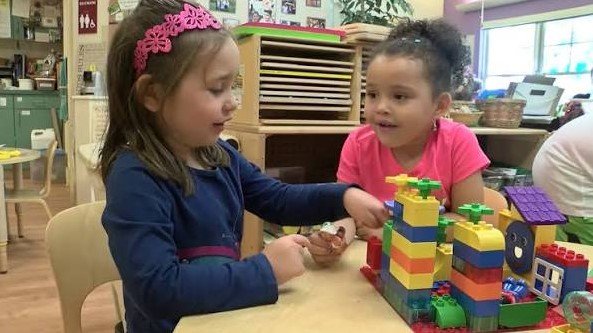
When two children work together to build a marble run or play a board game, they are constantly communicating. They must negotiate roles, share materials, and agree on a direction. They learn that their actions affect others and that working as a team often yields better results than working alone. These are the soft skills—patience, empathy, and listening—that form the bedrock of emotional intelligence.
Building Confidence and Resilience
Educational toys provide a safe space for “failure.” If a tower falls or a puzzle piece doesn’t fit, the consequence is low. The child learns that it is okay to try again. They learn to manage frustration and stick with a difficult task until it is complete. This resilience is a key indicator of future success. When they finally solve the problem, the burst of confidence they feel is a powerful motivator to try the next, more difficult challenge.
Choosing the Right Toys for Different Ages
Knowing why educational toys are important is only half the battle; knowing how to pick the right one for your child’s age is the other. In 2026, the market is flooded with options, but the best choices remain those that match the child’s developmental stage.
The Toddler Years (1-3)
At this stage, children learn through their senses. Focus on toys that encourage exploration: musical instruments, shape sorters, chunky puzzles, and stacking blocks. These items help with object permanence and basic categorization. Safety is the top priority here, so always look for non-toxic materials and durable construction.
The Preschool Years (3-5)
This is the golden age of imagination. Role-play toys like doctor kits, kitchens, or dress-up clothes are excellent for social-emotional development. Simultaneously, introduce more complex construction sets, simple coding robots, and board games that involve taking turns. These help refine social skills and introduce basic logic.
The School-Age Years (6+)
As children enter school, focus shifts toward complex problem-solving. This is the time for science kits, advanced LEGO sets, strategy board games, and even beginner robotics. These toys bridge the gap between pure play and structured learning, allowing children to apply the knowledge they are gaining in the classroom to real-world scenarios at home.
Creating a Learning-Friendly Environment
The environment matters just as much as the toy itself. To maximize the impact of educational toys, you should create a space that invites play. Avoid the trap of over-stimulating your child with too many toys at once. A cluttered space can actually hinder deep concentration.
The “Less is More” Philosophy
Try rotating your toys. If you have a large collection, keep some in storage and swap them out every few weeks. This keeps the collection feeling “fresh” and prevents the child from feeling overwhelmed. When a child has fewer toys to choose from, they are often forced to be more creative with what they have, leading to deeper, more meaningful engagement.
Being Present During Play
While independent play is great, parental involvement is a multiplier. When you sit down and engage with your child, you are providing a model for how to interact with the toy. Ask open-ended questions like, “What do you think will happen if we move this block?” or “How can we make this tower taller?” This dialogue encourages the child to think aloud, which is one of the best ways to deepen their understanding of any concept.
Conclusion
In conclusion, the question of why educational toys are important has a simple, multifaceted answer. They are not merely objects; they are vital instruments that shape the way a child sees, thinks about, and interacts with the world.
By choosing toys that stimulate the mind, challenge the body, and foster social connections, we provide our children with the tools they need to navigate the complexities of life in 2026 and beyond.
Remember that the best educational toy is one that sparks curiosity. Whether it is a simple set of wooden blocks or a sophisticated robotics kit, the magic happens in the engagement.
Embrace the process of play, encourage your child’s explorations, and watch as they build not just towers and machines, but the intelligence and confidence to build a bright future for themselves. Keep playing, keep learning, and keep growing together.
Frequently Asked Questions
What age should a child start using educational toys?
Children can benefit from educational toys as early as infancy. Simple, high-contrast objects and tactile toys help newborns develop sensory awareness and focus from the very first months.
Are digital educational toys better than physical ones?
Both have their place, but physical toys are generally better for developing fine motor skills and spatial reasoning. Digital toys can be effective for specific lessons, but physical play remains essential for holistic brain development.
How do I stop my child from getting bored with their toys?
Try a toy rotation system where you only keep a small selection of toys available at one time. Swapping them out every few weeks keeps play fresh and encourages children to rediscover the value of each item.
Do expensive educational toys provide better learning outcomes?
Not necessarily. Some of the most effective educational toys are simple items like building blocks, puzzles, or art supplies. The learning value comes from how the child engages with the toy, not the price tag attached to it.
Can educational toys help with behavioral issues?
Yes, many educational toys are designed to teach patience, turn-taking, and emotional regulation. Cooperative games, in particular, can provide a structured way for children to practice positive social interactions and manage frustration.
How can I tell if a toy is truly educational?
Look for toys that are “open-ended,” meaning they can be used in multiple ways. If the toy requires the child to think, solve a problem, or use their imagination rather than just watching a screen, it is likely a high-quality educational tool.