
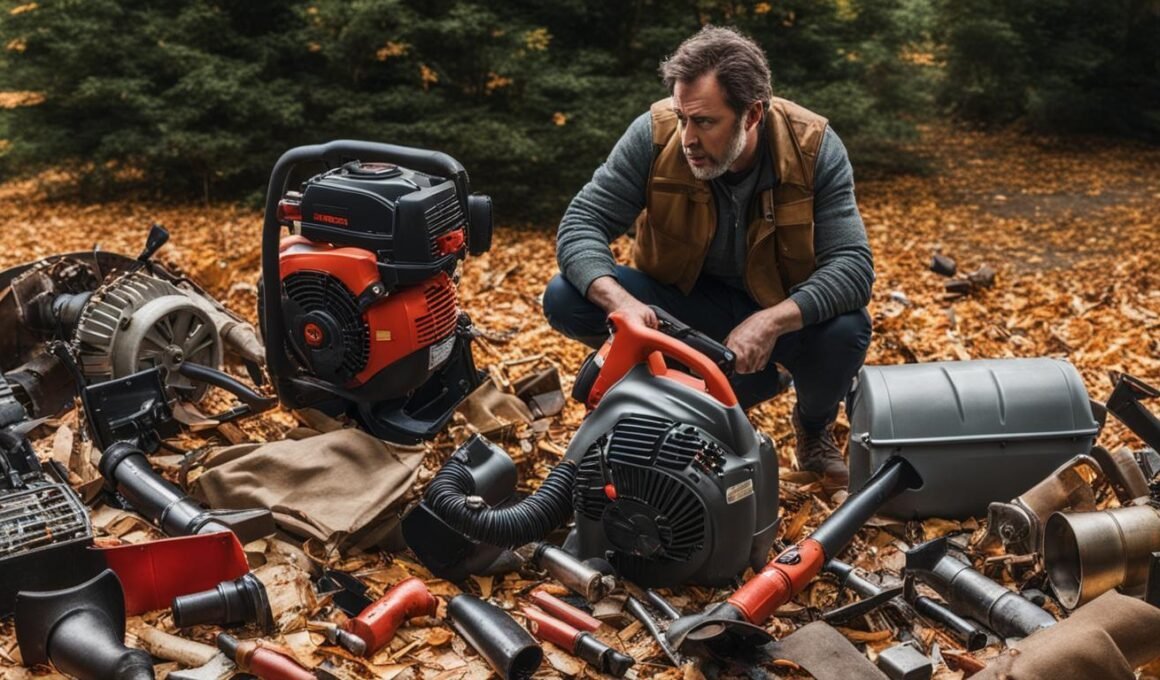
A leaf blower that will not start usually has a problem with fuel, airflow, ignition, battery power, or the starting procedure. In the United States, most gas leaf blowers use a small two-stroke engine, while newer models may use a four-stroke engine, a rechargeable battery, or a power cord.
Start with the simple checks. Confirm that the blower has fresh fuel or a charged battery, the stop switch is set to RUN, the spark plug cap is attached, and the air filter is not blocked. If the engine still will not start, use the symptom-based steps below.
Introduction
A non-starting leaf blower can be frustrating, especially when leaves are waiting and the weather is changing. The good news is that many starting problems do not require a full engine repair.
The correct fix depends on what happens when you pull the starter rope or press the power button. A gas blower that cranks but does not fire needs a different diagnosis from one that has no electrical response. Safety also matters: fuel vapors can ignite, and a flooded engine can release raw gasoline.
This guide covers common gas, battery, and corded electric leaf blowers sold and used in the United States. Always check the owner’s manual for your exact model before removing parts, adjusting the carburetor, or mixing fuel.

First, Identify What Your Leaf Blower Does
The sound and behavior of the blower provide the first useful clue. Do not treat every “won’t start” problem as a fuel problem.
| What happens | Most likely causes |
|---|---|
| Nothing happens | Dead battery, bad switch, disconnected spark plug, blown fuse, or power issue |
| Starter rope pulls normally, but the engine does not fire | No fuel, bad fuel, no spark, blocked air filter, or incorrect choke setting |
| Engine starts, then dies | Fuel restriction, blocked vent, dirty carburetor, or incorrect choke position |
| Engine starts only with the throttle pressed | Dirty carburetor, air leak, blocked idle circuit, or incorrect adjustment |
| Engine starts but runs poorly | Old fuel, dirty filter, damaged spark plug, clogged spark arrestor, or fuel mixture problem |
| Battery blower clicks but will not run | Battery not seated, battery too cold or hot, safety lock not engaged, or motor fault |
| Corded blower stops at once | Tripped breaker, damaged cord, loose connection, or failed switch |
A two-stroke engine needs four basic things to run:
- Fuel
- Air
- Spark
- Compression
A battery or corded electric blower does not use fuel or a spark plug. It needs power, a working control switch, and an unobstructed motor and fan.
Check whether the engine is flooded
A flooded gas engine has too much fuel and not enough air in the cylinder. Common signs include a strong gasoline smell, a wet spark plug, or an engine that briefly sputters but will not continue running.
If you suspect flooding, move the blower outdoors, set the choke to RUN or OPEN, and allow several minutes for fuel vapor to clear. Follow the exact “flooded engine” procedure in the owner’s manual.

Check the Starting Controls and Basic Conditions
The fastest solution is often an incorrect starting setting. Before removing a cover or part, perform these checks.
For a gas leaf blower
Confirm the following:
- The stop switch is set to RUN.
- The fuel tank contains the correct fuel.
- The fuel cap is tight but not damaged.
- The primer bulb is not cracked or collapsed.
- The choke is set as the manual instructs.
- The spark plug wire or boot is firmly connected.
- The throttle lock, if fitted, is released or set correctly.
- The blower tube is installed if the model requires it for operation.
Place the blower on firm ground. Keep the air intake and exhaust away from grass, leaves, clothing, and other objects. Hold the machine firmly while pulling the starter rope.
A common cold-start sequence is:
- Add fresh, correctly mixed fuel.
- Press the primer bulb the number of times listed in the manual.
- Set the choke to CLOSED or FULL CHOKE.
- Pull the starter rope until the engine attempts to start.
- Move the choke to the next position.
- Pull again until the engine starts.
- Let the engine warm briefly, then move the choke fully open.
This sequence varies by model. Pulling repeatedly with full choke after the engine has already fired can flood it.
For a battery leaf blower
Check these items:
- The battery is charged.
- The battery clicks fully into place.
- The battery contacts are clean and dry.
- The safety lock or trigger lock is engaged correctly.
- The charger shows normal charging status.
- The battery is within the temperature range stated by the manufacturer.
- The tube and fan area are free of leaves or other obstructions.
If the charger shows a fault light, use the instructions for that battery system. Do not open a lithium-ion battery pack or attempt to repair damaged cells.
For a corded electric blower
Check the power source first:
- Test the outlet with another tool.
- Reset the circuit breaker or ground-fault circuit interrupter if it tripped.
- Inspect the extension cord for cuts, crushed sections, or loose plugs.
- Use a cord size and length approved by the owner’s manual.
- Confirm that the blower switch is in the ON position.
Do not use a damaged extension cord, and do not operate a corded blower in wet conditions unless the manual specifically permits it.

Troubleshoot a Gas Leaf Blower That Will Not Start
If the starter rope pulls but the engine does not run, work through fuel, airflow, spark, and compression in that order. These checks move from easy causes to more involved causes.
1. Replace old or incorrect fuel
Old fuel is one of the most common causes of a gas leaf blower that will not start. Gasoline can lose its useful volatility during storage. It can also leave deposits in the carburetor.
Use fuel that meets the engine maker’s instructions. Many two-stroke blowers require gasoline mixed with a specific two-stroke oil ratio. Some models use premixed fuel, while others require the owner to mix fuel.
Do not guess the ratio. A wrong mixture can cause poor starting, overheating, smoke, or engine damage.
To check the fuel:
- Move the blower outdoors.
- Turn the engine off and let it cool.
- Inspect the fuel for a sour smell, dark color, cloudiness, or visible debris.
- Drain old fuel only as the manual directs.
- Add fresh fuel of the correct type.
- Dispose of old gasoline through a local household hazardous-waste program.
Never pour gasoline onto soil, into a storm drain, or into household trash. The U.S. Environmental Protection Agency recommends proper handling of used fuel and other hazardous household products.
2. Inspect the fuel line and primer bulb
The primer bulb pushes fuel toward the carburetor. If it is cracked, hard, collapsed, or full of air, the engine may not receive enough fuel.
Look for:
- Cracked fuel lines
- Loose fuel-line connections
- A blocked fuel filter
- A damaged primer bulb
- Fuel leaking around the tank or carburetor
A fuel filter inside the tank may be difficult to reach. Replace it only if the manual provides the procedure and the correct part.
3. Check the choke and avoid flooding
The choke restricts air during a cold start. This creates a richer fuel mixture. A warm engine usually needs little or no choke.
Use full choke only for a cold engine when the manual says to do so. If the blower smells strongly of fuel or the spark plug is wet, stop adding fuel and use the model’s flooded-engine procedure.
Do not keep pumping the primer bulb after the engine has started to sputter. That can add too much fuel.
4. Inspect and clean the air filter
A dirty air filter limits airflow. The engine may start poorly, run for a few seconds, or fail to start at all.
Remove the filter according to the manual. If it is a washable foam filter, clean and dry it fully before reinstalling it. If it is a paper or non-washable filter, replace it when dirty or damaged.
Do not run the blower without its air filter. Dust can enter the engine and damage internal parts.
5. Check the spark plug
A spark plug can become fouled with fuel, oil, or carbon. It may also have a worn electrode or an incorrect gap.
Before removing the plug:
- Turn the engine off.
- Let it cool.
- Disconnect the spark plug boot.
- Keep fuel and ignition sources away.
- Use the correct spark plug socket.
Inspect the plug for:
- Wet fuel on the tip
- Heavy black carbon
- A cracked ceramic insulator
- A worn electrode
- A damaged terminal
Replace the plug if the manual lists replacement as the remedy. If you clean and reuse it, use the method approved by the manufacturer. Set the gap only to the listed specification.
Do not hold the spark plug against the engine and pull the starter to test for spark unless the manual specifically describes a safe method. Ignition systems can produce a strong electrical shock, and a spark near gasoline vapor can start a fire. An approved spark tester is safer.
6. Check the muffler and spark arrestor
A blocked muffler or spark-arrestor screen can restrict exhaust flow. This may cause hard starting, low power, or an engine that dies when you press the throttle.
Let the blower cool fully before inspection. Carbon removal and spark-arrestor service should follow the owner’s manual. If the screen is damaged, replace it rather than bypassing it.
Do not operate a gas blower with its muffler or spark arrestor removed.
7. Consider carburetor or compression problems
If fresh fuel, a clean filter, and a good spark plug do not solve the problem, the carburetor may be dirty or the engine may have low compression.
Possible signs include:
- The engine starts only when fuel is added directly
- The primer bulb works, but fuel does not reach the engine
- The blower runs briefly and dies every time
- The starter rope feels unusually easy to pull
- The engine has been stored for a long period with fuel inside
Avoid spraying starting fluid into a two-stroke engine unless the manufacturer explicitly allows it. Starting fluid can damage some engines and may create a fire risk.
Carburetor cleaning, diaphragm replacement, fuel-system repair, and compression testing are good tasks for a qualified small-engine repair shop if you do not have the correct tools or service information.
Troubleshoot a Battery or Corded Leaf Blower
Electric blowers have fewer starting parts, but their controls and power systems still need careful checks.
Battery blower will not turn on
Remove the battery before inspecting the tube, fan, or contacts. Then:
- Charge the battery with the approved charger.
- Check for a charger fault indicator.
- Let a battery that is very hot or cold return to room temperature.
- Clean dry dust from the contacts.
- Reinstall the battery until it locks.
- Press the safety button before pulling the trigger.
- Check for a blocked fan or tube.
A battery that charges fully but powers no compatible tool may have reached the end of its service life or may have an internal fault. Do not disassemble it. Follow the manufacturer’s recycling or service instructions.
Corded blower has no power
Start at the outlet and work toward the tool. Reset a tripped breaker or GFCI, then test the cord. Replace a damaged cord rather than taping over cuts or exposed conductors.
If the outlet and cord work but the blower remains dead, the trigger switch, motor, or internal wiring may have failed. Unplug the tool before any inspection, and use an authorized repair service unless the manufacturer provides a safe service procedure.
Common Mistakes That Prevent Starting
Several habits can make a healthy blower seem defective.
Using the wrong fuel mixture
A two-stroke engine needs both gasoline and lubricating oil. Too little oil can damage the engine. Too much oil can cause smoke, plug fouling, and poor combustion.
Leaving old fuel in the tank during storage
Fuel left in the tank can degrade and leave deposits. For seasonal storage, follow the manual. The correct process may include draining the tank, running the carburetor dry, or using an approved fuel stabilizer.
Holding the choke closed too long
Full choke is for a cold start. Once the engine fires, move the choke as directed. Continuing to use full choke can flood the engine.
Pulling the starter rope too aggressively
Use a firm, controlled pull. Do not wrap the starter rope around your hand, and do not pull the rope beyond its normal travel.
Ignoring the air intake
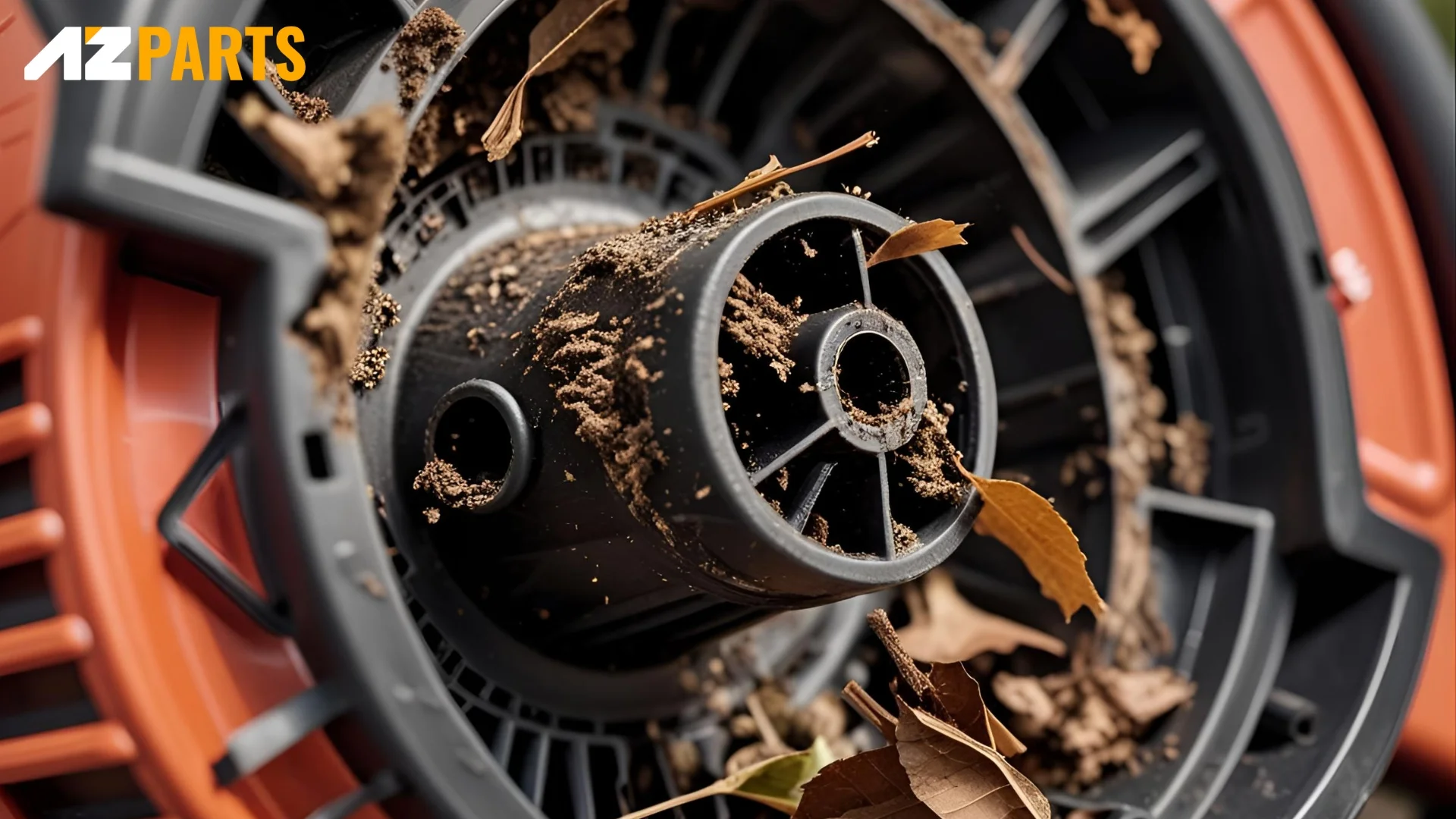
Leaves, dust, and grass can block the intake and cause overheating or poor operation. Clean the intake with the engine off and the battery removed or spark plug boot disconnected.
Adjusting the carburetor without specifications
Carburetor screws control the fuel and air mixture. Incorrect adjustment can cause high engine speed, overheating, poor emissions, or unsafe operation. Use the factory procedure or seek professional service.
When to Stop Troubleshooting and Get Repair Help
Stop and seek qualified help when you find a fuel leak, damaged fuel tank, melted wiring, a cracked housing, or a battery that is swollen, hot, smoking, or leaking.
Professional repair is also the safer choice when:
- The blower has no spark after the ignition system is checked.
- The engine has low compression.
- The carburetor needs to be removed.
- The starter mechanism is broken.
- The motor smells burnt.
- The tool trips the breaker repeatedly.
- A repair requires bypassing a safety switch.
- The blower is still under warranty.
Never bypass a safety interlock, remove a spark arrestor for normal use, or operate a machine with exposed wiring.

A Fast Decision Guide
Use this short sequence when you need the most efficient next step:
- No sound at all: Check the battery, outlet, switch, cord, or electrical connection.
- Rope pulls but there is no firing: Check fuel, choke, primer bulb, air filter, and spark plug.
- Strong fuel smell: Treat the engine as flooded. Stop priming and follow the manual’s clearing procedure.
- Starts, then dies: Check the choke position, fuel filter, fuel cap vent, carburetor, and spark arrestor.
- Runs but lacks power: Check the air filter, exhaust screen, fuel quality, tube blockage, and engine condition.
- Fuel or electrical damage is visible: Stop and arrange repair.
This order saves time because it begins with checks that are common, low cost, and easy to reverse.

Key Takeaways
- Fresh, correct fuel is essential for a gas leaf blower.
- A wrong choke setting can cause either a lean start or a flooded engine.
- A dirty air filter, fouled spark plug, or blocked spark arrestor can prevent starting.
- Battery blowers need a charged, properly seated battery and an active safety switch.
- Corded blowers need a working outlet, safe extension cord, and reset breaker or GFCI.
- Do not bypass safety devices or use damaged fuel, cords, batteries, or wiring.
- Carburetor, compression, fuel-leak, and internal electrical repairs may require professional service.
Frequently Asked Questions
Why does my leaf blower start and then stop?
The usual causes are an incorrect choke setting, old fuel, a blocked fuel filter, a plugged carburetor, or a restricted fuel-tank vent. If it dies when you open the choke, the engine may not be getting enough fuel or air may be entering where it should not.
Why won’t my leaf blower start after winter storage?
Fuel may have degraded or left deposits in the carburetor. The air filter, spark plug, primer bulb, and fuel lines may also have deteriorated during storage. Drain old fuel as directed, add the correct fresh fuel, and inspect these parts before repeated starting attempts.
Can a bad spark plug stop a leaf blower from starting?
Yes. A wet, carbon-fouled, cracked, or worn spark plug may not ignite the fuel mixture. Replace it with the exact plug type and gap listed in the owner’s manual.
Why does my battery leaf blower not work even though the battery is charged?
The battery may not be fully seated, the safety lock may not be engaged, or the battery may be too hot or cold. A blocked fan, dirty contact, failed trigger, or battery fault can also prevent operation.
Should I use starting fluid in my leaf blower?
Do not use starting fluid unless the manufacturer specifically approves it. It can create a fire hazard and may damage some two-stroke engines. Diagnose the fuel, spark, air, and compression systems instead.
How often should I service a leaf blower?
Follow the maintenance schedule in the owner’s manual. At minimum, inspect the air filter, spark plug, fuel lines, starter, tube, intake, and exhaust area at the intervals listed for your model. Clean debris after use and prepare the blower properly for seasonal storage.
Conclusion
When a leaf blower will not start, begin with the controls, fuel or battery, and starting procedure. Then check the air filter, spark plug, fuel system, and exhaust in that order. These steps solve many common problems without unnecessary part replacement.
If you find a fuel leak, damaged battery, exposed wiring, low compression, or a carburetor problem, stop using the blower and arrange qualified repair. The safest repair is the one that restores both starting performance and the machine’s original safety systems.