
Introduction
For most leaf-blower jobs in the United States, you need eye protection, hearing protection, sturdy closed-toe shoes, long pants, and work gloves. Add a NIOSH-approved respirator when blowing fine dust, mold, or other airborne particles. Use a hard hat, high-visibility vest, or other gear when the work site creates added risks.
A leaf blower can throw stones, sticks, and other debris at high speed. Its air stream can also stir up dust, pollen, animal waste, and mold. The motor may produce enough noise to harm hearing, especially during long jobs or when used near walls that reflect sound.
Always read the owner’s manual first. The manual may list extra hazards, limits, or required gear for your model. Personal protective equipment, or PPE, reduces harm, but it does not replace safe work habits.
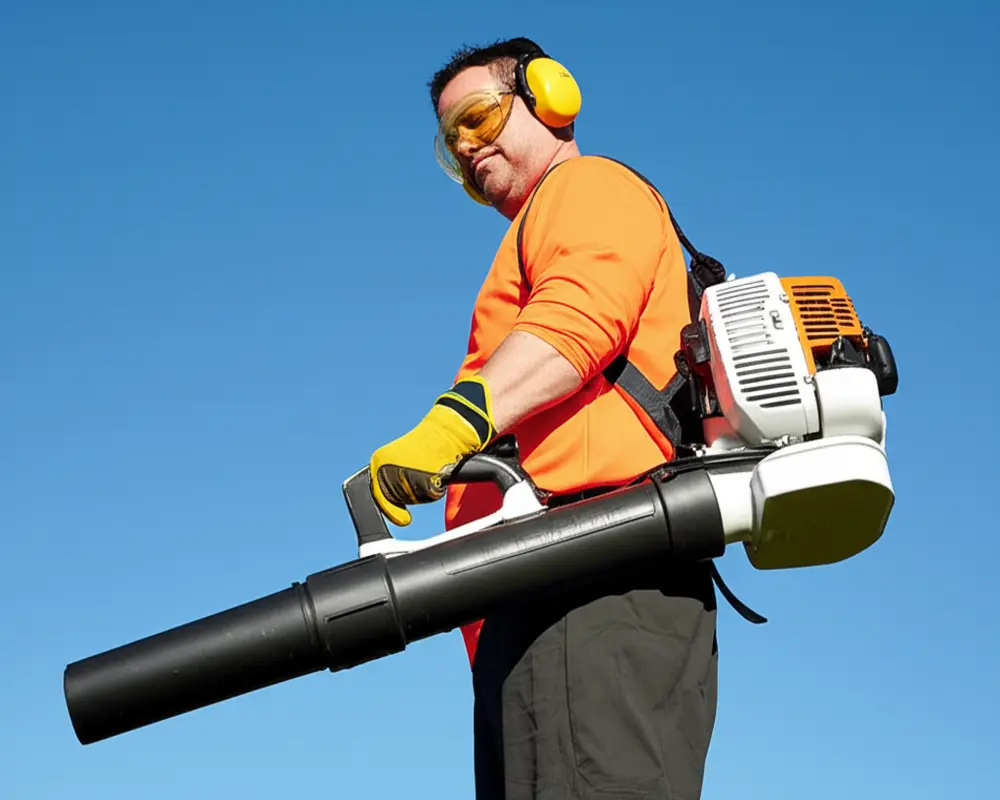
The Essential Safety Gear for Leaf Blower Use
The basic kit is simple: safety glasses, hearing protection, closed-toe footwear, long pants, and gloves. The right combination can change with the site, weather, debris, and type of blower.
1. Safety glasses or sealed goggles
Wear safety glasses with side shields when using a leaf blower. Choose eye protection marked ANSI Z87.1 or an equivalent rating. This mark shows that the product meets a recognized performance standard for eye protection.
Safety glasses help protect against:
- Small rocks and gravel
- Dry leaves and twigs
- Mulch and wood chips
- Dust and sand
- Insects and other flying debris
Use sealed goggles when you expect heavy dust or very fine particles. Regular glasses do not provide the same coverage. A face shield can add protection, but it should be worn over safety glasses, not instead of them.
Inspect the lenses before each use. Replace eye protection if it is cracked, badly scratched, loose, or difficult to see through.
2. Hearing protection
Wear hearing protection whenever the blower sounds loud, you use it for an extended time, or you work near buildings and hard surfaces. Common options include:
- Foam earplugs
- Reusable earplugs
- Earmuffs
- Earplugs and earmuffs together for very loud work
Earplugs must fit correctly to work well. Roll foam plugs, insert them fully, and hold them in place while they expand. Earmuffs must form a full seal around the ears.
Do not rely on music earbuds as hearing protection unless the product has a verified hearing-protection rating. Noise-canceling headphones may reduce perceived sound, but they do not automatically protect hearing.
The National Institute for Occupational Safety and Health explains that repeated exposure to loud noise can cause permanent hearing loss. A leaf blower may be especially loud close to the operator’s ear, so hearing protection is a wise default.
3. Sturdy, closed-toe shoes
Wear work boots or sturdy shoes with:
- Closed toes
- A firm sole
- Good traction
- A secure fit
Avoid sandals, slippers, bare feet, and smooth-soled shoes. A blower can move loose stones, and wet grass can become slippery. Good footwear also protects your feet from sharp sticks, hidden glass, thorns, and insects.
Use safety-toe boots when the job also involves moving heavy equipment, cutting wood, handling large stones, or working in a construction area. A leaf blower alone does not always require safety-toe footwear, but the work site may.
4. Long pants
Long pants help protect your legs from flying debris, sharp plant material, insects, and irritating plants. Choose durable pants that allow free movement.
Do not wear loose pant legs that can catch on equipment or drag across wet ground. Avoid shorts when clearing rough areas, gravel, brush, or construction debris.
Long pants are not cut-resistant protection. Do not use a leaf blower as a substitute for proper brush-cutting PPE near blades or other cutting tools.
5. Work gloves
Gloves can improve grip and protect your hands from:
- Rough blower handles
- Sharp sticks
- Thorns
- Cold weather
- Dirt and irritants
Choose gloves that fit well and let you operate the trigger and controls. Avoid oversized gloves that can catch on moving parts or reduce control.
Gloves do not make it safe to pick up unknown debris. Stop the blower before removing glass, wire, metal, or other dangerous objects.
6. A respirator for dust and fine particles
A leaf blower can make airborne dust that irritates the nose, throat, lungs, and eyes. Consider a properly fitted NIOSH-approved N95 filtering facepiece respirator when blowing:
- Dry soil
- Fine sand
- Heavy dust
- Moldy leaves
- Bird or rodent droppings
- Dried animal waste
- Other material that may carry harmful particles
A basic N95 helps filter particles. It does not protect against gases, vapors, low oxygen, or every biological hazard. A cloth face covering is not the same as a NIOSH-approved respirator.
People with asthma, chronic lung disease, or strong dust sensitivity may need extra care. Check with a health professional if breathing problems occur during yard work. Leave contaminated material alone and seek qualified guidance when the hazard is unknown or extensive.
7. A hard hat when overhead hazards exist
A hard hat is not normally required for routine leaf blowing in an open residential yard. It becomes useful when you work near:
- Low branches
- Construction areas
- Falling-object hazards
- Utility work
- Tree-trimming operations
- Crews working above you
Use a hard hat that fits the risk and work setting. Do not assume a bicycle helmet, baseball cap, or bump cap provides the same protection.
8. High-visibility clothing near traffic or equipment
Wear a high-visibility vest or shirt when working:
- Near roads
- In parking lots
- In public areas
- Around delivery vehicles
- Near landscaping crews
- In low light
Bright clothing helps others see you. It does not protect against vehicles, so stay alert and keep a safe distance from traffic.

Choose Leaf Blower PPE by the Job
The right safety gear depends on what the blower will disturb. A small, clean lawn needs less protection than a dusty roadside or a commercial work zone.
| Work setting | Minimum practical gear | Add when conditions require it |
|---|---|---|
| Clean residential lawn | Safety glasses, hearing protection, shoes, long pants | Gloves for rough debris |
| Gravel driveway | Safety glasses, hearing protection, sturdy shoes, long pants, gloves | Goggles for heavy dust; respirator for fine dust |
| Dry soil or mulch | Safety glasses, hearing protection, shoes, long pants | N95 respirator and sealed goggles |
| Moldy or heavily decomposed leaves | Eye protection, hearing protection, gloves, long pants | NIOSH-approved respirator; avoid disturbing large contaminated areas |
| Near traffic | Basic PPE | High-visibility vest or shirt |
| Construction or tree-work area | Full basic PPE | Hard hat, high-visibility clothing, work-zone-specific protection |
| Cold or wet weather | Basic PPE | Insulated gloves and slip-resistant waterproof boots |
This table is a planning guide, not a substitute for a site-specific hazard assessment. The main decision is simple: protect the body parts that the site can harm.
Do not blow glass, needles, chemical residue, animal carcasses, or unknown waste. A blower spreads material quickly and can turn a small hazard into a breathing or eye exposure.

How to Use a Leaf Blower Safely
PPE works best when you combine it with a safe operating routine.
Before starting
- Read the owner’s manual. Check the recommended fuel, battery, controls, attachments, and warnings.
- Inspect the blower. Look for loose parts, damaged guards, blocked air inlets, frayed cords, or battery damage.
- Clear the area. Remove stones, wire, glass, toys, and other objects that the air stream could launch.
- Keep people and pets away. The U.S. Consumer Product Safety Commission advises keeping bystanders away from the work area.
- Put on PPE before starting. Eye and hearing protection should be in place before the motor runs.
- Check the weather and ground. Wet or icy surfaces can increase slip risk. Strong wind can carry dust and debris toward people, roads, or buildings.
While operating
- Point the nozzle away from people, animals, windows, vehicles, and open doors.
- Keep the nozzle close to the ground, but do not force debris into the air.
- Use the lowest air setting that completes the task.
- Work with the wind when possible.
- Keep a firm stance and maintain control of the blower.
- Take breaks during long jobs.
- Stop the blower before clearing a blockage or changing an attachment.
- Never leave a running blower unattended.
- Keep children away, even when the blower is off but still hot or connected to a battery.
After use
Turn off the blower and disconnect the battery, unplug the cord, or stop the engine before inspection or cleaning. Let hot engine parts cool before storage.
Clean dust from the blower as the manual directs. Store fuel-powered models in a suitable, ventilated location away from ignition sources. Store batteries according to the manufacturer’s instructions, and do not use a battery that is swollen, cracked, leaking, or unusually hot.

Special Safety Issues by Leaf Blower Type
Gas-powered leaf blowers
Gas models create engine noise, hot surfaces, and exhaust. Use them outdoors and never run them inside a garage, shed, basement, vehicle, or other enclosed space. Carbon monoxide can build up without a strong warning smell.
Wear gloves when refueling if the fuel label or manual calls for them. Turn off the engine and let it cool before refueling. Keep gasoline away from sparks, flames, cigarettes, and hot parts.
Corded electric leaf blowers
Corded models add trip and electrical risks. Use an outdoor-rated extension cord that matches the manual’s requirements. Check the cord for cuts, exposed wires, crushed areas, and damaged plugs before use.
Keep the cord away from water and the blower nozzle. Use ground-fault circuit interrupter, or GFCI, protection where required or recommended. Do not use electrical equipment in wet conditions unless the equipment and setup are specifically rated for them.
Battery-powered leaf blowers
Battery models avoid fuel exhaust but still create noise, moving-air hazards, and flying debris. Inspect the battery and charger for damage. Use only compatible batteries and chargers approved by the manufacturer.
Stop using a battery if it becomes swollen, leaks, smokes, or produces unusual heat. Move away from the battery and contact the manufacturer or local emergency service if it catches fire. Do not place a damaged lithium-ion battery in household trash.

Common Leaf Blower Safety Mistakes
Wearing only a dust mask
A loose dust mask may not seal well and does not have the same performance standard as a NIOSH-approved respirator. Choose respiratory protection based on the actual hazard.
Using sunglasses as safety glasses
Sunglasses may reduce glare, but they may not protect against side impact or flying debris. Use marked safety eyewear instead.
Skipping hearing protection for a short job
Noise damage depends on sound level, distance, and exposure time. A short task may still be loud enough to harm hearing, especially in a confined or reflective area.
Blowing debris toward a road
Airborne debris can strike vehicles, cyclists, pedestrians, or nearby property. Change direction, lower the power, or remove the debris by another method.
Blowing moldy or animal-contaminated material
Disturbing contaminated material can increase airborne exposure. Wear suitable respiratory and eye protection, avoid creating a cloud, and seek professional help for large or unknown contamination.
Working in poor visibility
Do not use a leaf blower near traffic or machinery when others cannot see you. Add high-visibility clothing and use a safer work time if visibility is poor.
Clearing a jam with the motor still active
The impeller or fan can move without warning. Shut down the equipment and disconnect its power source before reaching near an opening.
Treating PPE as a substitute for distance
The safest debris is the debris that never reaches another person. Keep bystanders away, control the nozzle, and use barriers or a different tool when necessary.
Frequently Asked Questions
Do you need ear protection when using a leaf blower?
Yes, hearing protection is a prudent choice for leaf-blower use, especially during long jobs, at high power, or near walls and other hard surfaces. Use properly fitted earplugs or earmuffs. For very loud work, using both may provide additional protection.
Should you wear a mask with a leaf blower?
Use a properly fitted NIOSH-approved respirator when the blower creates fine dust or disturbs mold, dried waste, or other potentially harmful particles. A mask is not always needed for clean, damp leaves, but eye protection remains important.
Are safety glasses required for a leaf blower?
Safety glasses are strongly recommended because the air stream can launch stones, twigs, and other debris. Use ANSI Z87.1-rated eye protection when possible. Use sealed goggles for heavy dust.
Can you use a leaf blower in the rain?
Do not use a gas or electric leaf blower in conditions that the owner’s manual prohibits. Water can increase electrical, slip, and equipment risks. Corded electric models require special care around wet ground, outlets, and extension cords.
What should you not blow with a leaf blower?
Do not blow glass, sharp metal, chemical residue, needles, animal waste, or unknown debris. Avoid blowing dust toward people, animals, roads, open windows, or air intakes. Pick up hazardous material safely or contact a qualified service.
Do you need a hard hat for leaf blowing?
Most routine residential leaf blowing does not require a hard hat. Use one when there is a falling-object hazard, such as tree work, construction, or overhead activity. Follow the safety rules for the work site.
Final Checklist Before You Start
Use this quick check before every leaf-blower job:
- Safety glasses or sealed goggles are on.
- Hearing protection fits correctly.
- Shoes are closed-toe and slip-resistant.
- Long pants and suitable gloves are worn.
- A respirator is available for dust or contamination.
- People, pets, windows, and vehicles are clear.
- The blower, battery, cord, or fuel system is in good condition.
- The weather and ground are safe.
- The nozzle will not aim debris toward people or traffic.
- The power source will be disconnected before clearing a blockage.
For most American homeowners, the best basic setup is safety glasses, hearing protection, sturdy shoes, long pants, and gloves. Add respiratory protection for airborne dust and high-visibility or head protection when the work site creates those hazards. Good PPE is the last line of defense; distance, control, and a clear work area should come first.