The best educational toys for 2 year olds build language, fine motor skills, creativity, and early thinking through play.
Many two-year-olds lose interest fast when a toy feels too hard or does only one thing. Parents also want playthings that support real skills without turning home into a classroom. I reviewed these five options for hands-on value, age fit, ease of use, travel appeal, and play variety. These picks cover busy boards, early language, drawing, counting, letters, books, and simple problem-solving. Adult supervision still matters, especially when a toy includes magnets, small parts, batteries, or pieces that may enter a child’s mouth.
See the differences between my top picks at a glance.
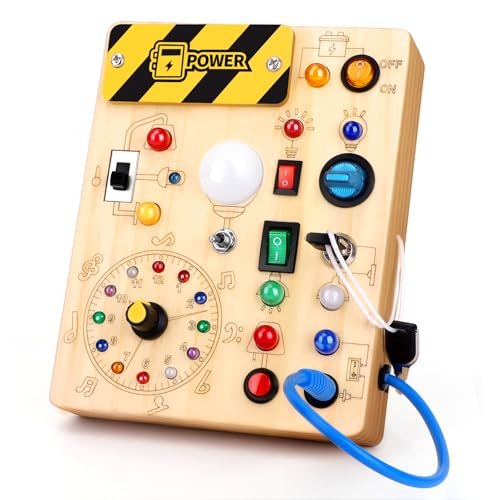
Grarain Busy Board for Toddlers

The Grarain Busy Board gives a two-year-old many small tasks in one compact toy. Children can explore common fasteners and hands-on features by touching, turning, pulling, and opening. This type of play supports finger strength and hand control. It also gives young children a safe way to copy simple daily actions.
I like the travel-friendly design for short trips, waiting rooms, and calm play at home. A child can work on one feature at a time instead of facing a large set of loose pieces. The board can also support quiet one-on-one play when an adult names each action. It suits toddlers who enjoy buttons, zippers, buckles, and other things they see adults use.
Pros:
- Offers several hands-on activities in one board
- Supports fine motor practice and finger control
- Works well for short, focused play sessions
- Easy to take on trips or use in a quiet corner
- Gives parents many chances to add simple words
- Does not need an app or a screen
Cons:
- Some features may need adult help at first
- Small attached parts still call for close supervision
- A child who prefers active movement may lose interest
What Amazon Buyers Are Saying
Amazon shoppers commonly look for busy boards that keep small hands occupied during travel and quiet moments. Product-page feedback for this kind of toy often focuses on the range of activities and the compact format. Buyers also tend to value a board that feels simple for a toddler to handle. As with any busy board, comments may vary by child, and parents should inspect seams, fasteners, and attached pieces before use.
My Recommendation
I recommend the Grarain Busy Board for a toddler who enjoys practical, touch-based play. It is not the best choice for teaching a full lesson by itself, but it works very well as a fine motor and sensory activity. I would buy it for travel, quiet time, or a child who likes to explore how things work.
| Category | Rating |
|---|---|
| Build and usability | 4.2/5 |
| Fine motor value | 4.6/5 |
| Travel appeal | 4.5/5 |
| Learning variety | 4.3/5 |
| Overall Rating | 4.4/5 |
Electronic Alphabet Wall Chart

This electronic alphabet wall chart turns early letter practice into an active game. A child can press areas on the poster and hear sounds, letters, numbers, or music, depending on the selected function. That press-and-listen action may help connect a spoken sound with a printed symbol. It also gives parents a simple way to practice a few letters at a time.
The wall format keeps the activity visible and easy to reach. I would place it at a child-friendly height in a play space, then use it for brief sessions rather than leaving sound on all day. The chart can support early vocabulary when an adult repeats the sound and adds a word. It may suit toddlers who enjoy music, buttons, and quick feedback.
Pros:
- Combines letters, numbers, music, and spoken feedback
- Encourages active pressing instead of passive watching
- Can support early letter and number awareness
- Uses wall space rather than taking up floor space
- Offers an easy parent-and-child learning activity
- May hold attention better than a plain poster
Cons:
- Electronic sound may become noisy in shared spaces
- It needs batteries or another power source as specified by the maker
- Sound-based learning works best with adult talk and repetition
What Amazon Buyers Are Saying
Buyers who choose electronic learning charts often praise the interactive format and the way children can use the chart with little setup. Common product-page concerns for this category include volume, battery use, and whether a young child needs help selecting modes. Parents may also differ on how long their child stays engaged. I suggest reading current Amazon reviews for the latest details on sound, mounting, and durability before ordering.
My Recommendation
This wall chart is a good choice when a toddler enjoys sound and repeated button play. It can make ABC and number exposure more fun, but it should not replace talking, books, songs, or real-world play. I see it as a useful supplement for a family that wants a visible, interactive learning station.
| Category | Rating |
|---|---|
| Interactive design | 4.4/5 |
| Early language support | 4.2/5 |
| Ease of use | 4.3/5 |
| Play flexibility | 4.0/5 |
| Overall Rating | 4.2/5 |
Kikidex Magnetic Drawing Board
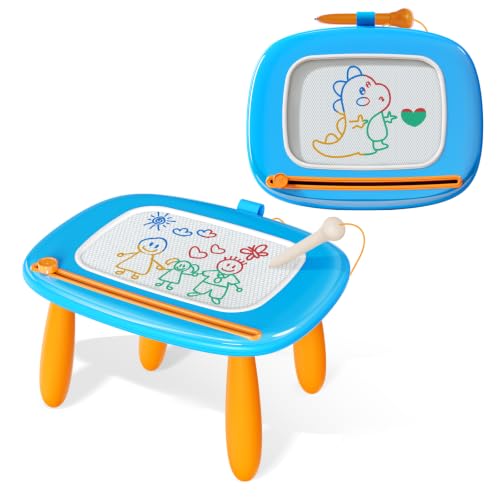
The Kikidex Magnetic Drawing Board gives toddlers a way to draw without crayons, paint, or loose paper. A child can make marks with the attached stylus and clear the surface for another picture. Repeated drawing supports hand movement, early pencil control, and creative choice. At age two, the goal is not perfect letters; it is learning how marks and movement work together.
I especially like this format for homes that need low-mess art. It can also travel well for car rides, restaurants, and visits, provided an adult keeps track of the stylus. Parents can talk about lines, circles, colors, and shapes while a child draws. The erase-and-start-again design removes pressure and makes experimentation easy.
Pros:
- Creates a mess-free space for early drawing
- Supports pre-writing movements and hand control
- Lets children erase and try again many times
- Works for free art and simple guided games
- Easy to use without paint, paper, or water
- Useful at home and during many types of travel
Cons:
- The attached stylus can still be misplaced or damaged
- Magnetic drawing boards do not replace real art tools forever
- Some toddlers may need help using the erase function
What Amazon Buyers Are Saying
Amazon buyers commonly choose magnetic drawing boards because they want easy cleanup and repeat play. Product feedback in this category often highlights how quickly children learn to draw and erase. Some shoppers also mention the value of the attached pen for keeping the set together. Before buying, I would check current reviews for comments on screen response, stylus storage, and long-term use.
My Recommendation
The Kikidex board is one of my strongest picks for a creative two-year-old. It offers clear value because children can use it again and again without using art supplies. I recommend it for parents who want to encourage drawing and pre-writing skills while keeping mess and setup time low.
| Category | Rating |
|---|---|
| Creative play | 4.7/5 |
| Pre-writing value | 4.5/5 |
| Mess control | 4.8/5 |
| Portability | 4.4/5 |
| Overall Rating | 4.6/5 |
Magnetic Wooden Fishing Game
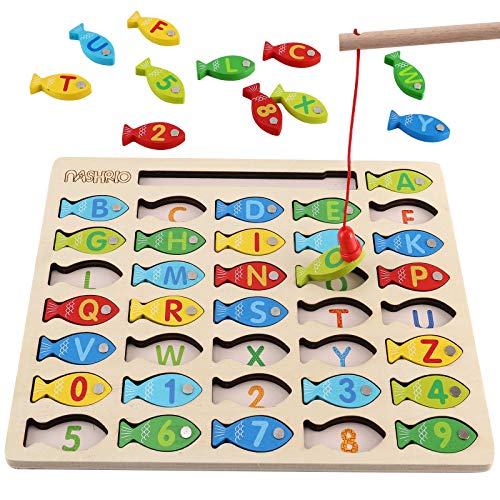
This magnetic wooden fishing game adds movement to early learning. Children use a small magnetic rod to catch fish, then explore letters, numbers, counting, or matching. The action asks them to aim, hold, lift, and place each piece. Those steps can support hand-eye coordination and early counting in a playful way.
This toy works best when an adult joins the game. I would start with a simple task, such as catching two fish or finding one letter from the child’s name. Later, parents can sort pieces, count them, or ask children to match a number with a group. The fishing theme gives the lesson a clear story, which can help a toddler stay involved.
Pros:
- Combines physical play with early academic concepts
- Supports hand-eye coordination and controlled movement
- Creates many simple counting and matching games
- Encourages parent-child interaction
- Wooden pieces offer a classic, screen-free play style
- Can grow with a child’s skill level through new games
Cons:
- Small fish and magnets require close adult supervision
- The set may be better for guided play than solo play
- Children who do not enjoy turn-taking may need support
What Amazon Buyers Are Saying
Shoppers often like magnetic fishing toys because they combine a simple game with letters and numbers. Product-page feedback for this type of set commonly points to the fun fishing action and the chance to play with a parent. The main points to check in current reviews are piece size, magnet strength, finish, and storage. Parents should follow the age and safety details shown on the current product page.
My Recommendation
I recommend this game for families that enjoy shared play. It offers more learning options than a toy used in only one way, but a two-year-old may need an adult to set up the activity. It is a strong pick for counting games, early letter exposure, and hand control when used with care.
| Category | Rating |
|---|---|
| Hands-on learning | 4.6/5 |
| Counting and matching | 4.5/5 |
| Motor skill practice | 4.5/5 |
| Independent play | 3.9/5 |
| Overall Rating | 4.4/5 |
Doctor Jupiter “I AM 2” Learning Set

The Doctor Jupiter “I AM 2” set focuses on books and simple activities for children around age two. Board books suit this stage because young children can turn pages, point at pictures, and hear the same words many times. Repetition helps build language and gives a toddler a familiar routine. The activity format can also make short learning moments feel like play.
I see this set as a strong choice for families who want less noise and more shared reading. An adult can pause, name objects, ask a simple question, or let the child finish a known phrase. The activities may also help parents talk about feelings, daily life, shapes, colors, or other early ideas. The best results will come from regular adult interaction, not from leaving the books alone with the child.
Pros:
- Designed around the early two-year-old stage
- Supports shared reading and everyday language
- Board-book format suits small hands
- Encourages repetition, pointing, and simple questions
- Offers a quieter option than electronic toys
- Can become part of a bedtime or morning routine
Cons:
- Adults need to take part for the richest learning
- Books may show wear if a toddler bends or chews pages
- Children who prefer active toys may need another play option too
What Amazon Buyers Are Saying
Parents shopping for learning sets often value age-focused content, sturdy pages, and activities that fit a daily routine. Product-page feedback for book-and-activity bundles commonly centers on child interest, print size, and how useful the set feels for parent-led play. Since tastes differ, I suggest checking the current listing and buyer images for the exact contents and page style. That step helps confirm whether the themes fit your child.
My Recommendation
This set is my top choice for language-rich play and shared time. It will not offer the same tactile action as a busy board or fishing game, but it supports one of the most important skills at age two: communication. I recommend it for parents who want a simple learning routine that can fit into each day.
| Category | Rating |
|---|---|
| Language support | 4.8/5 |
| Age fit | 4.7/5 |
| Shared reading value | 4.8/5 |
| Independent play | 3.8/5 |
| Overall Rating | 4.6/5 |
How to Choose the Best Educational Toys for 2 Year Olds
Choosing the best educational toys for 2 year olds takes more than picking a toy with the word “learning” on the box. At this age, play should feel simple, active, and fun. The right toy matches a child’s current skills but leaves room to grow. I also look at safety, adult involvement, storage, and how often a child can use the toy in a new way.
1. Match the Toy to Real Two-Year-Old Skills
A two-year-old is still building basic control. Look for toys that invite grasping, turning, stacking, drawing, pointing, matching, or pretending. These actions support fine motor skills, hand-eye coordination, and early problem-solving. A toy does not need to teach formal reading or math to have strong educational value.
Language matters just as much. Books, picture toys, songs, and pretend-play sets give adults chances to name items and ask easy questions. Choose a level that feels achievable. If a child cannot use the toy without constant frustration, the learning value may drop. If the toy feels too easy, add a new game instead of buying a more complex set right away.
2. Check Safety, Materials, and Supervision Needs
Read the current age guidance and safety notes before you buy. Magnets, small pieces, cords, batteries, and detachable parts need special care. Young children may still put objects in their mouths, so adult supervision remains important. Inspect a new toy for cracks, loose parts, rough edges, and damaged packaging.
Wooden toys should have a smooth finish. Electronic toys should have a secure battery compartment. Books should use pages that match your child’s handling style. The safest choice is not always the toy with the most features. It is the toy you can use in a suitable space with the right level of adult help.
3. Compare Play Value, Cleanup, and Long-Term Use
Think about how the toy will fit your real home. A compact busy board may be better than a large activity table in a small room. A magnetic drawing board may offer more repeat use than a craft kit that needs setup each time. A book set may become part of a daily routine, while an electronic chart may work best in short sessions.
I also favor open-ended toys. A child should be able to use them in more than one way as skills grow. You can turn a fishing game into a counting task, a color game, or a story. You can use a drawing board for free marks, shape practice, or pretend writing. This kind of flexibility improves value and helps prevent quick boredom.
Finally, compare the complete cost. Check whether the toy needs batteries, replacement parts, extra supplies, or a special storage space. A lower-priced item may not save money if it breaks quickly or holds attention for only a few minutes. The best educational toys for 2 year olds are the ones your child can use often and safely.
Final Verdict: Which Should You Buy?
For most families, the Doctor Jupiter “I AM 2” set is my top pick for language and shared learning. Choose the Kikidex board for creative play, or the Grarain board for fine motor practice and travel.
The best educational toys for 2 year olds should invite talk, movement, and repeat play. Pick the option that fits your child’s interests, space, and daily routine.
FAQs Of best educational toys for 2 year olds
What are the best educational toys for 2 year olds?
The best choices support language, fine motor control, creativity, counting, or simple problem-solving. Books, drawing boards, busy boards, and guided matching games all work well.
Are electronic learning toys good for two-year-olds?
They can help with sound and letter exposure when used in short sessions. Adult talk, books, songs, and hands-on play should remain part of the routine.
Are magnetic toys safe for a two-year-old?
Magnets need close supervision because loose or swallowed magnets can cause serious harm. Follow the product age guide and inspect the toy for loose parts before every use.
How long should a two-year-old play with an educational toy?
There is no fixed time. Short, happy sessions are often best. Stop when the child loses interest, and offer the toy again later.
How can parents make learning toys more useful?
Join the play, name objects, ask simple questions, and show one new action at a time. Repeating the same game helps a child learn through practice.