Babies typically begin interacting with toys between 3 and 6 months of age as their hand-eye coordination and motor skills rapidly develop. While newborn play is mostly observational, you will soon see your little one reaching, grasping, and exploring objects with growing curiosity. Focus on safe, sensory-rich play to support their natural learning journey.
Watching your baby discover the world is one of the most magical parts of parenthood. In those first few weeks, your little one seems content just to gaze at your face or drift off to sleep. But as the months go by, you might find yourself asking: when do babies start interacting with toys? It is a common question, and the answer is as exciting as it is dynamic. As we move through 2026, we have a better understanding than ever of how these early interactions build the foundation for future cognitive and physical growth.
Interaction with toys is not just about fun; it is a serious job for a developing brain. Whether it is a soft rattle, a crinkly cloth book, or a wooden block, every object helps your baby learn about cause and effect, texture, and gravity. By understanding the timeline of these milestones, you can better support your baby’s curiosity and provide the right tools for their specific developmental phase. Let’s dive into how this process unfolds and what you can expect as your tiny explorer grows.
Key Takeaways
- Early Engagement: Babies move from passive observation to active manipulation of toys between the 3rd and 6th month.
- Safety First: Always choose toys that are age-appropriate, non-toxic, and free of small parts that pose choking hazards.
- Sensory Milestones: Interaction starts with sensory exploration—touching, mouthing, and listening to different textures and sounds.
- Developmental Stages: As motor skills improve, play evolves from simple grasping to complex problem-solving like stacking or sorting.
- Parental Role: You are your baby’s first playmate; modeling how toys work helps them learn through imitation and connection.
The Newborn Phase: Observation and Discovery
During the first three months, your baby’s world is focused on your voice, your face, and your touch. If you have been wondering when do babies start interacting with toys, you might notice that newborn “play” is primarily sensory. They are not yet ready to manipulate objects intentionally, but they are absolutely soaking up information through observation.
What Play Looks Like at 0-3 Months
In these early weeks, babies are visually processing the world. They prefer high-contrast patterns and faces. If you dangle a mobile over their crib, they might track it with their eyes. This is the very first stage of toy interaction. They are learning to focus and follow moving objects. While they cannot grasp items yet, they are building the neural pathways required for later play. You might notice them batting at a hanging toy with their hands, which is a reflexive movement that eventually turns into a purposeful swipe.
Supporting Early Sensory Development
At this stage, your best “toy” is your own interaction. Talk to them, sing songs, and offer high-contrast black-and-white cards. Place a soft, crinkle-sound toy near them so they can hear the noise when they kick their legs. This introduces the concept of cause and effect early on. By simply being present, you are setting the stage for more complex engagement in the coming months.
3 to 6 Months: The Grasping and Reaching Milestone
This is often the answer most parents are looking for when they ask when do babies start interacting with toys. Around the three-to-four-month mark, babies begin to gain control over their arms and hands. Suddenly, the world becomes something they can actually touch and hold. This is a massive leap in their development.
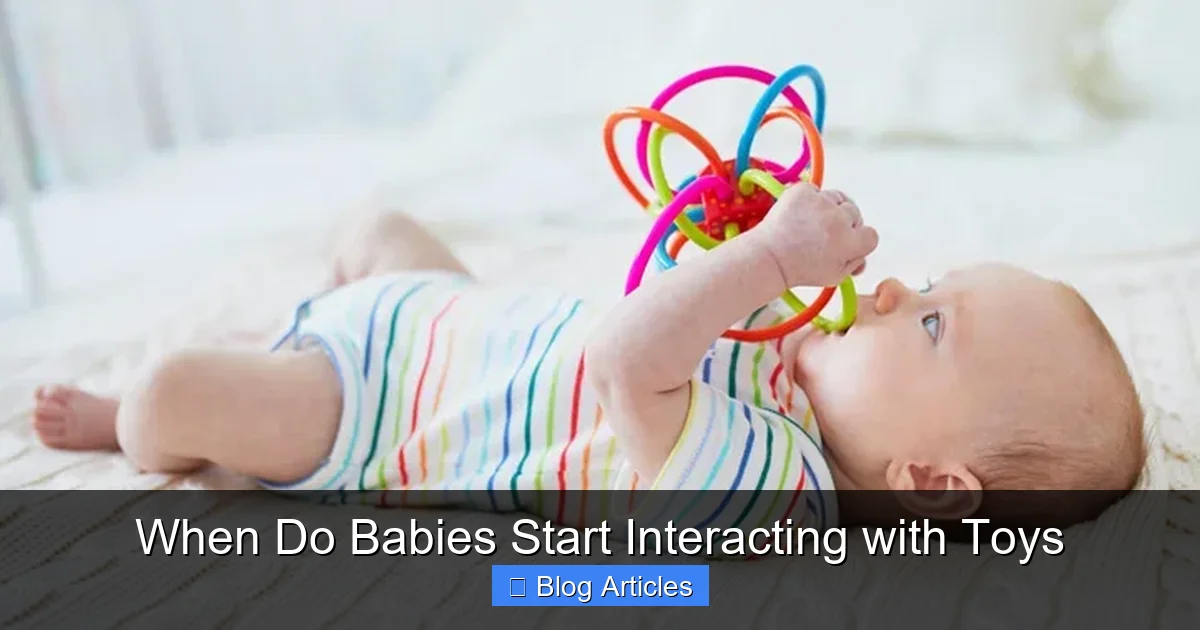
Visual guide about When Do Babies Start Interacting with Toys
Image source: funtoykingdom.com
Grasping Reflex vs. Intentional Play
Early on, the grasping reflex is automatic. If you put a finger in their palm, they will curl their fingers around it. By month four or five, this becomes a conscious choice. They see a toy, they aim, they reach, and they grab. This is a huge milestone for hand-eye coordination. You will notice that their favorite thing to “do” with a toy at this age is to bring it straight to their mouth. Don’t worry—this is perfectly normal! Their mouths are sensitive tools that help them learn about textures.
Best Toys for This Age
Look for lightweight rattles, soft plush toys, and teething rings that are easy to grip. Toys with various textures—some smooth, some bumpy, some soft—are perfect for tactile exploration. Mirrors are also a hit at this stage. Babies are fascinated by reflections, and interacting with their own image helps them begin to develop a sense of self.
6 to 9 Months: Refining Coordination and Intent
Once your baby reaches the half-year mark, you will notice their play becomes much more deliberate. When do babies start interacting with toys in a way that looks like “problem-solving”? It starts right around this time. They are not just grabbing objects anymore; they are shaking them, passing them from hand to hand, and exploring how they feel against different surfaces.
Learning Cause and Effect
At six to nine months, babies realize that their actions produce results. If they shake a rattle, it makes a sound. If they drop a toy, it falls to the floor. They will drop items repeatedly just to watch you pick them up, which is their way of investigating gravity and your reactions. This repetitive behavior is a crucial part of cognitive development.
Building Motor Skills through Interaction
Encourage this growth by introducing “push-button” toys that make music or light up. These toys require a bit more precision than a rattle, helping to refine their fine motor skills. As they learn to sit up, you can place toys just out of reach, encouraging them to scoot or lean to retrieve them. This combination of motor movement and play is essential for their physical health.
9 to 12 Months: The Age of Exploration and Purpose
As your baby approaches their first birthday, their interaction with toys becomes even more sophisticated. You might start to see them use toys for their intended purpose, such as pushing a small car along the floor or putting blocks into a container. When do babies start interacting with toys as tools? Usually, towards the end of the first year.
Developing Dexterity
The “pincer grasp”—using the thumb and index finger to pick up small objects—is a major focus during this time. Toys that allow them to practice this, such as shape sorters with large holes or stacking rings, are incredibly beneficial. They are now able to manipulate items with much more grace than before.
Social Play and Imitation
By 12 months, your baby is a master imitator. If they see you talking on a play phone, they might try to hold it to their ear. If you build a tower of blocks, they will likely try to mimic your actions. This is the beginning of social play. You are no longer just a spectator; you are a partner in their learning. Engage with them by playing side-by-side and showing them how different objects work.
Creating a Safe and Engaging Play Environment
Regardless of the age, safety is always the priority. As you investigate when do babies start interacting with toys, remember that their curiosity often outweighs their caution. Everything will eventually make its way to the mouth, so keeping toys clean and safe is a daily requirement for parents.
Safety Tips for 2026 Parents
Always inspect toys for loose buttons, strings, or small parts that could come off. In 2026, we have a wealth of eco-friendly, non-toxic options available. Look for items made from natural rubber, organic cotton, or sustainably sourced wood. Avoid toys with long cords that could pose a strangling hazard, and always supervise play sessions, especially when your baby is learning to crawl or walk and could potentially trip over or fall onto their toys.
Rotation: Keeping Play Fresh
You do not need a mountain of toys to keep your baby engaged. In fact, having too many toys out at once can lead to sensory overload. Try a toy rotation system. Keep a few toys available in a basket, and every week or so, switch them out for different ones stored away. This keeps the toys feeling “new” and exciting, encouraging your baby to interact with them in fresh ways every time.
Conclusion: Every Baby Travels at Their Own Pace
If you have been obsessively researching when do babies start interacting with toys, take a deep breath and look at your little one. While the milestones we have discussed provide a general map of development, every baby travels at their own speed. Some might be grabbing for toys at three months, while others might take a little longer to show interest. Both paths are perfectly healthy.
The most important thing to remember is that your baby learns best through love and interaction. Toys are simply the tools they use to explore the universe you have introduced them to. By being present, offering a safe space to play, and celebrating every small milestone—like the first time they successfully grasp a rattle or stack two blocks—you are providing everything they need to grow into a curious, capable, and happy toddler. Keep playing, keep laughing, and enjoy these beautiful moments as they unfold.
Frequently Asked Questions
What is the earliest sign that a baby is interacting with toys?
The earliest sign is often visual tracking, where a baby follows a moving toy with their eyes, usually starting around 2 to 3 months. This is followed by reflexive batting at hanging objects before they develop the coordination to grasp items purposefully.
Is it normal if my 4-month-old is not interested in toys?
Yes, it is common for some babies to focus more on people than objects in the early months. Every child develops at their own pace, and interest in inanimate objects usually peaks once their hand-eye coordination significantly improves after the 4-month mark.
How can I encourage my baby to play independently?
Start by sitting nearby while they explore, offering occasional encouragement without taking over the play. Providing a safe, dedicated space with a few age-appropriate options allows them to practice independent discovery at their own comfort level.
Are high-tech toys better for my baby’s development?
Not necessarily; in fact, simple, open-ended toys like blocks, soft balls, and texture books often encourage more cognitive growth. High-tech toys can sometimes be overstimulating, whereas simple items require the baby to use their own imagination and motor skills to make things happen.
When should I stop worrying about babies putting toys in their mouths?
Mouthing is a natural developmental stage for babies as they explore textures and relieve teething discomfort, typically lasting well into the second year. As long as the toys are clean, made of non-toxic materials, and free of choking hazards, it is a healthy part of their learning process.
How many toys should a baby have at one time?
Less is often more; providing 3 to 5 toys at a time is usually plenty for a baby to explore effectively. A toy rotation system helps prevent boredom and sensory overload, keeping play exciting without overwhelming your little one with too many choices.