

Yes. A leaf blower is a power tool, more specifically an outdoor power tool used to move leaves, grass clippings, dust, and light debris with a high-speed stream of air.
In the United States, leaf blowers are also grouped under terms such as outdoor power equipment, lawn and garden equipment, and yard tools. The exact label may vary by store, manufacturer, insurance policy, workplace rule, or local regulation.
A leaf blower uses an energy source—electricity or gasoline—to power a motor. The motor turns a fan or impeller, which pushes air through a nozzle. That powered mechanical action is what makes a leaf blower a tool rather than a simple hand device.

Why a Leaf Blower Counts as a Power Tool
A power tool uses an external energy source to perform work. That source may be electricity, a battery, gasoline, compressed air, or another form of stored energy.
A leaf blower meets this definition because it:
- Uses a motor to create airflow
- Requires electricity, a battery, or fuel
- Performs work faster than a person using a hand rake or broom
- Contains moving mechanical parts
- Can create hazards such as noise, flying debris, burns, and electrical shock
The term power tool is broad. It includes drills, circular saws, sanders, pressure washers, hedge trimmers, string trimmers, and many other motor-driven tools. A leaf blower fits within that broad group, even though it is designed mainly for outdoor cleaning rather than cutting, drilling, or shaping material.
Is a leaf blower a lawn mower?
A leaf blower is not a lawn mower. Both are types of outdoor power equipment, but they perform different jobs.
| Tool | Main job | Typical power source |
|---|---|---|
| Leaf blower | Moves leaves and loose debris | Battery, corded electricity, or gasoline |
| Lawn mower | Cuts grass | Battery, corded electricity, or gasoline |
| String trimmer | Cuts grass and weeds near edges | Battery, corded electricity, or gasoline |
| Hedge trimmer | Cuts shrubs and hedges | Battery, corded electricity, or gasoline |
| Rake | Gathers leaves by hand | Human effort |
So, a leaf blower is a power tool and outdoor power equipment, but it is not a cutting tool.
Types of Leaf Blowers
The power source changes how a leaf blower works, what risks it creates, and where you can use it.
Battery-powered leaf blowers
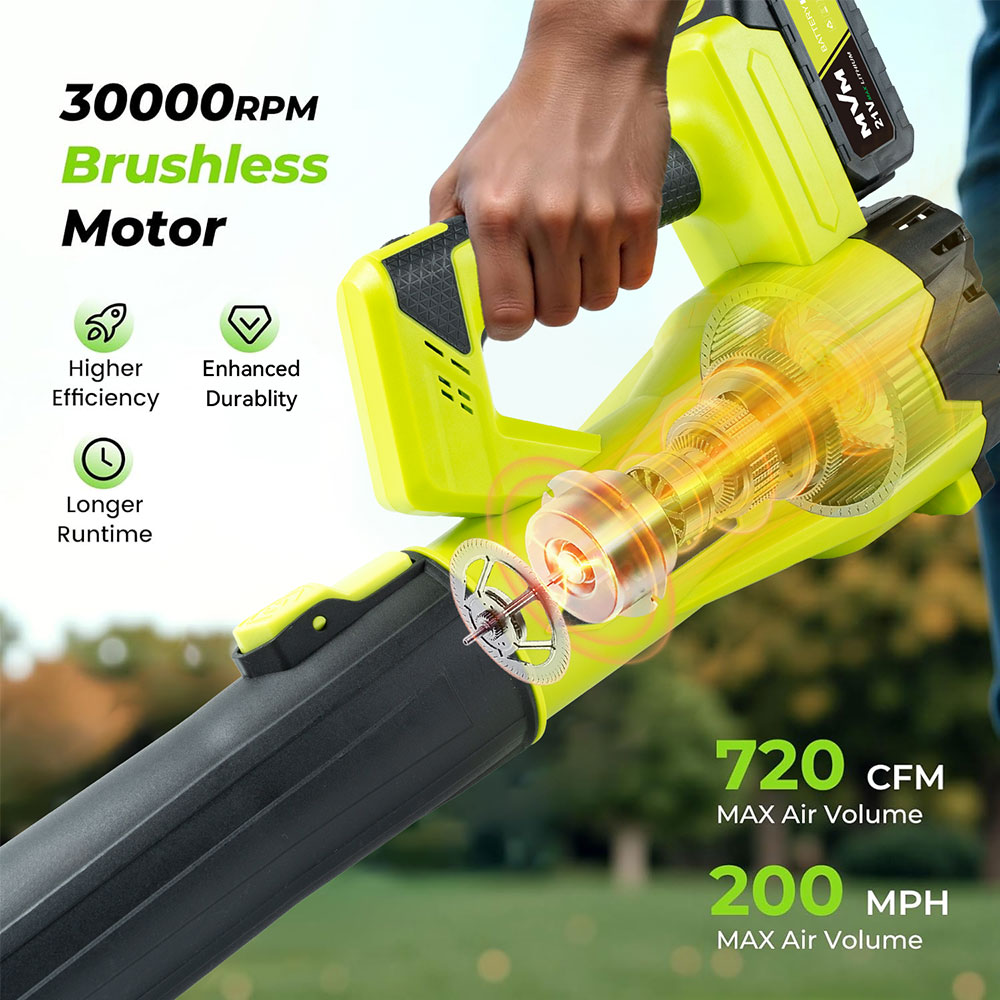
Battery leaf blowers use a rechargeable lithium-ion battery. They do not produce exhaust fumes during use and are often easier to start than gas models.
Their main limits are:
- Limited runtime
- Battery charging time
- Reduced power on some models
- Added battery replacement cost
- Performance changes in very cold weather
A battery leaf blower is still a power tool even when its motor runs from stored battery energy rather than a wall outlet.
Corded electric leaf blowers
Corded models draw power from a household electrical outlet. They are usually light and can run as long as electricity is available.
The power cord creates practical and safety limits. You must use an outdoor-rated extension cord when the manufacturer permits one. Keep the cord away from water, heat, sharp edges, vehicles, and the blower’s air intake.
A corded blower is best suited to smaller yards, driveways, patios, and areas close to a safe outdoor outlet.
Gas-powered leaf blowers
Gas models use a combustion engine. They often provide long operating times and strong airflow, but they also create more concerns about:
- Fuel storage
- Engine maintenance
- Exhaust emissions
- Hot engine parts
- Fuel spills
- Higher noise levels
- Harder starting
Never run a gasoline leaf blower inside a garage, shed, basement, vehicle, or other enclosed space. Carbon monoxide can build up quickly in enclosed areas.
Handheld and backpack models
A handheld leaf blower is carried in one hand. It is usually suitable for residential yards and short cleanup jobs.
A backpack leaf blower rests on the user’s back. It can be more comfortable for extended work, but it may be larger, louder, and more powerful. Backpack models are common in commercial landscaping.
The carrying style does not change the basic classification. Both are powered outdoor tools.

Is a Leaf Blower Considered a Power Tool for Work and Storage?
Usually, yes. In workplace, home, and retail settings, a leaf blower is commonly handled like other motorized power equipment.
That may affect:
- Tool storage
- Employee training
- Personal protective equipment
- Noise control
- Fuel handling
- Battery charging
- Maintenance procedures
- Insurance or rental agreements
However, there is no single American law that gives every product the same definition of “power tool” for every purpose. A workplace rule, insurance policy, warranty, tax form, or local code may use its own wording.
For example, a retailer may place leaf blowers in an “outdoor power equipment” department instead of an indoor “power tools” department. That location does not mean the blower stops being a power tool. It reflects how the retailer organizes products.
If a contract or rule matters, read its definition. When needed, ask the employer, insurer, landlord, or government office that issued it.

Safety Rules for Using a Leaf Blower
A leaf blower can throw stones, sticks, dust, and other debris at high speed. Treat it as powered machinery, not as a harmless household appliance.
The Consumer Product Safety Commission warns about hazards linked with outdoor power equipment, including flying objects and unsafe operation. The Occupational Safety and Health Administration also provides workplace guidance on hazardous noise exposure.
Wear basic protective equipment
At a minimum, use:
- Safety glasses or a face shield
- Hearing protection
- Closed-toe shoes with good traction
- Long pants when debris may strike your legs
- A dust mask or respirator when the manufacturer or site conditions call for one
Hearing protection matters because powered blowers can produce sound levels that may harm hearing over time. The actual noise depends on the model, distance, operating speed, surroundings, and length of use.
Inspect the area first
Before starting, remove or move:
- Small rocks
- Glass
- Wire
- Metal pieces
- Toys
- Loose branches
- Pet bowls
- Lightweight decorations
Do not point the nozzle at people, pets, vehicles, windows, or nearby workers. Keep children and bystanders away from the work area.
Use the correct starting and operating method
Read the owner’s manual before use. Then:
- Check the housing, nozzle, cord, battery, fuel system, and controls.
- Confirm that guards and covers are in place.
- Start the blower outdoors and on stable ground.
- Hold the nozzle low and direct debris away from people and property.
- Use the lowest airflow that completes the job.
- Stop the motor before clearing a blockage or inspecting the fan area.
- Remove the battery, unplug the cord, or shut off the engine before maintenance.
Never place fingers near the intake or impeller. A stopped motor can restart if a battery remains installed or if a control is activated.
Avoid unsafe conditions
Do not use an electric leaf blower in rain or standing water unless the manual specifically permits it. Do not use a gas blower near open flames, hot surfaces, or spilled fuel.
Avoid blowing dust into the air when it could affect neighbors, workers, people with breathing problems, or nearby traffic. A rake or broom may be safer for dusty material.

Leaf Blower Rules in the United States
Leaf blower rules depend on the state, county, city, homeowner association, and property type. Some communities limit operating hours or noise. Others restrict or ban certain gas-powered models.
California has adopted rules affecting the sale of new small off-road engines and equipment. The California Air Resources Board provides current information about those requirements. Local rules can change, so check the government website for your area before buying or using a blower.
Noise rules may consider:
- Decibel limits
- Time of day
- Distance from homes
- Residential or commercial property
- Gas versus electric equipment
- Temporary construction or landscaping work
Do not assume that a battery model is legal everywhere or that a gas model is banned everywhere. Verify the rule that applies to your address and the date of use.

How to Choose the Right Leaf Blower
The best type depends on the size of the area, the debris, nearby noise limits, and how long you need to work.
| Need | Often suitable | Main trade-off |
|---|---|---|
| Small patio or driveway | Corded electric or compact battery | Limited range or runtime |
| Small to medium yard | Battery-powered | Battery cost and charging time |
| Large property | High-capacity battery or gas | More weight, noise, or maintenance |
| Frequent commercial use | Backpack model | Greater size and operating noise |
| Areas with strict emissions rules | Battery or approved electric model | Charging and runtime planning |
| Occasional light cleanup | Rake or small blower | A hand tool may be quieter |
Check airflow and air speed together
Manufacturers often list cubic feet per minute (CFM) and miles per hour (MPH).
- CFM describes how much air the blower moves.
- MPH describes how fast the air leaves the nozzle.
High air speed can help loosen wet leaves. High airflow can help move larger piles. Neither number alone tells you exactly how well the blower will work in your yard because nozzle design, battery charge, leaf moisture, and surface type also matter.
A practical buyer should consider:
- Runtime at the speed normally used
- Battery and charger compatibility
- Weight and balance
- Noise rating, when provided
- Warranty terms
- Availability of replacement batteries or parts
- Local emissions and noise rules
- Manufacturer instructions for extension cords or fuel
Do not compare a gas blower’s maximum figures with a battery blower’s figures without checking how each manufacturer measured them. Test conditions and specifications can differ.

Common Mistakes to Avoid
Several mistakes can reduce performance or create avoidable risk.
Using maximum power all the time
Full power uses more battery energy and can scatter leaves instead of gathering them. Start with a lower setting and raise it only when needed.
Blowing leaves into the street
Leaves can create hazards for vehicles, bicycles, and pedestrians. They may also enter storm drains. Direct debris to a safe collection area and follow local yard-waste rules.
Using a blower on gravel
A strong air stream can launch stones. Use extra care on gravel driveways and paths. A rake may be safer for loose rock.
Clearing dust without respiratory protection
A blower can turn dry soil, animal waste, moldy leaves, and fine debris into airborne dust. Wetting the material or using a rake may reduce airborne particles. Follow the product manual and site safety rules.
Charging batteries in unsafe places
Use the supplied or approved charger. Charge batteries on a dry, hard, nonflammable surface with ventilation. Stop using a battery that is swollen, cracked, leaking, unusually hot, or damaged.
Storing fuel incorrectly
For gas models, use the fuel type and storage method specified in the manual. Keep fuel in an approved container, away from flames and living areas. Never refuel a hot engine.

Frequently Asked Questions
Is a leaf blower an electric tool?
Yes, if it uses a cord or battery, it is an electrically powered tool. A gasoline model is also a power tool, but it uses an internal-combustion engine rather than an electric motor.
Is a leaf blower considered a machine?
Yes. A leaf blower has a motor, fan or impeller, housing, controls, and moving parts. “Machine,” “power tool,” and “outdoor power equipment” can overlap, although a specific regulation may define each term differently.
Can I use a leaf blower indoors?
Do not use a gasoline leaf blower indoors. Exhaust can produce dangerous carbon monoxide. Electric models should also not be used indoors unless the owner’s manual allows it and the area is dry, clear, and suitable for the tool. A broom or vacuum made for indoor use is normally safer.
Does a leaf blower need maintenance?
Yes. Maintenance may include cleaning air vents, checking the nozzle and housing, inspecting cords or batteries, cleaning or replacing air filters on gas models, checking fuel systems, and following the manufacturer’s storage instructions.
Always disconnect the power source before service.
Is a leaf blower safer than a rake?
A rake does not create motor noise, exhaust, or powered airflow, so it avoids several risks. A leaf blower may reduce bending and physical effort, but it can create flying debris, dust, noise, and emissions. The safer choice depends on the material, location, user, and operating conditions.

Bottom Line
A leaf blower is a power tool and a type of outdoor power equipment. It uses a motor powered by electricity, a rechargeable battery, or gasoline to move air and clear loose debris.
Choose the power source based on yard size, runtime, maintenance, noise, emissions, and local rules. Before use, inspect the area, wear eye and hearing protection, keep the nozzle away from people and pets, and follow the owner’s manual. For a small cleanup job, a rake may be the quieter and simpler option.