
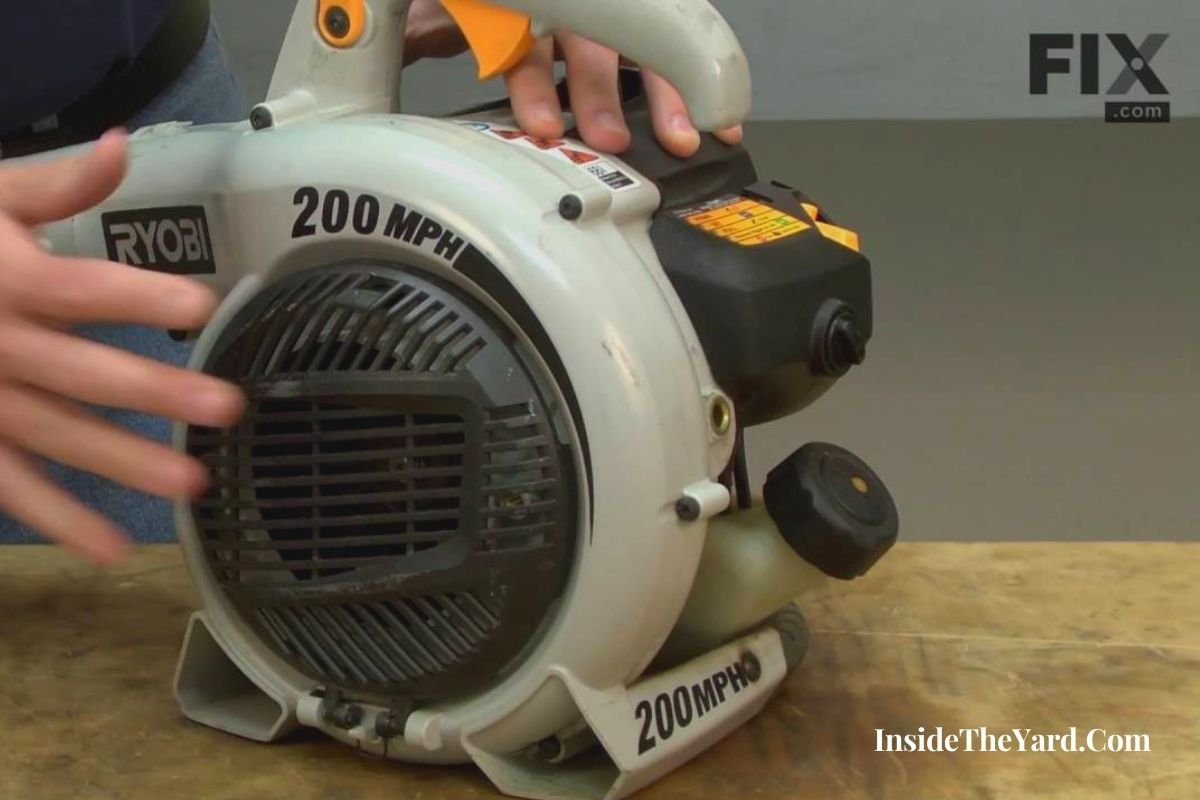
For homeowners in the United States, the best way to adjust leaf blower speed is to use the blower’s variable-speed trigger, cruise-control lever, or speed dial. Start at low speed for flower beds, mulch, and dry leaves. Increase speed for wet leaves, grass clippings, and hard surfaces. If your blower has only one speed, you may need to change the nozzle, clear an airflow blockage, or use a different model.
Do not adjust internal engine screws unless the owner’s manual gives a specific procedure. Incorrect carburetor changes can damage a gas blower, increase emissions, or create an unsafe condition.
How Leaf Blower Speed Controls Work
A leaf blower controls air movement in two main ways: engine or motor speed and airflow restriction. The control system depends on whether the blower uses a battery, an electric cord, or gasoline.
Variable-speed trigger
A variable-speed trigger changes blower speed as you squeeze it.
- Light pressure produces a gentle stream of air.
- More pressure increases motor or engine speed.
- Full pressure produces the highest available airflow.
This is the most useful control for daily yard work. It lets you move leaves without disturbing soil, mulch, gravel, or plants.
Cruise control or throttle lock
Some blowers have a cruise-control lever or throttle-lock button. This feature holds the blower at a chosen speed without constant finger pressure.
Set the speed with the trigger first. Then move or press the cruise control. Release it before you place the blower down or walk across a slippery area.
Speed dial or operating modes
Battery and electric blowers may have a dial or buttons marked with levels such as:
- Low
- Medium
- High
- Turbo
- Eco
- Boost
The names vary by brand. A “turbo” or “boost” setting may provide more airflow for a short time, but it can also use more battery power or create more noise.
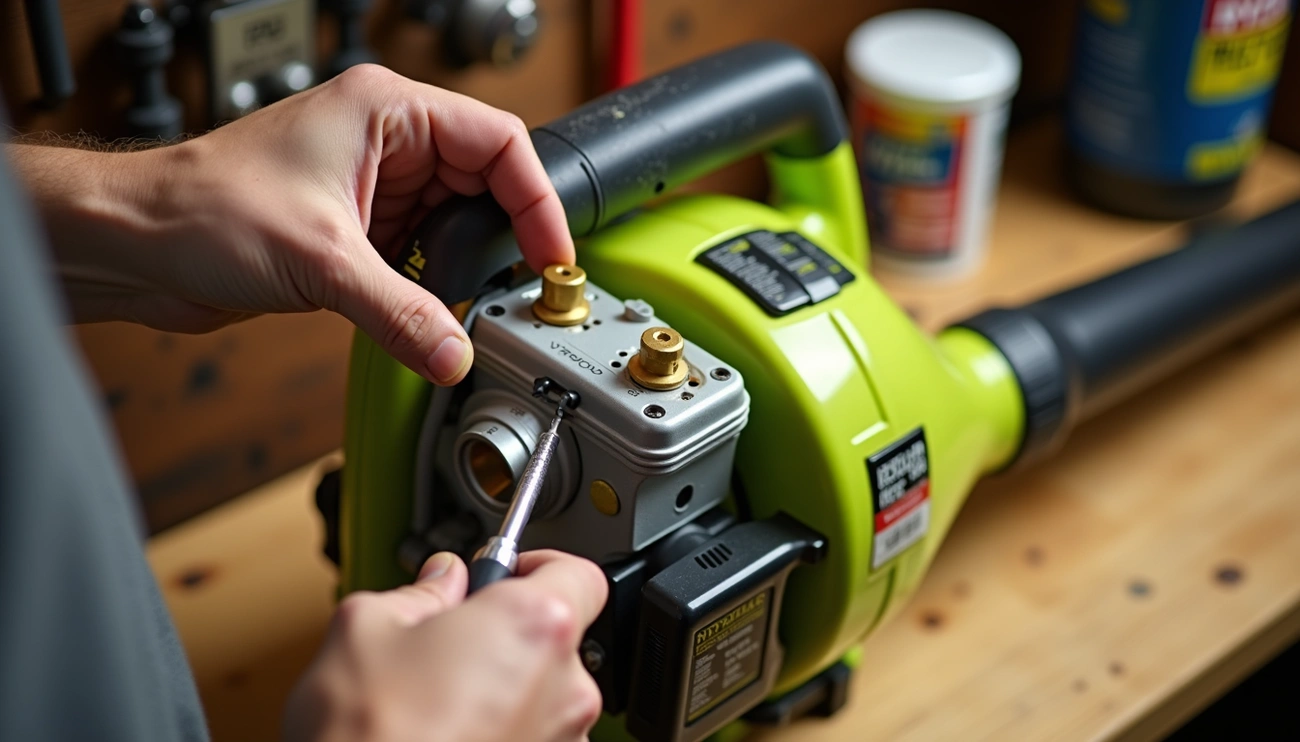
Carburetor adjustment on gas models
Older gas blowers may have adjustment screws marked L, H, and T. These usually relate to fuel mixture and idle speed, not simple user speed control.
- L often affects low-speed fuel mixture.
- H often affects high-speed fuel mixture.
- T, S, or LA may affect idle speed.
The exact function differs by engine. Some newer blowers use limiter caps or fixed carburetor settings. Follow the model’s manual rather than turning these screws by guesswork.

How to Adjust Leaf Blower Speed Correctly
Adjust the speed while the blower is pointed into a clear area. Begin with the lowest setting that moves the material. This method gives better control, uses less energy, and reduces the chance of blowing debris into windows, roads, or other people.
Step 1: Read the control layout
Before starting, identify:
- The trigger
- The speed dial or mode button
- The cruise-control lever
- The stop switch
- The battery latch or power cord
- The fuel and choke controls, if it is a gas model
The owner’s manual is the best source for model-specific controls. Many controls look similar but work in different ways.
Step 2: Inspect the blower
Turn the blower off before checking it. Remove the battery, unplug the cord, or stop the engine as required by the manual.
Check these parts:
- Air intake
- Tube and nozzle
- Fan housing
- Battery contacts
- Power cord
- Fuel filter and air filter on gas models
Remove leaves, grass, and packed dirt from the intake and tube. Do not reach into the fan housing while the blower is connected to power or fuel.
Step 3: Start at low speed
Point the nozzle toward a clear patch of ground. Start the blower at its lowest setting.
Use low speed for:
- Dry leaves near flower beds
- Mulch
- Decorative stone
- Porches and patios
- Light dust and grass clippings
- Areas near parked cars
Low speed often gives better control than maximum power. A strong air stream can scatter leaves in every direction instead of forming a neat pile.
Step 4: Raise the speed in small steps
Squeeze the trigger farther or move the dial one level at a time. Watch the material, not just the sound of the motor.
Stop increasing speed when the leaves move at the rate and direction you want. Maximum speed is not always the fastest way to finish. Too much air can spread the work across a larger area.
Step 5: Use the right nozzle position
Hold the nozzle several inches above the ground. Aim slightly under the leaves and use a shallow angle.
A low, shallow angle can lift and move leaves well. Pointing straight down may stir up dust and gravel. Keep the nozzle farther away when working near mulch, loose soil, or fragile plants.
Step 6: Use cruise control only after finding the right speed
Once you find a useful speed, engage the cruise-control feature if your blower has one. This can reduce hand fatigue during long work sessions.
Keep one hand ready to control the blower. Turn cruise control off before crossing a walkway or moving near people, pets, vehicles, or open doors.
Step 7: Reduce speed before stopping
Release the trigger or lower the speed before shutting the blower off. This makes the stop more controlled and reduces the chance of moving debris unexpectedly.
For a gas blower, follow the manual’s shutdown steps. Some models require an engine switch, while others use a throttle or stop control.
Choose the Right Leaf Blower Speed for the Job
The correct speed depends on the material, surface, moisture, and nearby objects. The goal is controlled movement, not the highest possible air output.
| Task | Recommended setting | Why |
|---|---|---|
| Dry leaves on pavement | Low to medium | Moves leaves without making a large dust cloud |
| Leaves on grass | Medium | Provides enough force without stripping loose soil |
| Wet leaves | Medium to high | Wet material needs more force |
| Leaves in mulch | Low | Helps prevent mulch from scattering |
| Gravel driveway | Low | Reduces the chance of moving small stones |
| Grass clippings | Low to medium | Keeps clippings in a manageable stream |
| Light snow from a car | Low, if approved by the manual | High speed may push moisture into gaps |
| Packed debris | High, briefly | Adds force when lower speeds do not work |
These settings are general starting points. A compact battery blower and a large backpack blower may produce very different results at the same dial position.
CFM and MPH: which one matters?
Manufacturers often list two airflow measurements:
- CFM, or cubic feet per minute, describes the volume of air moved.
- MPH, or miles per hour, describes air speed at or near the nozzle.
CFM helps explain how much material the blower can move. MPH helps explain how forcefully the air stream leaves the nozzle. Neither number alone tells you exactly how the blower will perform in your yard.
Nozzle design, tube shape, battery charge, air temperature, and debris weight also affect performance. Use the specifications as a guide, then adjust the control based on the surface in front of you.
A simple speed rule
Use the lowest speed that moves the material without damaging the surface.
Increase speed when:
- Leaves are wet.
- The pile is thick.
- The wind is pushing against you.
- Grass or debris is trapped in a corner.
- The nozzle is farther from the material.
Decrease speed when:
- Mulch begins to move.
- Dust rises.
- Gravel rolls.
- Leaves scatter past the target.
- The air stream reaches a street, person, animal, or vehicle.
Why a Leaf Blower May Not Change Speed
If the blower runs but the speed does not change, first check the control and airflow path. Do not begin by adjusting the carburetor.
Symptom: The trigger does not change motor speed
Possible causes include:
- The speed mode is locked.
- Cruise control is active.
- A turbo or eco mode limits the trigger.
- The trigger is damaged.
- The battery is not fully seated.
- The power supply is weak.
- The control switch has failed.
Turn the blower off. Check the mode button and cruise-control lever. On a battery model, remove and reinstall the battery. On a corded model, inspect the plug and extension cord.
Do not use a damaged cord. The U.S. Consumer Product Safety Commission advises consumers to replace damaged electrical cords rather than continue using them.
Symptom: The blower stays at high speed
A stuck trigger, locked throttle, or defective cruise-control system may cause this problem. Stop using the blower if you cannot reduce speed normally.
For a gas model, a throttle cable may be stuck or incorrectly adjusted. For a battery model, the trigger or electronic control may have failed. Use the manufacturer’s repair process or take the blower to a qualified service center.
Symptom: The blower sounds weak
A weak air stream can result from:
- A low battery
- A blocked intake
- A clogged tube
- A dirty air filter
- A damaged fan
- A restricted spark arrestor on some gas models
- Old or contaminated fuel
- A worn battery or motor
Clean only the parts listed in the manual. Never operate a gas blower without required guards or with a damaged fan housing.
Symptom: The blower surges or changes speed by itself
Surging on a gas blower may point to a fuel, air, or carburetor problem. Common possibilities include a dirty fuel filter, restricted air filter, stale fuel, or an engine adjustment issue.
Surging on a battery blower may point to low battery voltage, overheating, or an electronic fault. Let the unit cool, check the battery, and review the manual. If the issue continues, stop using the blower and arrange service.

How to Adjust Speed on Different Leaf Blower Types
The basic method is similar across blowers, but the control limits differ by power source.
Battery leaf blowers
Battery blowers usually use a trigger, dial, or electronic mode button.
To adjust one:
- Insert the correct battery until it locks.
- Turn the blower on.
- Start at the lowest setting.
- Increase the trigger pressure or select a higher mode.
- Watch for reduced power as the battery gets low.
- Let the battery and blower cool if the tool stops or limits output.
A battery blower may reduce power when the battery is cold, overheated, or nearly empty. This can feel like a speed-control problem even when the trigger works correctly.
Use only the battery and charger approved for the blower. Different battery platforms may have similar shapes but may not be electrically compatible.
Corded electric leaf blowers
Corded models need a suitable outdoor-rated power connection.
To adjust one:
- Check the cord, plug, and extension cord for damage.
- Use an outdoor-rated extension cord of the size listed in the manual.
- Plug the blower into a ground-fault circuit interrupter, or GFCI, when required by local practice or the equipment instructions.
- Start at low speed.
- Increase speed as needed.
A long or undersized extension cord can cause voltage drop and weak performance. The blower may sound normal but produce less air.
Keep the cord behind you and away from the nozzle. Stop work if the cord becomes warm, cut, loose, or damaged.
Gas leaf blowers
Gas blowers often use a throttle trigger and cruise-control lever. Some also have choke and primer controls for starting.
To adjust speed:
- Start the engine according to the manual.
- Let it warm up if the manual calls for a warm-up period.
- Squeeze the throttle gradually.
- Use the cruise control only after selecting the desired speed.
- Release the throttle before shutdown if required by the manual.
Do not change high- and low-speed mixture screws unless the manufacturer provides a clear adjustment procedure. Gasoline engines produce carbon monoxide, so operate them outdoors and away from doors, windows, and air intakes.
Never refuel a hot engine. Shut it off, move it away from ignition sources, and let it cool before adding fuel.

Safety Rules When Changing Leaf Blower Speed
Speed control does not remove the main risks of a leaf blower. Fast-moving air can throw stones, sticks, and other objects.
Use these precautions:
- Wear eye protection that meets the applicable safety standard.
- Use hearing protection around loud gas or high-output blowers.
- Wear sturdy, closed-toe footwear.
- Keep children, pets, and bystanders away from the work area.
- Check the lawn for stones, wire, and other loose objects.
- Do not point the nozzle at people, animals, cars, windows, or buildings.
- Avoid blowing dust toward roads or neighboring property.
- Follow local rules for blower hours and noise.
- Do not use a gas blower inside a garage, shed, basement, or other enclosed space.
- Stop before clearing a blockage.
- Disconnect the battery or power source before maintenance.
- Keep hands and loose clothing away from the intake and fan.
The Occupational Safety and Health Administration provides workplace guidance on noise and protective equipment. Residential users should also follow the warnings in the blower manual and any local requirements.
When to stop and seek service
Stop using the blower if you notice:
- Burning smells
- Smoke
- Sparks
- A cracked housing
- A damaged power cord
- A loose fan
- A stuck throttle
- Unusual vibration
- Fuel leaks
- An engine that cannot return to idle
A speed problem can become a safety problem when the blower cannot slow down or shut off normally.

Common Mistakes to Avoid
Using maximum speed for every task
High speed can scatter leaves, move mulch, and create dust. Start low and increase only when needed.
Adjusting the carburetor without the manual
Carburetor screws control engine operation, not just convenience. Wrong settings can cause poor starting, overheating, excess smoke, or engine damage.
Ignoring the nozzle
A narrow nozzle may produce a faster air stream. A wider nozzle may move more air over a larger area. Test the supplied nozzles according to the manual before assuming the motor lacks power.
Blocking the air intake
Holding the blower too close to leaves or clothing can restrict intake airflow. This reduces output and may cause overheating.
Using the wrong extension cord
A cord that is too long or too small can reduce power. Follow the gauge and length guidance in the manual.
Blowing wet debris at full speed near buildings
Wet debris can carry dirt onto siding, windows, and vehicles. Use a lower setting and aim away from walls and doors.
Treating a new sound as normal
A change in pitch, vibration, or engine behavior may signal a blocked tube, damaged fan, or mechanical problem. Stop and inspect the blower safely.

Frequently Asked Questions
Can I make my leaf blower more powerful by adjusting the speed?
You can use the highest factory speed setting, but you should not exceed the manufacturer’s limits. Do not remove guards, modify the tube, bypass controls, or change carburetor settings without approved instructions.
Why does my leaf blower lose speed when the battery is low?
The battery voltage may fall under load. Many cordless tools limit output as the battery becomes nearly empty or too hot. Charge the approved battery fully and let it cool before testing again.
Should I use high speed on wet leaves?
Usually, yes, but increase speed gradually. Wet leaves are heavier and may need more airflow. Avoid aiming the stream at windows, doors, or siding.
How do I adjust the idle speed on a gas leaf blower?
Use the idle procedure in the model’s owner’s manual. Some engines have an idle adjustment screw, while others use a fixed setting. If the blower’s fan spins at idle or the engine will not idle, have it serviced.
Why does my leaf blower have power but weak airflow?
Check the nozzle, tube, and air intake for blockage. Then check the battery charge, extension cord, air filter, fuel, and fan housing. If the parts are clear and the problem remains, professional service may be needed.
Can I use a leaf blower to dry a car?
Use a low setting and keep the nozzle away from paint, trim, seals, and loose dirt. A blower can move grit across the paint and cause scratches. Follow the blower manual and avoid directing air into electrical openings.
Final Takeaway
Adjust leaf blower speed with the trigger, dial, or cruise-control system. Start low, increase in small steps, and use the lowest setting that moves the debris. Check the nozzle, intake, battery, cord, and filter before changing any internal engine settings.
If the blower will not slow down, surges, overheats, leaks fuel, or shows electrical damage, stop using it. Check the manual and use qualified service rather than guessing at a carburetor or electronic repair.
For the next job, clear the work area, choose a low starting speed, and raise the setting only when the material needs more force.