
A leaf blower spark arrestor is a small metal screen inside or near the muffler. It helps stop hot carbon particles from leaving the exhaust. In the United States, a clogged screen can reduce power, make starting hard, and raise the risk of overheating.
To clean it, let the blower cool, disconnect the spark plug wire or battery, remove the muffler cover, take out the screen, brush away carbon, inspect it for damage, and reinstall it as the manufacturer directs. Always check the owner’s manual first because screen location, fastener type, and cleaning methods vary by model.

What Is a Leaf Blower Spark Arrestor?
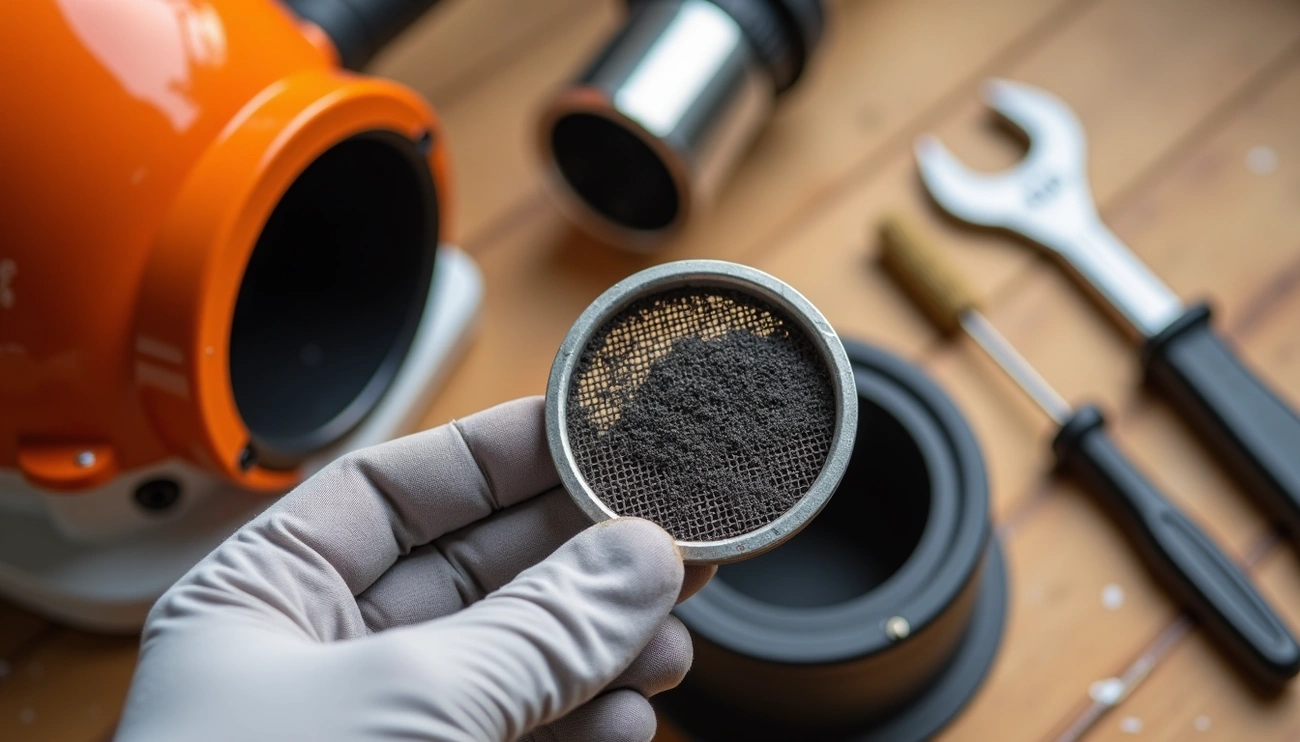
A spark arrestor is a fine metal screen placed in the exhaust system of many gasoline-powered leaf blowers. The screen helps stop glowing carbon particles and sparks from leaving the muffler.
The screen is not the same as the air filter. The air filter cleans air entering the engine. The spark arrestor filters exhaust leaving the engine.
A dirty spark arrestor can block exhaust flow. When this happens, the engine may:
- Lose power at full throttle
- Run poorly after warming up
- Stall under load
- Start and then die
- Take longer to start
- Sound quieter or more muffled than usual
- Run hotter than normal
A blocked screen is only one possible cause of these symptoms. A dirty air filter, old fuel, damaged muffler, worn spark plug, or carburetor problem can cause similar issues.
Why the Screen Gets Dirty
Two-stroke engines burn a mix of gasoline and two-stroke oil. This process can leave carbon and oily residue in the exhaust. Poor fuel, an incorrect fuel mix, long periods of idling, and engine problems can increase deposits.
Four-stroke blowers may also build carbon on the screen. The exact cause depends on the engine design and maintenance history.
Why the Spark Arrestor Matters in the United States
Some outdoor power equipment uses a spark arrestor to reduce the chance that hot exhaust particles will start a fire. This matters most in dry areas, grasslands, forests, and other places with wildfire risk.
Rules can vary by state, county, land agency, and season. The U.S. Forest Service maintains guidance for spark arresters used with certain equipment. A missing or damaged screen may also violate local rules or the equipment maker’s instructions.
Cleaning the screen does not make a blower fireproof. Keep the muffler, exhaust, and engine away from dry leaves and grass.
Tools and Safety Gear You Need
Gather the correct tools before you open the muffler. Most jobs need only a few basic items:
- Owner’s manual
- Work gloves
- Safety glasses
- Small socket set or nut driver
- Flat-head or Phillips screwdriver, if required
- Small brass brush or soft wire brush
- Clean rag
- Flashlight
- Replacement spark arrestor screen or gasket, if needed
A brass brush is usually a better choice than a hard steel brush. A steel brush can bend or tear fine mesh.
You may also need a new muffler gasket. Do not reuse a gasket that is torn, crushed, or badly burned. An exhaust leak can send hot gases toward plastic parts, fuel lines, or dry material.
Before You start
follow these safety steps:
- Move the blower to a clean, well-ventilated work area.
- Shut off the engine.
- Let the muffler and cylinder cool fully.
- Remove the spark plug wire from a gasoline model.
- Remove the battery from a cordless model.
- Turn off the fuel valve, if the blower has one.
- Keep gasoline, leaves, and other flammable items away from the work area.
- Take a photo before removing parts so you can restore their position.
Do not work on a hot muffler. The muffler can stay hot after the engine stops.
Do not test the blower with the muffler or spark arrestor removed. Hot exhaust can cause burns, start a fire, or damage the engine.

How to Clean a Leaf Blower Spark Arrestor
The basic process is simple, but the part may sit behind a muffler cover, inside the muffler outlet, or under a small retaining plate. Use the service steps for your exact model when they differ from the process below.
1. Find the Spark Arrestor
Look for the muffler on the side of the engine. It is usually a metal cover near the cylinder and exhaust outlet.
The spark arrestor may be:
- Behind a small muffler outlet plate
- Inside the exhaust outlet
- Held by one or two screws
- Secured by a retaining clip
- Built into a muffler assembly
Some cordless leaf blowers do not have the same exhaust parts because they use an electric motor. Do not search for a spark arrestor on a battery blower unless the manufacturer lists one.
2. Remove the Outer Cover
Remove only the screws or bolts needed to reach the screen. Keep the fasteners in a small container.
Do not force a stuck screw. Penetrating oil may help with an external fastener, but keep oil away from the muffler opening and hot engine parts. If the screw head is damaged, stop before you destroy it.
Lift the cover away carefully. The cover may have a gasket or heat shield behind it.
3. Remove the Screen
Use a screwdriver, pick, or small pliers only if the manual allows it. Avoid pulling hard on the mesh.
Some screens have a tab that fits into a slot. Others are flat discs. Note the direction and position before removal.
If the screen is fused in place by carbon, do not pry against a thin muffler wall. A damaged muffler can be more costly and less safe than a replacement screen.
4. Brush Off Loose Carbon
Hold the screen over a workbench or disposable tray. Brush both sides with a brass brush.
Work gently. Remove loose carbon without stretching the mesh. Tap the screen lightly against a solid surface if needed, but do not crush it.
For light buildup, brushing is often enough. A clean screen should allow air to pass through most of the mesh.
5. Clean Stubborn Deposits
If carbon remains, use the cleaning method listed in the owner’s manual. Depending on the model, the manual may allow a solvent, a heated cleaning method, or replacement of the screen.
Never use gasoline to clean the screen. Gasoline vapors can ignite easily.
Do not heat the screen with a torch unless the manufacturer specifically approves that method and you have the correct fire-safe setup. Heating carbon can create flames, smoke, and hot particles.
Do not soak the screen in an unknown chemical. Some cleaners can damage coatings, nearby gaskets, or the metal itself.
In many cases, replacing a heavily blocked screen is safer and faster than trying to restore it.
6. Inspect the Screen and Muffler
Hold the screen up to a bright light. Look for:
- Torn or missing mesh
- Holes
- Bent edges
- Severe rust
- Loose welds
- Heavy carbon that will not come off
- A screen that no longer fits tightly
Inspect the muffler outlet as well. Look for cracks, loose parts, broken mounting points, or signs of exhaust leakage.
Replace a damaged screen. Do not cut out the screen and continue using the blower without it.
7. Clean the Mounting Area
Wipe carbon from the screen seat and cover. Use a wooden pick or soft brush where needed.
Keep loose debris out of the cylinder, exhaust port, and muffler. Do not scrape deep into the engine opening.
If the cover uses a gasket, remove the old gasket only if the manual directs you to do so. Avoid scratching the sealing surface.
8. Reinstall the Screen and Cover
Place the screen in its original position. Install the gasket, heat shield, cover, and fasteners in the correct order.
Tighten screws evenly. Use the torque value in the manual when one is provided. Over-tightening can strip small threads or distort the muffler cover.
Do not use ordinary household sealant on the muffler. Exhaust parts reach high temperatures, and the wrong sealant can burn or fail.
9. Run a Safe Test
Reconnect the spark plug wire or battery. Start the blower outdoors, away from dry grass and flammable material.
Let it idle briefly. Then check for:
- Exhaust leaks
- Rattling
- Smoke from the wrong area
- Loose covers
- Unusual heat
- Poor acceleration
Stop the engine if you hear a metal rattle or see exhaust escaping around the cover. Let it cool and inspect the installation.
A clean spark arrestor may improve power if the old screen was blocked. It will not fix a fuel, ignition, compression, or carburetor problem.

How to Tell Whether the Spark Arrestor Is Really Clogged
A blocked screen often causes a loss of power that becomes worse as the engine runs. The blower may start normally but fail to reach full speed.
Use the following symptoms as clues, not as a final diagnosis:
| Symptom | Possible cause | Useful next check |
|---|---|---|
| Starts but will not rev up | Clogged screen, dirty air filter, fuel problem | Inspect the screen and air filter |
| Runs briefly, then stalls | Exhaust restriction, blocked fuel vent, carburetor issue | Check the screen and fuel cap vent |
| Low power at all times | Dirty screen, old fuel, worn engine | Inspect maintenance items |
| Loud exhaust noise | Loose cover, missing screen, damaged muffler | Inspect the muffler before running |
| Screen is clean but power stays low | Fuel, ignition, air, or compression problem | Follow the service manual diagnosis |
| Strong oily residue at the muffler | Excess oil, rich mixture, worn engine, or muffler buildup | Check the fuel mix and engine condition |
A clean screen does not prove that the exhaust system is clear. Carbon may also collect inside the muffler or exhaust port.
If the blower loses power only when hot, let a qualified small-engine technician inspect it. Heat-related ignition faults and engine wear can look like a blocked screen.

How Often Should You Clean a Spark Arrestor?
Clean the spark arrestor when the manual specifies it or when symptoms suggest an exhaust restriction. There is no safe universal interval for every leaf blower.
The needed schedule depends on:
- Engine type
- Fuel and oil quality
- Hours of use
- Long periods of low-speed running
- Dust and debris exposure
- Storage conditions
- Engine tuning and condition
As a practical routine, inspect the screen during regular seasonal maintenance. Commercial users and people who run a blower often may need more frequent checks.
A screen that clogs again soon after cleaning points to a deeper issue. Possible causes include an incorrect two-stroke fuel mixture, a rich-running engine, poor combustion, excessive oil, or internal engine wear.
Follow the fuel ratio printed in the manual or on the fuel cap. Do not guess the oil amount.

Common Mistakes to Avoid
Several shortcuts can damage the blower or create a safety risk.
Removing the Screen Permanently
Some owners remove a clogged screen to restore power. This is not a proper repair. The blower may release hot carbon particles, create a fire risk, and fail local or land-management requirements.
Install the correct replacement screen instead.
Using a Steel Brush Too Aggressively
Hard brushing can enlarge the mesh openings or break the screen. A damaged screen cannot perform its intended job.
Use light pressure and replace the screen if the mesh is weak.
Cleaning a Hot Muffler
A hot muffler can cause serious burns. It can also ignite cleaner, fuel, dry grass, or carbon dust.
Wait until the engine is fully cool.
Using Compressed Air Near the Engine
Compressed air can push carbon into the engine, spread debris into the work area, or damage small parts. If you use it on a removed screen, wear eye protection and keep the air pressure low.
Manual brushing is usually easier to control.
Ignoring the Gasket
A crushed or missing gasket can cause an exhaust leak. The leak may heat nearby parts and make the blower noisy.
Replace the gasket when the service manual calls for it or when the old one is damaged.
Testing Indoors
Gasoline-powered leaf blowers produce carbon monoxide. Run the blower outdoors, far from doors, windows, and vents. Never run it in a garage, shed, basement, or enclosed porch.

When Cleaning Does Not Fix the Problem
If the blower still loses power after the screen is clean, inspect other basic service items in a safe order:
- Confirm the screen is installed correctly and is not damaged.
- Check the air filter.
- Check the spark plug condition and gap.
- Confirm the fuel is fresh and mixed at the correct ratio.
- Inspect the fuel filter and fuel lines.
- Check whether the fuel tank vent is blocked.
- Look for a loose muffler or damaged exhaust gasket.
- Follow the model-specific carburetor and ignition tests.
Do not adjust the carburetor by guesswork. A wrong setting can make the engine run too lean or too rich. A lean engine may run excessively hot, while a rich engine may produce more carbon.
Stop DIY work and seek qualified service if you find a cracked muffler, stripped mounting threads, damaged fuel lines, severe overheating, low compression, or repeated screen clogging.
For a blower under warranty, check the warranty instructions before opening the muffler. Unauthorized disassembly may affect coverage, depending on the manufacturer’s terms.

Frequently Asked Questions
Can I clean a leaf blower spark arrestor without removing the muffler?
Sometimes. Many blowers have a small outlet cover that exposes the screen. Other models place the screen behind the muffler or inside a larger assembly. Use the owner’s manual rather than forcing the muffler apart.
Can I use carburetor cleaner on a spark arrestor?
Only if the manufacturer allows it. Some cleaners may work on metal parts, but they are flammable and require careful handling. Never spray cleaner into a hot muffler or near an ignition source.
How do I know if the spark arrestor needs replacement?
Replace it if the mesh has holes, severe rust, broken welds, bent edges, or carbon that will not come off. Also replace it if it does not fit tightly in its original position.
Does every leaf blower have a spark arrestor?
No. Gasoline models may use one, but the design varies. Battery-powered blowers generally do not have an engine exhaust system or a conventional spark arrestor. Confirm the part in the manual for your model.
Can a clogged spark arrestor damage the engine?
A severe exhaust restriction can cause poor running and may increase heat and stress. It can also hide another engine problem. Do not keep operating a blower that overheats, stalls repeatedly, or shows signs of exhaust damage.
Final Takeaway
To clean a leaf blower spark arrestor, cool the machine, disconnect its power source, remove the access cover, brush the screen gently, inspect it, and reinstall it with the correct gasket and fastener setup.
Use the exact instructions for your model. Replace a damaged or badly blocked screen instead of removing it. If power remains low after cleaning, check the air filter, fuel, spark plug, fuel vent, and muffler—or have a qualified technician diagnose the blower.