
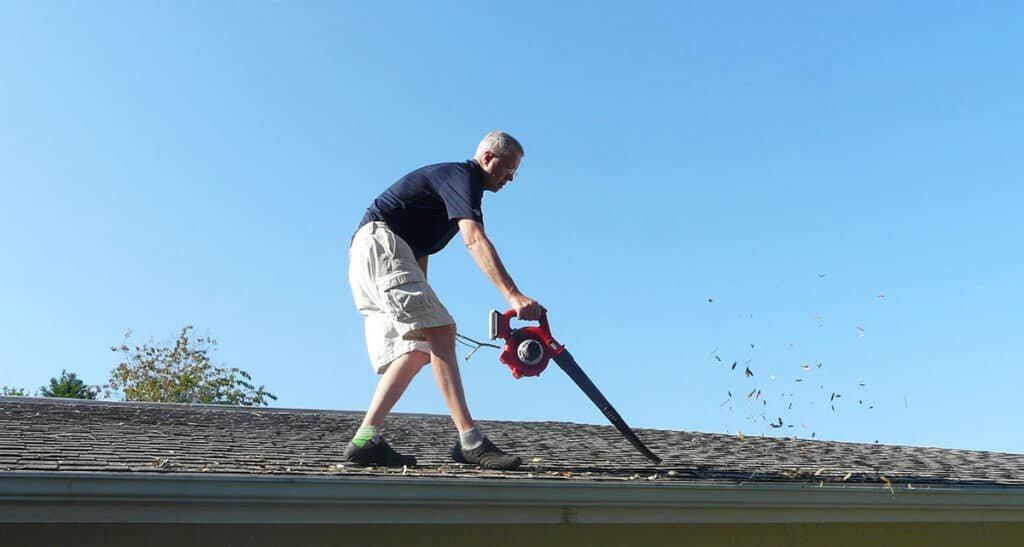
Cleaning gutters with a leaf blower can remove dry leaves, pine needles, and loose roof debris in less time than hand scooping. For most American homes, the safest method is to work from the ground with a blower extension kit. Use a ladder only when the gutter is low, the ground is stable, and you can keep three points of contact.
The method works best on a dry day. Wet leaves can form heavy clumps that stick to the gutter and may clog the downspout. Always wear eye protection, hearing protection, gloves, and sturdy shoes. Never walk on a roof just to clean a gutter.

What You Need Before You Start
Gather the right tools before turning on the blower. A basic setup usually includes:
- Leaf blower with adjustable air speed
- Gutter-cleaning attachment or extension wand
- Safety glasses or goggles
- Hearing protection
- Work gloves
- Nonslip shoes or boots
- Ladder with stable feet, if needed
- Hose with a spray nozzle
- Bucket or tarp for loose debris
- Outdoor-rated extension cord for a corded blower
- GFCI-protected outlet for corded equipment
A gutter attachment is a curved tube that directs air into the gutter from the ground. It may include several sections that connect to the blower tube. Check that each joint is secure before use. A loose section can fall, disconnect, or send debris in an unsafe direction.
Choose the right blower
A handheld electric, battery, or gas blower can work for dry gutter debris. The best choice depends on the height of the house and the type of material in the gutter.
| Blower type | Useful for | Main limitation |
|---|---|---|
| Battery-powered | Small and medium homes; quick jobs | Battery run time |
| Corded electric | Near an outdoor outlet | Cord management |
| Gas-powered | Large properties and long work sessions | Noise, fuel, and exhaust |
| Backpack blower | Large areas and heavy yard cleanup | Usually too powerful for close gutter work |
More power is not always better. High air speed can scatter debris onto siding, windows, neighbors’ property, or passing people. Start at the lowest useful setting and increase it only when needed.
Check the owner’s manual before fitting an extension. Some manufacturers approve specific accessories, while others warn against modifying the blower tube.

Check the Gutter and Weather First
Clean gutters when the debris is dry and the wind is light. Dry leaves are much easier to move than soaked leaves, mud, or decomposed roof material.
Before starting, walk around the house and look for:
- Sagging or separated gutter sections
- Loose fasteners
- Cracks or holes
- Blocked downspout outlets
- Gutter guards or screens
- Low branches
- Wet ground or unstable soil
- Overhead utility lines
Do not use a blower during rain or when water can reach a corded blower, plug, or connection. Follow the electrical safety instructions for the specific machine. The U.S. Consumer Product Safety Commission advises using outdoor-rated cords and ground-fault protection for outdoor electrical equipment.
If the gutter is full of wet soil, standing water, or compacted sludge, a blower may not solve the problem. Remove the heavy material by hand with a scoop or call a gutter professional.
Decide whether ground cleaning is safe
Ground-level cleaning is usually the preferred method because it avoids ladder falls. A long extension attachment may allow you to reach a one-story gutter while standing on the ground.
Do not use a long wand near power lines. Keep the blower, extension tube, and your body well away from electrical equipment. If you cannot reach the gutter without leaning, climbing onto the roof, or working near wires, stop and use a professional service.

How to Clean Gutters With a Leaf Blower: Step-by-Step
1. Clear people, pets, and fragile items
Keep children, pets, and other people away from the work area. Move cars, outdoor furniture, decorations, and fragile plants if possible.
A leaf blower can launch small stones, twigs, screws, and dried debris. Even a small object can injure an eye or damage a window.
2. Put on protective equipment
Wear eye protection before starting the blower. Use hearing protection, especially with gas blowers or when working near walls that reflect sound.
Wear gloves when handling gutter guards, ladders, or sharp metal edges. Shoes should have good traction and a firm sole.
3. Assemble and inspect the attachment
Turn the blower off before attaching the gutter kit. Connect each tube section firmly. Hold the attachment near the end and check whether it flexes or separates.
Keep the blower intake clear. Do not place the intake against clothing, grass, leaves, or a wall. A blocked intake can reduce airflow and may cause the machine to overheat.
4. Start at the downspout and work toward the open end
Begin near the downspout. Direct debris away from the downspout and toward the nearest open end of the gutter.
This approach reduces the chance of forcing leaves into the vertical pipe. A downspout packed with leaves can cause water to back up under the roof edge during the next storm.
If the gutter has downspouts at both ends, start near the center and work toward an end. Use short bursts of air rather than holding the trigger continuously.
5. Use low power first
Point the nozzle into the gutter before turning on the blower. Start at a low setting and raise the power only when loose debris does not move.
Keep the nozzle close enough to guide the material, but do not jam it into the gutter. Slow, controlled passes work better than a high-pressure blast. Think of the air stream as a small broom, not a water hose.
6. Move in short sections
Clean about 3 to 6 feet at a time. Sweep the nozzle back and forth while moving along the gutter.
Watch where the debris lands. If it begins blowing toward doors, windows, parked cars, or a neighbor’s property, change your position or lower the power.
7. Inspect corners and outlet areas
Gutter corners often collect wet leaves and roof grit. Give these areas a second pass after the main channel looks clear.
Pay special attention to the opening around each downspout. Do not force a large clump into the outlet. Remove it by hand if the blower cannot break it apart.
8. Clean the downspout separately
After clearing the gutter, check whether water can pass through the downspout. Place a hose at the top only if the opening is clear enough to avoid creating a packed blockage.
A better check is often to run water from the bottom outlet upward only when the downspout design allows it and the water can drain safely. If water backs up, the downspout may need to be opened from a cleanout, disconnected, or cleared by a professional.
9. Rinse and inspect
Use a garden hose to rinse fine dust from the gutter and test water flow. Watch the joints, end caps, corners, and downspout connections.
Look for water leaking through seams or spilling over the front edge. Cleaning removes debris, but it does not repair a damaged or poorly pitched gutter.
10. Clean the ground
Rake or blow the fallen leaves away from the foundation. Do not leave a thick layer of wet debris beside the house, where it can hold moisture against siding or walkways.
Before storing the blower, turn it off, disconnect the battery or power source when required, and inspect the tube for trapped material.

What to Do When the Blower Does Not Work
A leaf blower is useful for loose, dry debris. It is not a complete solution for every gutter problem.
| Problem | Likely cause | Safer response |
|---|---|---|
| Leaves do not move | Wet or compacted debris | Scoop out the heavy material |
| Airflow seems weak | Blocked intake, loose tube, low battery, or dirty filter | Turn off the blower and inspect it |
| Debris blows everywhere | Air speed is too high or wind is strong | Lower the speed or wait for calmer weather |
| Water still backs up | Blocked downspout or bad gutter pitch | Test the downspout and inspect the gutter |
| Gutter leaks after cleaning | Cracked seam, loose end cap, or failed seal | Repair or replace the damaged part |
| Gutter guard blocks the nozzle | Guard design does not allow blower access | Follow the guard maker’s instructions |
| Wand will not reach safely | House is too tall or access is poor | Use a professional gutter service |
Do not keep increasing the blower speed when debris will not move. Heavy sludge usually needs physical removal. Excessive air can damage a loose gutter or push debris beneath shingles and flashing.
If the blower stops, turn it off before checking the machine. Never reach into the intake or tube while the fan can still rotate.

Ladder and Roof Safety
A ladder creates the greatest fall risk during gutter cleaning. The Occupational Safety and Health Administration recommends placing ladders on stable, level surfaces and maintaining three points of contact while climbing and working.
Use these basic controls:
- Inspect the ladder before use.
- Set it on firm, level ground.
- Keep the ladder away from power lines.
- Do not stand on the top step or top cap.
- Do not overreach to the side.
- Move the ladder instead of stretching.
- Keep both hands free while climbing.
- Have another adult steady the ladder when practical.
- Do not carry a running blower up a ladder.
- Stop when wind, rain, ice, or wet surfaces make footing uncertain.
Do not use a ladder on a roof. Do not walk on a steep, wet, fragile, or visibly damaged roof. Tile, slate, and some older roofing materials can break under foot. A professional can use fall-protection equipment and the right access method.
A one-story house may be suitable for a ground-based gutter attachment. A two-story house, steep roof, difficult terrain, or damaged gutter system may not be a safe do-it-yourself job.

How Often Should You Clean Gutters?
Many American homes need gutter cleaning at least twice a year: once in late spring and again in fall after most leaves have dropped. The right schedule depends on the property.
Clean or inspect gutters more often when the home has:
- Many mature trees
- Pine trees that shed year-round
- A steep roof
- Gutter guards that collect fine debris
- Frequent storms
- Nearby construction dust
- A history of overflowing gutters
A simple inspection after a heavy leaf fall can prevent a larger blockage. Check the gutters before the rainy season, hurricane season, or winter freeze in regions where those conditions apply.
Gutter guards can reduce large-leaf buildup, but they do not make gutters maintenance-free. Pine needles, seed pods, roof grit, and small organic matter can collect on top of or beneath some guards.
Common Mistakes to Avoid
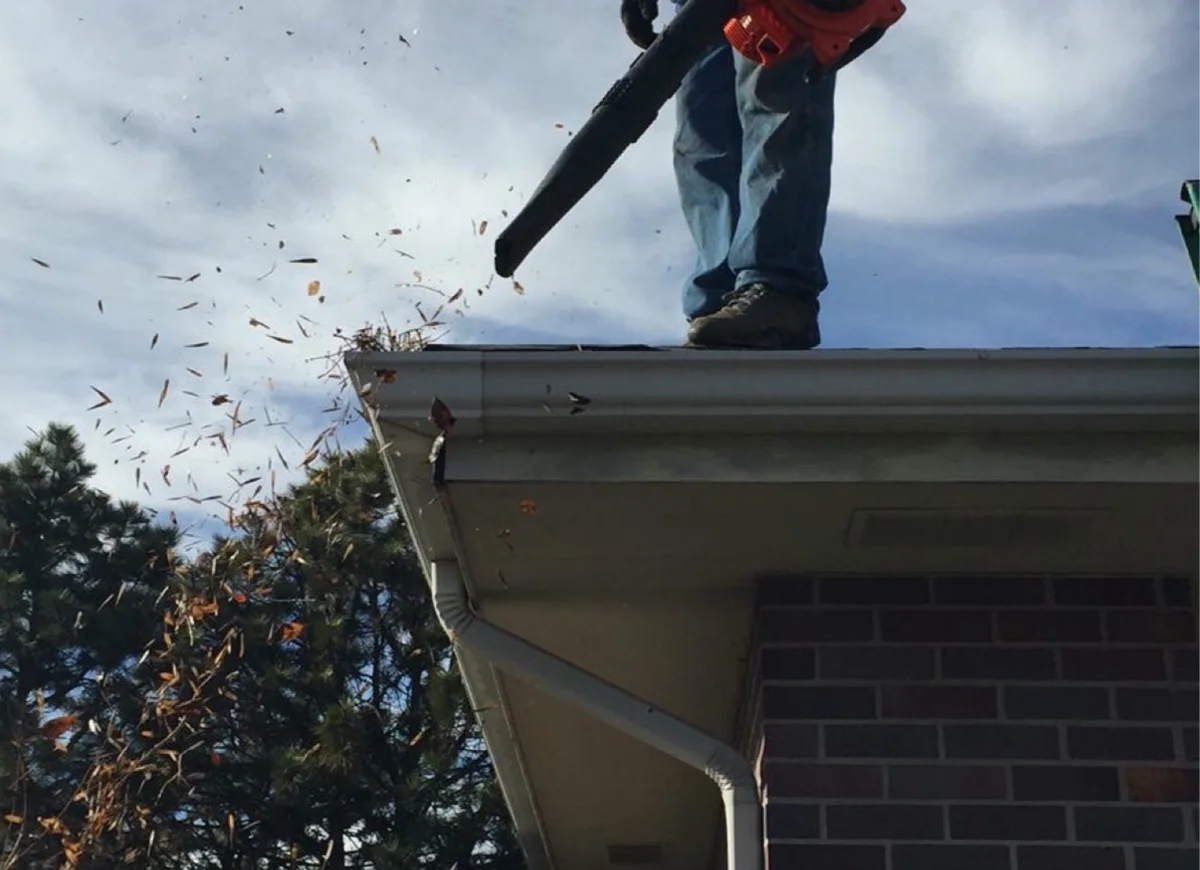
Blowing debris onto the roof
Pointing the nozzle upward can force leaves beneath shingles or into roof vents. Keep the air stream aimed into the gutter and away from roof coverings.
Using the blower in wet conditions
Wet debris is heavy and tends to stick to the gutter. Moisture also increases electrical risk for corded tools. Wait for dry weather unless the owner’s instructions allow the method and the setup is safe.
Ignoring the downspouts
A clean gutter does not help if the downspout is blocked. Test every downspout after clearing the horizontal channel.
Working too close to windows
High-speed air can carry grit and small objects. Keep the nozzle away from glass and use the lowest setting that moves the debris.
Overlooking gutter damage
A gutter that sags, separates, or leaks may need repair rather than more cleaning. Do not pull hard on a loose section with the blower attachment.
Treating gutter guards as a complete solution
Guards may reduce cleaning, but they still need inspection. Some systems must be removed for a full clean, while others can be brushed or blown from above according to the manufacturer’s instructions.
Cleaning without planning the debris
Leaves blown from the gutter may land on decks, sidewalks, mulch, or neighboring yards. Use a tarp where practical, then collect the debris for composting or yard-waste disposal.

When to Hire a Professional
Hire a qualified gutter professional when the work involves a second story, steep roof, unstable ground, power-line hazards, extensive gutter damage, or difficult access.
Professional help is also sensible when:
- You have no safe ground-based reach.
- The roof is wet, fragile, or steep.
- The gutters are packed with soil or standing water.
- The downspout is buried or hard to access.
- You see loose fascia, rotten wood, or detached gutters.
- You cannot use a ladder safely.
- The property has complex roof lines or multiple levels.
Ask what access method will be used and whether the service includes downspout testing, debris removal from the ground, and a basic damage report. Cleaning and repair are different services, so confirm what the estimate covers.

Frequently Asked Questions
Can you clean gutters with any leaf blower?
Most leaf blowers can move dry, loose debris, but not every blower accepts a gutter attachment. Check the owner’s manual and the accessory instructions. A blower with adjustable speed is easier to control than one that runs only at maximum power.
Is it better to clean gutters from the ground or from a ladder?
Ground cleaning is generally safer because it avoids ladder falls. A ladder may provide better control on a low gutter, but only when it can be placed securely and you can keep three points of contact. Do not use a ladder if you must lean or carry a running blower.
Can a leaf blower remove wet leaves from gutters?
It may move a small amount of damp material, but wet leaves often stick together and become too heavy for effective blowing. Scoop out packed debris first, then use the blower for the remaining dry material.
Will a leaf blower unclog a downspout?
It may clear a small amount of loose material, but forcing debris into a downspout can make the blockage worse. Inspect the opening first and test water flow after cleaning. A deep or compacted blockage may require disassembly or professional equipment.
Should I use a blower on gutters with guards?
Only if the gutter-guard manufacturer allows it. Some guards can be cleaned from above, while others trap fine debris beneath the cover. Do not remove or bend a guard unless you know how it is installed and how it must be replaced.
Final Recommendation
Use a leaf blower for dry, loose gutter debris, and choose a ground-based extension whenever it provides safe reach. Start near the downspout, blow toward an open end, use low power, and test every downspout with water afterward.
Stop if the roof, ladder, electrical setup, weather, or gutter condition creates a fall or impact hazard. A clean gutter protects drainage, but safe access matters more than finishing the job yourself.