
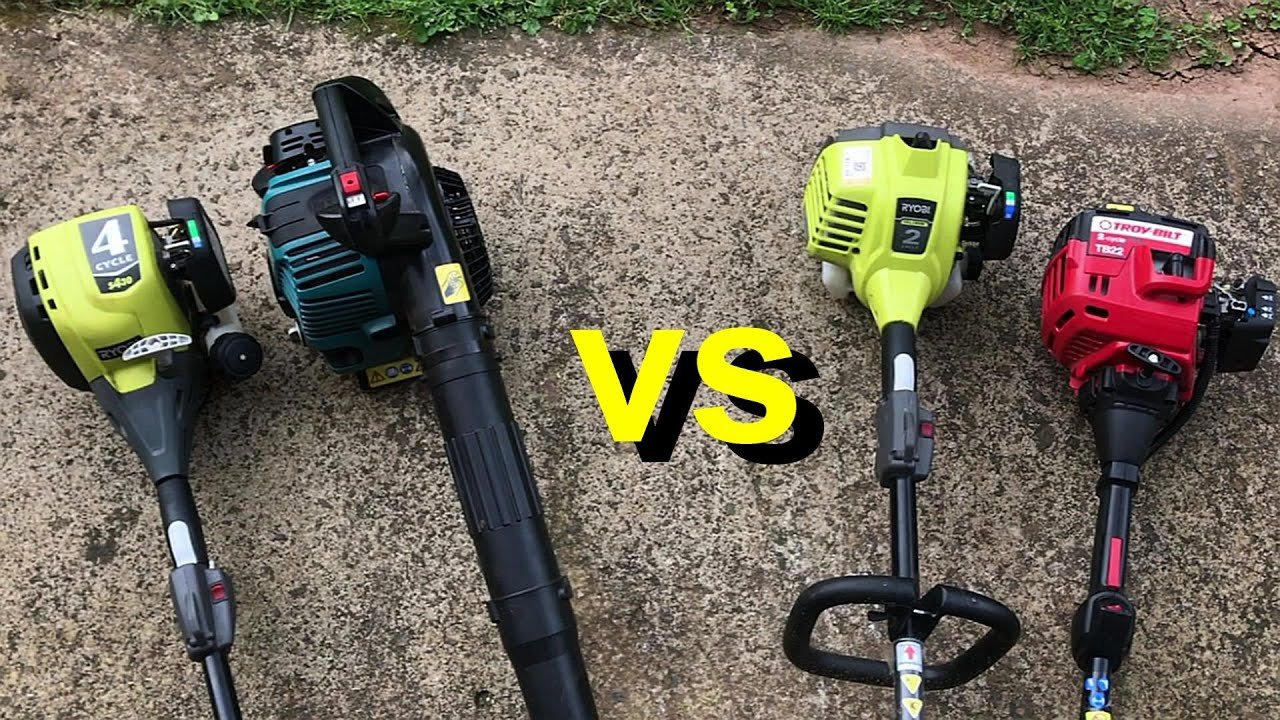
For most homeowners in the United States, a 2-cycle leaf blower is lighter, easier to carry, and often less expensive. A 4-cycle leaf blower uses straight gasoline, runs with less smoke, and usually makes less noise and vibration. Choose a 2-cycle model for low weight and fast cleanup. Choose a 4-cycle model for longer jobs, simpler fueling, and improved comfort.
The best option depends on your yard size, local noise rules, storage space, fuel habits, and tolerance for routine maintenance. Neither engine type is best for every American home.
Quick Answer: 2-Cycle vs. 4-Cycle Leaf Blower
A 2-cycle leaf blower completes its power cycle in two piston movements. It burns a mix of gasoline and 2-cycle oil. A 4-cycle leaf blower completes the cycle in four piston movements and uses separate engine oil and gasoline.
| Feature | 2-cycle leaf blower | 4-cycle leaf blower |
|---|---|---|
| Fuel | Gasoline mixed with 2-cycle oil | Straight gasoline |
| Separate oil crankcase | No | Yes |
| Weight | Usually lighter | Usually heavier |
| Purchase price | Often lower | Often higher |
| Noise and vibration | Often higher | Often lower |
| Starting and fueling | Requires correct fuel mix | Fueling is simpler |
| Maintenance | Fuel mixing and spark plug care | Oil changes plus standard care |
| Best for | Short, mobile yard work | Longer or more frequent jobs |
| Main drawback | Fuel-mix errors and more vibration | More weight and higher cost |
A key point: engine type does not determine total blower performance by itself. Air volume, air speed, tube design, engine size, battery condition, and operator technique also matter.

How 2-Cycle and 4-Cycle Engines Work
The main difference is how each engine moves air, fuel, and exhaust through the cylinder.
A 2-cycle engine produces power during every crankshaft revolution. It combines intake, compression, combustion, and exhaust across two piston strokes. Since the engine does not have a separate oil reservoir, the oil must be mixed with the gasoline.
A 4-cycle engine produces power every other crankshaft revolution. It uses four separate strokes:
- Intake
- Compression
- Power
- Exhaust
A 4-cycle engine stores oil in a crankcase. The gasoline and oil stay separate, much like they do in a car or lawn mower.
What “2-cycle” and “2-stroke” mean
In the United States, 2-cycle and 2-stroke usually describe the same engine design. Likewise, 4-cycle and 4-stroke generally mean the same thing.
Manufacturers may use either term in product labels and owner manuals. The important detail is not the wording. It is the required fuel and oil setup.
Why a 2-cycle engine needs mixed fuel
A 2-cycle engine uses the fuel mixture to lubricate internal parts. If you use gasoline without oil, the engine can suffer severe damage in a short time.
The correct ratio varies by model. Common ratios include:
- 50:1: 2.6 U.S. fluid ounces of oil per U.S. gallon of gasoline
- 40:1: 3.2 U.S. fluid ounces of oil per U.S. gallon
- 32:1: 4 U.S. fluid ounces of oil per U.S. gallon
these amounts are approximate. Always follow the ratio printed in the owner’s manual or on the manufacturer’s instructions.
A 4-cycle engine does not use premixed fuel unless the manufacturer specifically allows it. Filling a 4-cycle tank with mixed fuel can cause smoke, poor operation, or damage.
Performance Comparison
A 2-cycle blower often feels quicker and lighter in the hands. A 4-cycle blower often feels smoother during long periods of use.
Power and airflow
Engine type alone does not prove that one blower will move more leaves. Compare the blower’s published:
- CFM: Cubic feet per minute, or the amount of air moved
- MPH: Air speed at the nozzle
- Newton force: A useful measure of blowing force on some commercial models
- Engine displacement: The size of the engine, usually listed in cubic centimeters
CFM helps move large piles of leaves. Air speed helps break apart wet leaves and move debris from cracks. A high MPH number with low CFM may not clear a wide area quickly.
Manufacturers may measure these values under different conditions. Treat them as useful comparison points, not as perfect real-world predictions.
Throttle response
Two-cycle engines often respond quickly when the operator pulls the trigger. Their lighter rotating parts can make the blower feel lively during short bursts.
Four-cycle engines can also provide strong throttle response, but the extra engine parts add weight. A well-designed 4-cycle model may feel smooth rather than sharp.
Wet leaves and heavy debris
Wet leaves need more force than dry leaves. A blower with stronger air volume and better nozzle design may perform well regardless of engine type.
For wet debris, compare the actual blower specifications rather than assuming that a 2-cycle or 4-cycle design will win. A larger 4-cycle blower may outperform a small 2-cycle model, while a compact 2-cycle blower may outperform a weak 4-cycle model.

Weight, Noise, Vibration, and Comfort
For many homeowners, comfort matters more than a small difference in engine output.
Weight
Two-cycle engines usually have fewer mechanical parts and do not carry separate crankcase oil. This often makes them lighter.
A lighter blower can help when you:
- Clear sidewalks and driveways
- Work on stairs or slopes
- Move between several areas
- Have limited upper-body strength
- Need to hold the blower for more than a few minutes
Four-cycle blowers often weigh more because they contain a valve train, oil system, and additional engine parts. Backpack designs can reduce the effect of that weight by moving it from the arm to the back and hips.
Check the ready-to-use weight, not only the dry weight. Fuel, tubes, and accessories add to the load.
Noise
Four-cycle engines often produce a deeper and less sharp sound than 2-cycle engines. This does not mean that every 4-cycle blower is quiet.
Noise depends on:
- Engine speed
- Muffler design
- Air tube design
- Blower housing
- Distance from the operator
- Maintenance condition
The U.S. Occupational Safety and Health Administration warns that repeated exposure to loud equipment can harm hearing. Wear hearing protection when operating a gasoline blower, even for short jobs if the sound level feels intense.
Also check city, county, and neighborhood rules. Some U.S. communities restrict gas-powered leaf blowers by time, season, noise level, or location.
Vibration
A 2-cycle engine may produce more noticeable vibration because of its design and operating speed. A 4-cycle engine may feel smoother, but the result depends on the crankshaft, fan balance, handle, and anti-vibration system.
Vibration becomes more important during long jobs. If your hands become numb or painful, stop and rest. Continued exposure can increase discomfort and reduce control.
Fuel, Maintenance, and Operating Cost
Fueling is one of the biggest practical differences between the two designs.
2-cycle fuel management
A 2-cycle blower requires the correct gasoline-to-oil mixture. Use a clean fuel container and measure the oil carefully.
Good practice includes:
- Read the manual for the exact fuel ratio.
- Use fresh, clean gasoline from a reliable source.
- Measure the oil with a marked container.
- Mix fuel in an approved fuel can.
- Label the can clearly as 2-cycle fuel.
- Shake the mixture gently before filling if the manual recommends it.
- Do not store mixed fuel longer than the fuel or engine maker allows.
Do not guess the ratio. Too little oil can reduce lubrication. Too much oil can cause smoke, carbon deposits, poor starting, and fouled spark plugs.
4-cycle fuel and oil
A 4-cycle blower uses gasoline in the fuel tank and engine oil in a separate fill port.
Maintenance usually includes:
- Checking engine oil before use
- Changing oil at the manual’s interval
- Cleaning or replacing the air filter
- Replacing the spark plug when needed
- Inspecting the fuel system
- Cleaning the cooling areas
- Checking the blower tube and housing
Fueling is easier because you do not need to mix oil into the gasoline. However, forgetting to check the crankcase oil can damage the engine.
Fuel age and storage
Gasoline can degrade during storage. Old fuel may cause hard starting, rough running, or carburetor problems. Ethanol-blended gasoline can also attract moisture under some storage conditions.
For seasonal storage:
- Follow the owner’s manual.
- Drain or stabilize fuel as directed.
- Run the engine only when the manual says to do so.
- Store fuel in an approved container.
- Keep fuel away from heat, sparks, and living areas.
- Never store a hot blower indoors.
A repair shop may need to clean the carburetor if stale fuel has blocked small passages.

Emissions and Environmental Considerations
Two-cycle engines burn oil with the gasoline. As a result, they can release more unburned fuel and oil-related exhaust than comparable 4-cycle engines.
Four-cycle engines keep oil separate from the fuel. This can reduce oil-related emissions, although total emissions still depend on engine size, age, tuning, fuel, and use.
The U.S. Environmental Protection Agency regulates emissions from nonroad engines, including outdoor power equipment. A compliant engine still produces exhaust. Use gasoline equipment outdoors, keep the exhaust away from doors and windows, and never operate a gasoline blower inside a garage or shed.
If reducing local exhaust is your top priority, consider a battery-powered blower. Battery models avoid direct exhaust during use, but their runtime, charging time, battery cost, and power vary by model.
Environmental impact also includes fuel production, battery manufacturing, equipment life, and how often you use the blower. A homeowner who clears a small sidewalk for ten minutes each week may have different priorities from a landscaping worker who operates equipment all day.
Which Leaf Blower Should You Choose?
Use your work pattern to make the decision.
Choose a 2-cycle leaf blower if:
- You want the lightest gas-powered option.
- You clear a small or medium yard.
- You use the blower for short sessions.
- You do not mind mixing fuel.
- You want a broad selection of handheld models.
- You need strong mobility around trees, beds, steps, and walkways.
A 2-cycle model can be a practical choice for homeowners who value low weight and quick handling.
Choose a 4-cycle leaf blower if:
- You use the blower for long sessions.
- You dislike measuring fuel and oil.
- Lower vibration matters to you.
- You prefer a smoother engine sound.
- You already maintain 4-cycle outdoor equipment.
- You want separate gasoline and engine oil systems.
A 4-cycle model may suit large properties and frequent users, but its extra weight can become tiring.
Consider a battery blower instead if:
- Your cleanup area is small.
- You want no fuel mixing.
- You need low local exhaust.
- You already own batteries in a compatible tool system.
- You can work within the battery’s runtime.
Battery tools have their own limits. Cold weather, wet leaves, high power settings, and old batteries can reduce runtime.

How to Compare Two Specific Leaf Blowers
When comparing two models, follow the same order each time.
1. Check the fuel system
Confirm whether the blower requires:
- A 2-cycle fuel mixture
- Straight gasoline
- A specific fuel grade
- Ethanol limits
- Pre-mixed fuel
The owner’s manual is more reliable than a product listing that leaves out fuel details.
2. Compare ready-to-use weight
Look for the operating weight with the tube and fuel installed. A difference of a few pounds can feel large when you hold the tool away from your body.
For a backpack blower, check the harness design and weight distribution as well.
3. Compare CFM and air speed
Use both numbers. CFM indicates how much air the blower moves. Air speed indicates how fast the air exits the nozzle.
Do not compare a bare-tube number from one model with a tube-installed number from another unless the testing conditions match.
4. Check the controls
Look for:
- Variable-speed trigger
- Cruise control or throttle lock
- Stop switch
- Primer bulb
- Choke system
- Purge bulb
- Electric start, if included
- Handle position
Simple controls can reduce frustration, especially during cold starts.
5. Read the maintenance schedule
A model with a lower purchase price may cost more if it needs frequent service or special fuel. Check the manual for oil changes, filters, spark plugs, and storage steps.
6. Check local rules before buying
Some U.S. cities and counties restrict gas-powered blowers. Rules may apply to public areas, residential properties, certain months, or specific hours.
A blower that is legal to buy may still be restricted in where or when you can use it.
Common Mistakes to Avoid
Putting straight gasoline in a 2-cycle blower
This can remove needed lubrication. Stop using the blower if you discover the mistake. Follow the manual’s drain and inspection procedure, or contact a qualified small-engine technician.
Putting mixed fuel in a 4-cycle blower
The oil may cause smoke, fouling, or poor operation. Do not keep running the engine to “burn it off” unless the manufacturer specifically instructs you to do so.
Using the wrong oil ratio
The ratio printed on the container is not automatically right for every blower. Follow the equipment manual.
Ignoring the air filter
A dirty filter can reduce power and make starting harder. Clean or replace it at the interval set by the manufacturer.
Blowing debris toward people or property
Stones, sticks, and other objects can become projectiles. Keep people, pets, cars, windows, and fragile plants away from the discharge path.
Using a blower in an enclosed space
Gasoline engine exhaust contains carbon monoxide and other harmful pollutants. Operate gasoline blowers outdoors only. Do not use them in garages, sheds, crawl spaces, or partially enclosed porches.

Safe Leaf Blower Use in the United States
Before starting, inspect the blower for loose parts, damaged tubes, fuel leaks, and blocked cooling areas.
Wear:
- Eye protection
- Hearing protection
- Closed-toe shoes
- Long pants
- Gloves when appropriate
Keep the nozzle pointed away from people and animals. Avoid blowing dust toward roads, open windows, air intakes, or neighboring yards.
Do not use a blower to move asbestos-containing debris, mold-contaminated material, animal waste, or unknown hazardous dust. Blowing these materials can spread harmful particles through the air.
For leaves, use a rake or a low blower setting near garden beds. High air force can disturb mulch, soil, gravel, and young plants.
Frequently Asked Questions
Is a 2-cycle or 4-cycle leaf blower more powerful?
Neither engine type is always more powerful. Compare CFM, air speed, Newton force when listed, engine size, nozzle design, and the manufacturer’s test conditions.
Do 4-cycle leaf blowers use regular gasoline?
Most 4-cycle leaf blowers use gasoline in the fuel tank and separate engine oil in the crankcase. Check the manual for fuel grade, ethanol limits, and oil type.
Can I use premixed 2-cycle fuel in any 2-cycle leaf blower?
You can use premixed fuel only when its oil ratio and fuel specifications match the blower’s manual. A 50:1 premix may not be correct for a blower that requires a different ratio.
Are 4-cycle leaf blowers quieter than 2-cycle models?
They are often smoother and may have a deeper sound, but no engine type guarantees a quiet blower. Muffler design, engine speed, and the blower housing also affect noise.
Which type lasts longer?
Service life depends on design, maintenance, fuel quality, storage, workload, and repair quality. A well-maintained 2-cycle engine can last for years, while a neglected 4-cycle engine can fail early.
Is a battery blower better than a gas blower?
A battery blower may be better for small yards, low local exhaust, and simple starting. A gas blower may be better for long work sessions when fuel can be added quickly and charging access is limited.
Final Recommendation
Choose a 2-cycle leaf blower if low weight, mobility, and purchase cost matter most. Choose a 4-cycle leaf blower if you want separate fuel and oil systems, lower vibration, and comfortable operation during longer jobs.
Before buying, compare the actual model’s ready-to-use weight, CFM, air speed, noise information, maintenance schedule, warranty, and local-use restrictions. For many U.S. homeowners, the right engine is the one that matches the yard and the way the blower will be used—not simply the one with the higher specification.
Sources and further reading
- U.S. Environmental Protection Agency: Small Nonroad Engines
- U.S. Consumer Product Safety Commission: Outdoor Power Equipment Safety
- OSHA: Occupational Noise Exposure
- The owner’s manual for the exact leaf blower model, including its fuel ratio, oil type, maintenance schedule, and storage procedure.