
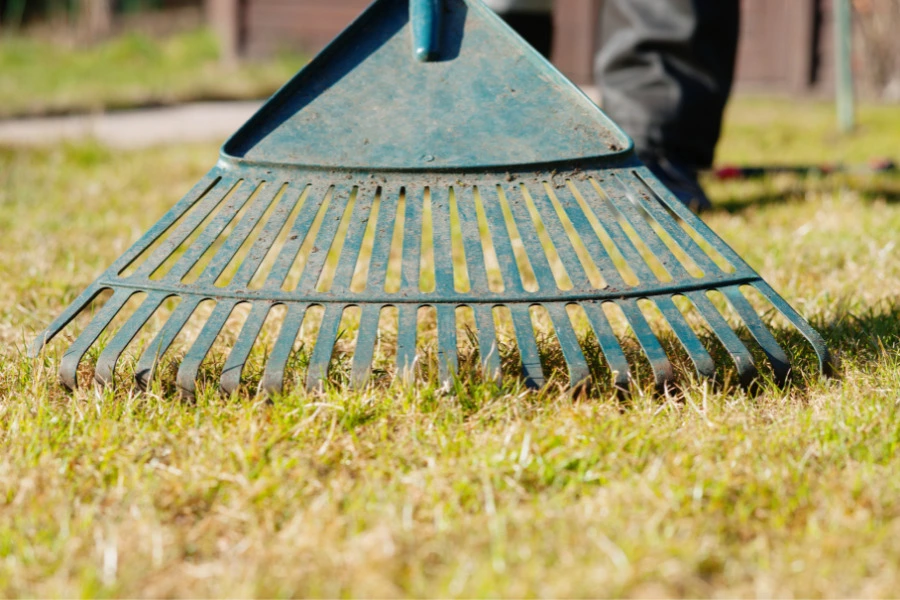
After mowing a U.S. lawn, use a leaf blower to move grass clippings from hard surfaces toward one collection point. Start with the lowest useful air speed. Work in the same direction as the wind when possible. Blow clippings away from roads, storm drains, windows, doors, cars, pets, and people.
A good method is simple: mow first, let heavy clumps settle, sweep the edges inward, make one small pile, and collect or compost it. Avoid blowing clippings into the street or a storm drain. Local rules may restrict where yard waste can go, so check your city, county, or homeowners association guidance.

What You Need Before You Start
You need a leaf blower, eye protection, sturdy shoes, and a way to collect the clippings. A lawn bag, rake, tarp, or yard-waste bin can work.
Choose the blower that fits the job:
- Cordless electric blower: Good for small and medium yards. It starts quickly and makes less noise than many gas models.
- Corded electric blower: Useful near an outdoor outlet. Keep the cord behind you and away from the blower tube.
- Gas blower: Helpful for large areas or long work sessions. It needs fuel, ventilation, and more maintenance.
- Backpack blower: Designed for larger properties. It may be more power than a small lawn needs.
Before mowing, clear stones, sticks, toys, and other hard objects from the lawn. A blower can move small debris at high speed. Check the blower tube, battery, fuel level, and air intake before use.
Wear:
- Safety glasses or wraparound eye protection
- Closed-toe shoes with good grip
- Hearing protection when the blower is loud
- Long pants if dry clippings or dust may hit your legs
Do not blow clippings while children, pets, or bystanders are nearby. Keep the blower away from water, loose gravel, open windows, and parked vehicles.

The Best Way to Remove Grass Clippings With a Leaf Blower
The most effective method is to control the air stream instead of using full power from the start. A narrow, fast stream can scatter clippings. A lower setting moves them in a more controlled line.
1. Mow in a way that limits cleanup
Mow the lawn before blowing. If possible, mow when the grass is dry. Wet grass sticks to concrete, pavers, mower wheels, and the underside of the mower deck.
Use the mower’s side discharge with care. Aim the discharge toward the part of the lawn that still needs mowing. This reduces the amount of grass left on sidewalks and driveways.
If the grass is very tall, mow slowly and avoid cutting too much at once. Large wet clumps are harder to move with a blower. They may need a rake or hand collection first.
2. Let the clippings settle
Wait a few minutes after mowing if clippings are still floating in the air. This gives dust and light debris time to settle.
Do not blow while the mower is running. Turn the mower off before clearing clippings from its wheels, deck, or discharge chute. Follow the mower manual before reaching near the blade area.
3. Start at the farthest edge
Begin at the far end of the driveway, sidewalk, patio, or other hard surface. Work toward one collection area.
Keep the blower tube about 6 to 12 inches above the surface as a starting point. The ideal height depends on the blower and the material. Raise the tube if dust or gravel starts moving. Lower it slightly if the clippings do not move.
4. Use a shallow blowing angle
Point the tube slightly downward and across the surface. Do not point it straight down. A straight-down blast can push clippings into cracks or send dust into the air.
Use smooth side-to-side movements. Move the blower slowly enough to keep the clippings together. Think of the air stream as a broom, not a hammer.
5. Make a narrow windrow
A windrow is a long, narrow line of clippings. Push the clippings into a line along one side of the surface. Then move that line toward a final pile.
This two-stage method works better than trying to blow every clipping into one pile at once. It also reduces scattering.
6. Collect the pile
Use a dustpan, hand broom, rake, tarp, or gloved hands to collect the final pile. Place the material in a yard-waste bin if required by your local program.
You can often leave fine clippings on the lawn. Short clippings can break down and return organic matter to the soil. Remove thick clumps from the grass if they block sunlight or form wet mats.
7. Check the edges
Walk the area after the main pass. Look along:
- Curb lines
- Driveway cracks
- Sidewalk joints
- Fence edges
- Steps
- Garage thresholds
- Grass borders
- Patio corners
Use a lower blower speed for the final pass. This helps remove stray clippings without creating a dust cloud.
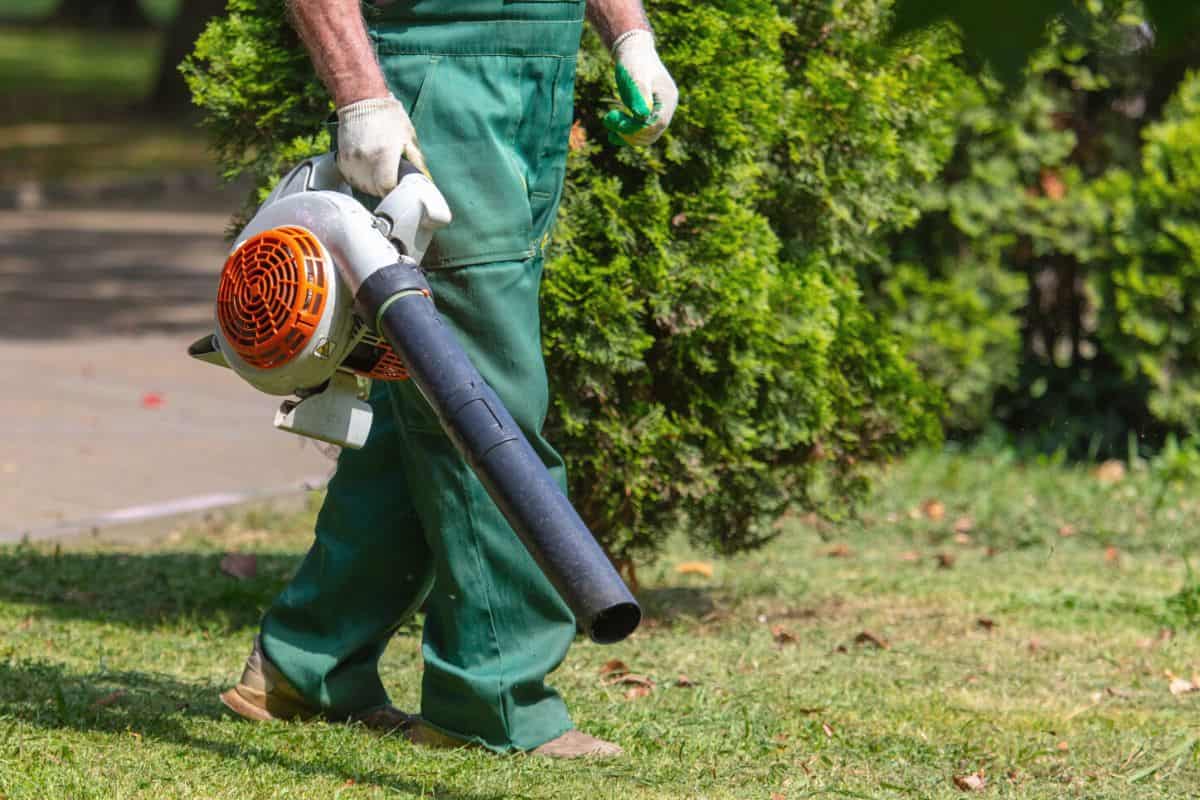
How to Blow Clippings From Common Surfaces
Different surfaces need different blower settings. Start low and increase power only when needed.
| Surface | Recommended approach | Main concern |
|---|---|---|
| Concrete driveway | Blow from the garage side toward the yard-waste pile | Dust and vehicle scratches |
| Sidewalk | Work along the path toward one safe collection point | People, doors, and roads |
| Asphalt | Use a low to medium setting | Dust and loose stones |
| Pavers | Aim across the joints, not directly into them | Clippings caught in gaps |
| Gravel | Use the lowest useful speed and a higher tube angle | Moving stones |
| Mulch beds | Blow parallel to the bed edge | Scattering mulch |
| Artificial turf | Use short passes at low power | Lifting infill |
| Patio furniture area | Clear loose items first | Dust entering cushions or screens |
Concrete and asphalt
Hard surfaces are usually the easiest. Blow along the length of the driveway or sidewalk. Keep the air stream low and angled across the surface.
Avoid directing clippings toward a garage, vehicle, open door, or street. If the surface is dusty, stop and let the dust settle before making a final pass.
Pavers and brick
Clippings can lodge between pavers. Use a moderate setting and blow across the joints rather than straight into them.
If the joints contain loose sand, test a small area first. Too much air can remove joint material along with the grass.
Gravel
Gravel requires care. A powerful blower can move stones into grass, landscaping, or a road. Raise the tube and use the lowest setting that moves the clippings.
For a few wet clumps on gravel, a rake may work better than a blower.
Mulch and flower beds
Blow parallel to the bed edge. Keep the tube pointed away from mulch, soil, flowers, and young plants. If grass clippings land deep in a bed, hand collection may be safer than using more air.
Artificial turf
Artificial turf may contain infill that can shift under strong air. Use short, gentle passes. Follow the turf maker’s care instructions if the surface has special infill or seams.

How to Remove Wet or Stubborn Grass Clippings
A leaf blower works best on light, dry clippings. Wet clippings are heavier and may stick to concrete, pavers, or mower parts.
Use this order when clippings will not move:
- Let the surface dry if weather allows.
- Break apart large clumps with a rake or stiff broom.
- Use a dustpan or flat shovel for thick piles.
- Blow the small pieces toward the collection point.
- Rinse the surface only after collecting the clippings, if needed.
Do not use a blower to force heavy wet clumps across a surface. This wastes battery power or fuel and may spread a thin layer that is harder to collect.
If clippings stick to the mower deck, turn off the mower and follow the owner’s manual. Disconnect the spark plug wire on a gas mower or remove the battery on a battery mower when the manual calls for it before working near the blade or deck.
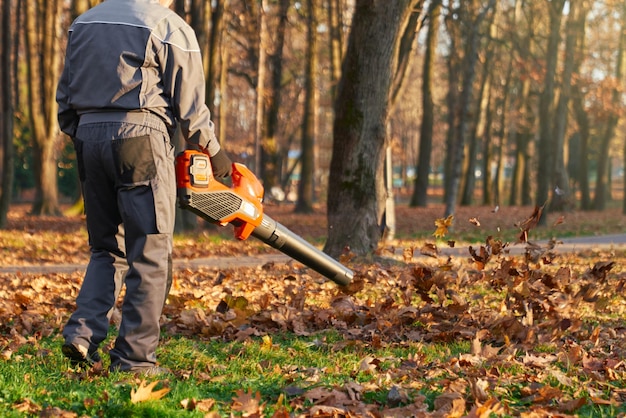
Where to Put Grass Clippings
Place grass clippings in the option allowed in your area. Common choices include:
- Leave short clippings on the lawn
- Add suitable clippings to a compost pile
- Put them in a municipal yard-waste bin
- Use a local drop-off or collection program
- Bag them for disposal when local rules require it
Keep clippings out of storm drains, streams, ditches, and streets. They can wash into drainage systems and add organic material where it does not belong. They can also create a slippery layer on pavement.
Do not put clippings in a compost pile if they are contaminated with trash, pet waste, chemical products, or other materials. Avoid creating a thick, wet layer of fresh grass in compost. Mix it with dry leaves or other brown material to improve airflow.
If you leave clippings on the lawn, spread out heavy piles. A thin layer is less likely to cover the grass. Remove large clumps from sidewalks and driveways even when you mulch the rest of the lawn.

How to Blow Grass Clippings Safely
Safe blower use depends on direction, visibility, and control. Never point the air stream at a person or animal, even at low power.
Follow these rules:
- Wear eye protection.
- Use hearing protection when needed.
- Keep people and pets away from the work area.
- Do not blow toward roads or moving traffic.
- Do not blow debris into storm drains.
- Keep the blower away from open windows and doors.
- Watch for stones, sticks, and hidden objects.
- Avoid operating a gas blower in a garage or enclosed space.
- Stop if dust reduces your view.
- Check local noise and yard-waste rules.
Be careful near cars. Grass clippings may not harm most paint, but dust, sand, and small stones can scratch a finish when pushed by strong airflow. Close car doors and windows before blowing nearby.
Use extra care in dry conditions. Dust can carry into neighboring yards or homes. A mask may help with nuisance dust, but it does not replace ventilation or proper control of the blower.

Common Mistakes and How to Fix Them
Using full power for every pass
Full power often scatters clippings instead of gathering them. Start at low power, then increase it only when the clippings resist movement.
Blowing clippings into the street
This creates a cleanup and safety problem. Blow toward your property’s collection area instead. If clippings reach the road, remove them with a rake or broom when traffic conditions are safe.
Blowing against the wind
Wind can carry clippings back across a clean surface. When possible, work with the wind. If the wind changes, make smaller piles and collect them more often.
Blowing gravel and mulch
A high setting can move landscaping materials. Raise the tube, reduce power, and aim across the edge. Hand-pick stubborn clumps.
Ignoring the corners
Most missed clippings collect along curbs, walls, fences, and garage doors. Use a slow edge pass after the main cleanup.
Blowing dust before it settles
Dust can enter homes, cars, and neighboring yards. Pause, let the air clear, and finish with less power.
Working on wet pavement
Wet pavement may be slippery. Wear shoes with good traction and avoid rushing. A broom may offer better control than a blower on heavy, wet clippings.

Troubleshooting: When the Clippings Will Not Move
| Problem | Likely cause | Better response |
|---|---|---|
| Clippings barely move | Wet or heavy material | Break them apart with a rake |
| Clippings scatter | Air speed is too high | Lower the speed and use shorter passes |
| Dust fills the air | Dry surface or loose soil | Stop, wait, and aim across the surface |
| Gravel moves | Tube is too low or power is too high | Raise the tube and reduce power |
| Clippings return | Wind is working against you | Change direction or collect smaller piles |
| Clippings stay in cracks | Air stream misses the gap | Use a broom, rake, or hand tool |
| Battery drains quickly | Long use at high power | Use lower power and remove large piles by hand |
| Blower loses force | Blocked intake or low battery | Turn it off, inspect it, and follow the manual |
If the blower vibrates, smells unusual, overheats, or makes a new grinding sound, stop using it. Turn it off and inspect it only after moving away from the work area. Use the manual for maintenance steps. Do not remove guards or operate a damaged blower.
A Fast Cleanup Routine for Most U.S. Yards
For a normal residential lawn, use this order:
- Mow the grass and direct discharge away from hard surfaces.
- Move large clumps from sidewalks and driveways with a rake.
- Start at the farthest edge.
- Blow with the wind, if practical.
- Push clippings into a narrow line.
- Move the line to one collection spot.
- Collect the pile or place it in the approved yard-waste location.
- Make a low-power pass along edges and cracks.
- Check the street, storm drains, cars, doors, and neighboring property.
- Store the blower safely and clean its intake if the manual permits it.
A small yard may take only a few minutes when the clippings are dry and spread thin. A large yard, wet grass, wind, gravel, or heavy clumps can require more time and hand tools.

Key Takeaways
- Use a leaf blower to move clippings from hard surfaces into one controlled pile.
- Start with low air speed and increase it only when needed.
- Work with the wind and away from roads, storm drains, homes, cars, people, and pets.
- Use a rake or broom for wet clumps, gravel, mulch, and deep cracks.
- Collect clippings where your local yard-waste rules allow.
- Leave fine clippings on the lawn only when they are spread thin and do not cover the grass.
Frequently Asked Questions
Can I blow grass clippings into my lawn?
Yes. Fine clippings can remain on the lawn when they are spread evenly. Do not leave thick piles, especially when the grass is wet. Heavy mats can block light and hold moisture against the turf.
Should I blow grass clippings into the street?
No. Keep clippings off streets and out of storm drains. Blow them toward a collection area on your property or use the yard-waste method required by your local government.
What is the best leaf blower speed for grass clippings?
Use the lowest speed that moves the clippings. Low power gives you more control and reduces dust, noise, and the risk of moving gravel or mulch. Increase power only for stubborn dry clippings.
Can a leaf blower remove wet grass clippings?
It can move small amounts, but wet clippings are heavy and sticky. Break up large clumps with a rake or broom first. Hand collection may be faster for thick piles.
Is it better to use a blower or a broom?
A blower is faster for dry clippings spread across a large driveway or sidewalk. A broom offers more control near doors, cars, gravel, mulch, and wet clumps. Many cleanup jobs work best with both tools.
Conclusion
The best way to remove grass clippings with a leaf blower is to gather them in stages. Start at the far edge, use a shallow air stream, work toward one pile, and finish with a low-power edge pass. Collect the clippings or leave only a thin, even layer on the lawn.
Before you begin, check the wind, clear people and pets, wear eye protection, and confirm your local rules for yard waste. Then use the blower as a controlled sweep rather than a high-speed blast.