
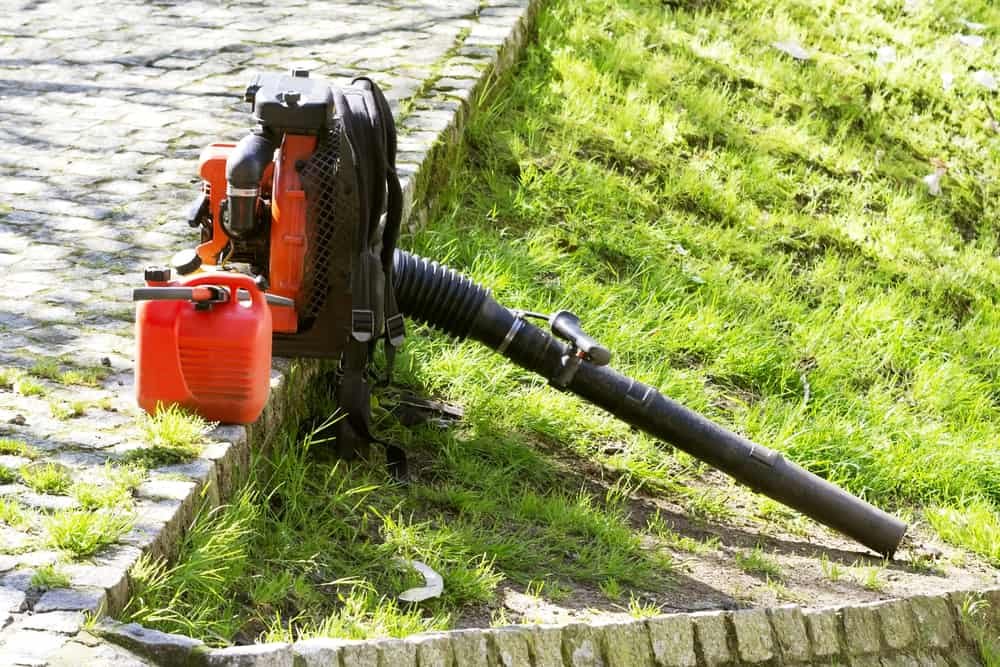
For a two-stroke leaf blower, mix fresh gasoline with the exact amount of two-stroke oil listed in the owner’s manual. Many newer blowers use a 50:1 gas-to-oil ratio, but some use 40:1 or 32:1. A four-stroke blower does not use premixed fuel.
The safest rule for homeowners in the United States is simple: check the fuel section of the blower manual before measuring anything. Using the wrong ratio can cause hard starting, smoke, poor performance, piston damage, or engine failure.

First, identify the type of leaf blower
A gas leaf blower is usually either a two-stroke engine or a four-stroke engine. The fuel mixture depends on this design.
Two-stroke leaf blowers
A two-stroke engine uses one fuel tank for gasoline and oil. The oil travels with the gasoline and lubricates the piston, crankshaft, and other internal parts.
You must mix the oil into the gasoline before filling the tank unless the blower has a separate, labeled oil-injection system. Most handheld gas blowers use premixed fuel.
Four-stroke leaf blowers
A four-stroke engine has separate systems for gasoline and engine oil. It uses regular gasoline in the fuel tank and engine oil in a separate crankcase.
Do not add two-stroke oil to the gasoline tank of a four-stroke blower. Read the manual and check for a separate engine-oil fill cap or dipstick.
Electric and battery leaf blowers
Corded electric and battery-powered blowers do not use gasoline or engine oil. Mixing fuel for one of these tools creates an unnecessary fire and storage hazard.
Look for the following clues:
- A fuel cap and spark plug usually indicate a gas engine.
- A separate oil dipstick may indicate a four-stroke engine.
- A fuel-and-oil ratio printed on the cap or manual usually indicates a two-stroke engine.
- A battery slot or power cord means the blower does not need fuel.
Find the correct gas-to-oil ratio
The correct ratio comes from the blower manufacturer, not from a general rule. Never guess the ratio based only on the blower’s age, size, or brand.
Common two-stroke ratios include:
| Gas-to-oil ratio | Gasoline | Two-stroke oil |
|---|---|---|
| 50:1 | 1 U.S. gallon | 2.6 U.S. fluid ounces |
| 40:1 | 1 U.S. gallon | 3.2 U.S. fluid ounces |
| 32:1 | 1 U.S. gallon | 4.0 U.S. fluid ounces |
| 50:1 | 5 U.S. gallons | 12.8 U.S. fluid ounces |
| 40:1 | 5 U.S. gallons | 16.0 U.S. fluid ounces |
| 32:1 | 5 U.S. gallons | 20.0 U.S. fluid ounces |
These amounts are calculated from the stated ratio. Your owner’s manual remains the controlling source because some manufacturers specify a particular oil type or a premeasured oil bottle.
How to calculate the oil amount
Use this formula:
Oil needed = gasoline volume ÷ ratio
For example, a 50:1 mixture needs:
- 1 gallon of gasoline ÷ 50 = 0.02 gallon of oil
- 0.02 gallon × 128 fluid ounces = 2.56 fluid ounces
Round only as directed by the manufacturer or measuring container. A small measuring error is more significant when mixing a small batch.
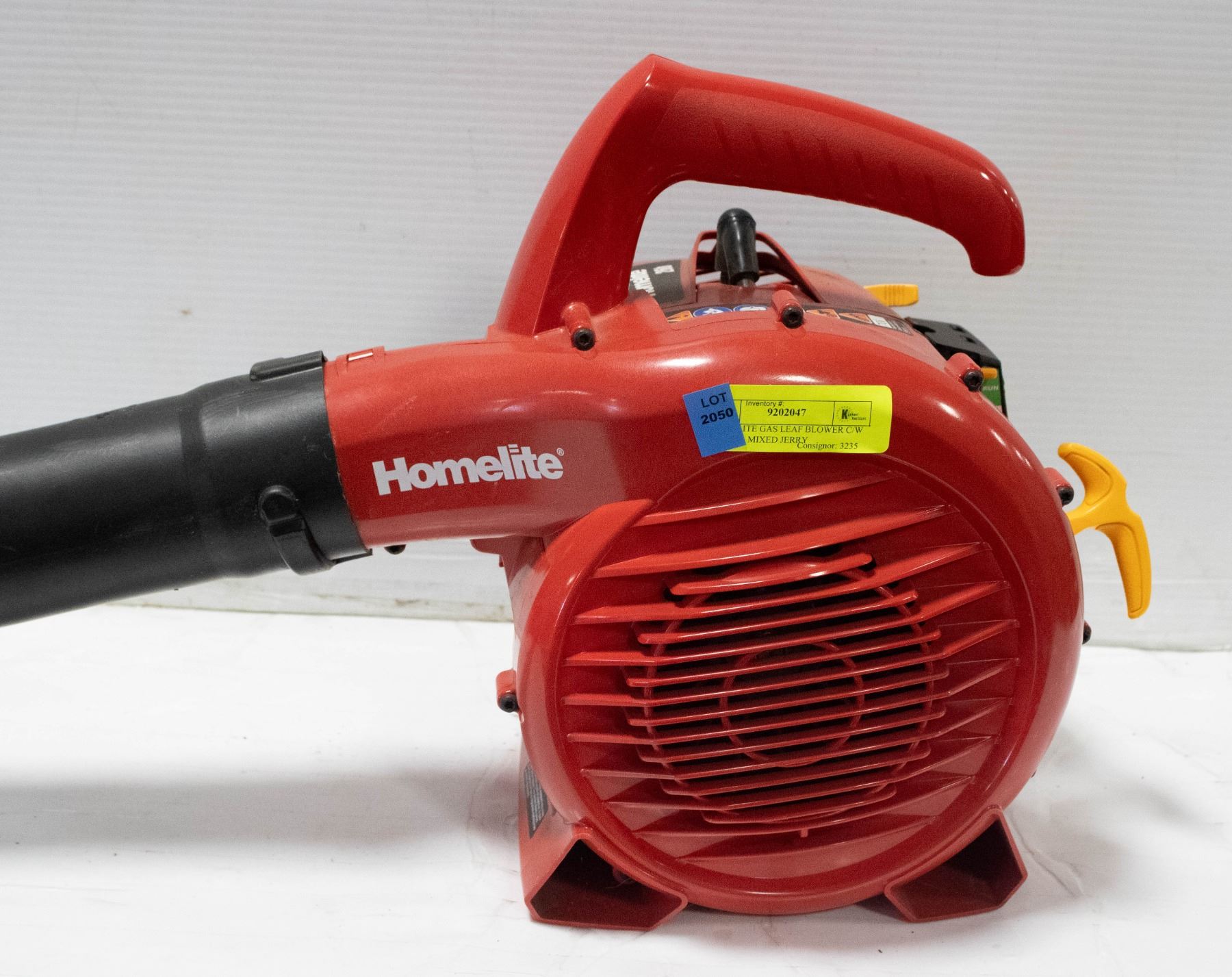
What gasoline and oil should you use?
Use the fuel grade and oil type listed in the manual. In many U.S. owner’s manuals, manufacturers permit regular unleaded gasoline with a minimum octane rating of 87 AKI, but this is not universal.
Choose the right gasoline
For most small two-stroke engines:
- Use fresh, unleaded gasoline.
- Use the minimum octane listed in the manual.
- Avoid gasoline that contains more ethanol than the manual permits.
- Do not use diesel fuel.
- Do not use gasoline mixed with water or other contaminants.
- Avoid fuel that has been stored for a long time.
The U.S. Environmental Protection Agency warns that E15 gasoline is not approved for use in many non-road engines and equipment, including many small engines. E85 is also not suitable for a typical leaf blower. Check the pump label and the blower manual.
Many manufacturers allow gasoline containing up to 10% ethanol, often labeled E10. Ethanol can absorb moisture and may cause fuel-system problems when fuel sits for long periods.
Choose air-cooled two-stroke oil
Use oil labeled for air-cooled two-stroke engines when the manual calls for it. Do not substitute automotive motor oil, gear oil, or four-stroke engine oil.
The manual may require a specific standard, such as:
- JASO FD or another JASO grade
- ISO-L-EGD
- A manufacturer-branded two-stroke oil
- A particular premixed fuel specification
The oil label and owner’s manual should agree. More oil is not automatically better. Too much oil can increase smoke, foul the spark plug, reduce power, and leave deposits. Too little oil can reduce lubrication and cause severe engine damage.
How to mix gas and oil safely
Mix fuel outdoors or in a well-ventilated area away from flames, sparks, cigarettes, pilot lights, and hot surfaces. Gasoline vapor can ignite easily.
What you need
Prepare these items:
- The leaf blower’s owner’s manual
- Fresh gasoline
- Correct air-cooled two-stroke oil
- An approved gasoline container
- A fuel-measuring cup or premeasured oil bottle
- A clean funnel, if needed
- A rag for small spills
- Protective gloves, if preferred
Do not mix fuel in a glass jar, food container, open bucket, or unapproved bottle. Keep gasoline away from children and pets.
Step-by-step method
-
Confirm that the blower is a two-stroke model.
Do not mix fuel until you know the engine requires gasoline and oil together. -
Read the required ratio.
Check the manual, fuel-cap label, or manufacturer’s official instructions. Use the exact ratio for that model. -
Use a clean fuel container.
Dirt, water, and old fuel can clog the carburetor and fuel filter. -
Add part of the gasoline first.
Pour about half of the gasoline into the approved container. This gives the oil room to blend. -
Measure the oil accurately.
Use the amount required for the gasoline volume and ratio. Do not estimate by eye. -
Add the two-stroke oil.
Pour the oil into the gasoline container. -
Add the rest of the gasoline.
Leave some space in the container. Do not fill it to the very top because fuel expands with heat. -
Close the container and mix it.
Gently shake or rotate the sealed container until the oil is evenly distributed. Do not shake an open container. -
Label the container.
Write the ratio and date on it, such as “50:1—mixed May 2026.” -
Fill the cool blower outdoors.
Set the blower on a stable surface. Wipe away any spill before starting the engine. -
Tighten the fuel cap.
Move the blower away from the fueling area before starting it.
Example: mixing one gallon at 50:1
For a blower that requires a 50:1 ratio:
- Pour about half a gallon of fresh gasoline into an approved container.
- Measure 2.6 U.S. fluid ounces of air-cooled two-stroke oil.
- Add the oil to the container.
- Add the remaining gasoline until the container holds one gallon.
- Seal and gently mix the fuel.
A premeasured bottle labeled for one gallon at 50:1 can reduce measuring errors. Confirm that the bottle’s ratio matches the blower’s manual.

Signs that the mixture is correct
A correct fuel mixture should allow the blower to start, idle, and accelerate normally when the air filter, spark plug, and fuel system are in good condition.
Normal signs include:
- The engine starts using the normal choke and starting procedure.
- The engine reaches full speed without excessive hesitation.
- The blower produces little or no unusual smoke after warm-up.
- The engine does not stall when you press the throttle.
- The spark plug does not quickly become wet with oil or covered in heavy deposits.
These signs do not prove that the ratio is perfect. A blower can run with the wrong mixture for a while and still suffer internal wear.
Common mixing mistakes and their effects
Using the wrong ratio
A 50:1 blower should not receive a 32:1 mixture unless the manufacturer specifically allows it. A richer oil mixture may cause smoke, plug fouling, and carbon buildup. A leaner oil mixture may reduce lubrication and damage the engine.
Adding oil directly to the blower tank
Do not pour oil into the fuel tank and then guess how much gasoline to add. The oil may not blend evenly, and the final ratio can be wrong.
Mix the fuel in a separate approved container first.
Using four-stroke oil
Four-stroke oil is designed for a crankcase, not for combustion with gasoline in a two-stroke engine. It can create deposits and poor running.
Using old or contaminated fuel
Old fuel may cause hard starting, surging, stalling, and a clogged carburetor. Water or dirt can damage the fuel system.
Filling a hot engine
Gasoline can vaporize quickly near a hot muffler or engine. Shut the blower off, let it cool, and refuel outdoors.
Storing fuel in an unapproved container
Gasoline should remain in a container designed for fuel storage. Keep the container closed, upright, cool, and away from living areas and ignition sources.
What to do if you mixed the fuel incorrectly
Do not start the blower if you know the fuel ratio is wrong or if you accidentally used straight gasoline in a two-stroke engine.
If the mixture contains too much oil
Drain the mixture into an approved container and dispose of it through a local household hazardous-waste or used-fuel program. Do not pour gasoline onto soil, into a drain, or into the trash.
Do not try to correct a wrong mixture by adding gasoline directly to the blower tank. You may still end up with an unknown ratio.
If the mixture contains too little oil
Stop using it. A low-oil mixture can damage a two-stroke engine even if the blower still runs.
Drain the tank and fuel system according to the manufacturer’s instructions. If the blower ran for more than a short time on very lean fuel, have a qualified small-engine technician inspect it.
If you used the wrong type of fuel
Do not start the engine. Drain the tank safely and follow the manual’s procedure. If diesel, water, or a large amount of incorrect oil entered the system, professional service may be needed.

Troubleshooting a blower that will not run well
Fuel is only one possible cause of poor performance. Check problems in a safe order.
| Symptom | Possible causes | Safe first checks |
|---|---|---|
| Will not start | Old fuel, flooded engine, wrong choke setting, fouled plug | Confirm fresh correct fuel and follow the starting steps |
| Starts, then stops | Blocked fuel filter, dirty carburetor, stale fuel, blocked vent | Stop and inspect only items listed in the manual |
| Excessive smoke | Too much oil, wrong oil, overfilled mixture | Stop using the fuel and verify the ratio |
| Weak power | Dirty air filter, blocked spark arrestor, stale fuel, engine wear | Check cleanable parts with the engine cool |
| Surging or uneven idle | Restricted fuel flow, air leak, dirty carburetor | Use fresh fuel and seek service if the issue continues |
| Runs hot or seizes | Too little oil, blocked cooling fins, lean fuel condition | Stop immediately and allow the engine to cool |
Do not adjust a carburetor by guesswork. A wrong adjustment can create a lean condition, increase engine temperature, or violate emissions settings. Use the manufacturer’s procedure or contact a qualified technician.

How to store mixed fuel
Fuel quality declines during storage, especially when the container is exposed to heat, air, or moisture. The exact storage period depends on the fuel, container, stabilizer, and manufacturer’s instructions.
For better storage:
- Use fresh fuel when possible.
- Add fuel stabilizer at the rate printed on the stabilizer label.
- Mix the stabilizer into the gasoline before adding the two-stroke oil unless the product instructions say otherwise.
- Mark the mixture date and ratio on the container.
- Store fuel in an approved, closed container in a cool, well-ventilated place.
- Keep fuel away from furnaces, water heaters, electrical equipment, and open flames.
- Do not store gasoline inside a home, basement, or vehicle.
- Follow the blower manual before placing the tool into seasonal storage.
Some manufacturers recommend draining the fuel system before long-term storage. Others allow stabilized fuel to remain in the tank. Follow the manual for your exact model.
Key takeaways
- Confirm that the blower has a two-stroke engine before mixing fuel.
- Use the ratio printed in the owner’s manual.
- 50:1 is common, but it is not universal.
- At 50:1, use about 2.6 fluid ounces of two-stroke oil per U.S. gallon of gasoline.
- Use air-cooled two-stroke oil, not automotive motor oil.
- Mix fuel in an approved container before filling the blower.
- Avoid E15, E85, old fuel, contaminated fuel, and open flames.
- If the ratio is wrong, do not start the engine. Drain the fuel safely.
Frequently asked questions
Can I use a 50:1 fuel mix in a leaf blower that calls for 40:1?
No. Use the ratio specified for that blower. A 50:1 mixture contains less oil than a 40:1 mixture, so using it in a 40:1 engine may reduce lubrication.
How much oil goes into one gallon of gas at 50:1?
Use 2.6 U.S. fluid ounces of two-stroke oil for one U.S. gallon of gasoline.
Can I use regular 87-octane gas?
Often, yes, if the blower manual lists 87 AKI as the minimum. Check the manual first. Also verify the permitted ethanol content.
Can I use premixed fuel?
Yes, if its gas-to-oil ratio, fuel type, and octane meet the blower manufacturer’s requirements. Premixed fuel can reduce measuring errors, but it does not override the manual.
What happens if I put straight gas in a two-stroke blower?
The blower may run briefly, but the engine may not receive enough lubrication. Stop using it, avoid repeated starting attempts, and drain the fuel according to the manual. Professional inspection may be needed if it ran for more than a short time.
Can I leave mixed fuel in the blower over winter?
Only if the manufacturer permits it and the fuel is fresh and properly stabilized. Many manufacturers recommend a specific winter-storage procedure, such as draining the tank and running the carburetor dry.
Conclusion
To mix gas and oil for a leaf blower, first confirm that it is a two-stroke model. Then follow the exact ratio in the manual, measure the oil carefully, blend it in an approved container, and fuel the cool blower outdoors.
If you cannot find the ratio, stop before adding fuel. Locate the model number and download the official U.S. owner’s manual from the manufacturer. That small step can prevent a costly engine repair.