
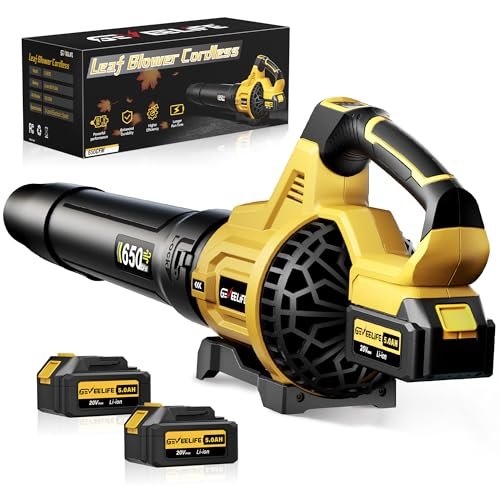
A leaf blower battery usually takes 30 minutes to 3 hours to charge. Most common 20V, 40V, and 56V lithium-ion batteries take about 60 to 120 minutes with the charger supplied by the manufacturer.
The exact time depends on the battery’s capacity, charger speed, starting charge, temperature, and battery age. A small battery on a rapid charger may finish in less than an hour. A large battery on a standard charger may need several hours.
For the most accurate answer, check the charging time in your leaf blower’s owner’s manual. Charger times can differ even when two batteries have the same voltage.

Typical Leaf Blower Battery Charging Times
The table below gives general estimates for common cordless leaf blower batteries. These are not universal times. They are useful planning ranges based on common lithium-ion battery sizes and charger types.
| Battery type | Typical capacity | Standard charger | Rapid charger |
|---|---|---|---|
| 18V or 20V battery | 2.0 Ah | 45–90 minutes | 20–45 minutes |
| 18V or 20V battery | 4.0 Ah | 90–150 minutes | 40–75 minutes |
| 36V or 40V battery | 2.5 Ah | 60–120 minutes | 30–60 minutes |
| 36V or 40V battery | 4.0 Ah | 90–180 minutes | 45–90 minutes |
| 56V or 60V battery | 2.5 Ah | 60–120 minutes | 30–60 minutes |
| 56V or 60V battery | 5.0 Ah | 120–240 minutes | 45–100 minutes |
A battery with a higher voltage is not always slower to charge. The battery’s amp-hour rating and the charger’s output matter more than voltage alone.
For example, a 40V 2.5 Ah battery may charge faster than a 20V 5.0 Ah battery. The 40V battery has a similar energy capacity, but the charging system may use a different current and charge profile.
Manufacturers list different times for their own systems. For example, official charging charts from brands such as EGO, Greenworks, and STIHL show that charging speed varies by battery size and charger model.

What Determines Leaf Blower Battery Charging Time?
Battery charging time is mainly controlled by four factors: capacity, charger output, starting charge, and temperature.
Battery capacity
Battery capacity is measured in amp-hours, or Ah. It describes how much electrical charge the battery can store.
A 5.0 Ah battery stores more energy than a 2.5 Ah battery from the same voltage system. It will usually take about twice as long to charge when both batteries use the same charger and begin at the same charge level.
A larger battery also usually runs a leaf blower for longer. The trade-off is added weight, cost, and charging time.
Charger output
The charger controls how quickly energy enters the battery. A charger with a higher current rating can often charge the same battery faster.
A simple estimate is:
Charging time = battery capacity in Ah ÷ charger output in amps × charging factor
The charging factor allows for energy loss and the slower final stage of charging. A value between 1.1 and 1.3 is a useful rough estimate.
For example, a 4.0 Ah battery connected to a 2-amp charger may take:
4.0 Ah ÷ 2 amps × 1.2 = about 2.4 hours
this is only an estimate. The battery management system may reduce current near full charge.
Starting charge level
A nearly empty battery takes longer than a battery that is half full. Some chargers also spend extra time balancing battery cells near the end of the cycle.
A battery may reach a high charge level quickly, then charge more slowly during the final stage. This is normal for lithium-ion batteries.
Temperature
Lithium-ion batteries charge best at moderate room temperatures. Very hot or cold conditions can cause the charger to reduce or pause charging.
Do not charge a battery immediately after heavy use if it feels hot. Let it cool first. Do not charge a frozen battery. Follow the temperature limits in the owner’s manual.

How to Calculate an Estimated Charging Time
You can estimate charge time by checking the labels on the battery and charger.
Step 1: Find the battery capacity
Look for a label such as:
- 2.0 Ah
- 4.0 Ah
- 5.0 Ah
- 8.0 Ah
Some manuals list watt-hours instead of amp-hours. Watt-hours are calculated by multiplying voltage by amp-hours:
Watt-hours = volts × amp-hours
For example, a 40V 4.0 Ah battery stores about 160 watt-hours under the manufacturer’s rating system.
Step 2: Find the charger output
The charger may list its output in amps. Look for wording such as:
- Output: 20V, 2A
- Output: 40V, 4A
- Output: 56V, 8A
Some brands do not make the output easy to find. In that case, use the charging-time chart in the manual rather than guessing from the charger’s input rating.
Step 3: Apply the estimate
Use this formula:
Battery Ah ÷ charger amps × 1.1 to 1.3 = estimated hours
For a hypothetical 5.0 Ah battery with a 2.5-amp charger:
5.0 ÷ 2.5 × 1.2 = about 2.4 hours
That estimate does not replace the manufacturer’s stated time. It helps explain why a large battery takes longer than a small one.
Step 4: Add time for heat or a very low charge
If the battery is hot, cold, deeply discharged, or several years old, charging may take longer. A charger light may also remain on briefly while the system completes its final charge checks.

How to Know When a Leaf Blower Battery Is Fully Charged
Most cordless leaf blower systems use indicator lights on the charger or battery.
Common signals include:
- A flashing light while charging
- A solid green light when charging is complete
- A red or orange light for a fault or unsuitable temperature
- No light when the charger is not receiving power
- A display showing a percentage or battery bars
Indicator colors differ by brand. Read the label beside the light or check the manual for the exact meaning.
Do not rely only on a battery gauge shown on the leaf blower. Some gauges display an approximate charge level rather than a precise percentage.
A full battery should normally show the charger’s completed status. The battery may also feel slightly warm, but it should not be excessively hot, swollen, cracked, or leaking.

Why Is My Leaf Blower Battery Taking So Long to Charge?
A long charging time does not always mean the battery is defective. Check the simplest and safest causes first.
1. The battery is too hot or too cold
Many lithium-ion chargers pause charging outside their safe temperature range. Move the battery indoors and let it reach room temperature naturally.
Do not use a heater, hair dryer, freezer, or other device to change the battery temperature.
2. The charger is the wrong model
Battery platforms may use different chargers for different voltages, generations, or battery types. A charger that fits physically may still be electrically incompatible.
Use only the charger approved for that battery system. Do not force a battery onto a charger.
3. The charger is in its slow final stage
Charging often slows near full capacity. This helps protect the cells and allows the battery management system to complete the cycle.
If the charger reaches the full indicator within the time listed in the manual, the slower final stage is usually normal.
4. The battery is old or worn
A lithium-ion battery gradually loses capacity after repeated use and over time. Age can lead to shorter run time, longer charging, or both.
A battery that becomes unusually hot, loses charge quickly, shuts down under light use, or will not charge may need professional inspection or replacement.
5. The contacts are dirty
Unplug the charger before checking the battery contacts. If the contacts have dust or debris, wipe them gently with a clean, dry cloth.
Do not scrape the contacts with metal tools. Do not apply water or household cleaner unless the manufacturer specifically permits it.
6. The outlet or charger has a fault
Try a known-working outlet if the manual allows it. Inspect the cord, plug, and charger housing for damage.
Stop using the charger if the cord is cut, the housing is cracked, it smells burnt, or it makes unusual sounds. Contact the manufacturer or an approved service center.

How Long Does a Leaf Blower Battery Last on One Charge?
Charging time and run time are different measurements.
A battery may charge in 90 minutes but power a leaf blower for only 15 to 30 minutes at high speed. Runtime depends on:
- Battery capacity
- Blower motor design
- Air speed and air volume settings
- Use of a turbo mode
- Wet or heavy leaves
- Ambient temperature
- Battery age
- Blocked air inlets or dirty parts
A larger Ah rating usually provides longer runtime within the same battery platform. For example, a 5.0 Ah battery generally runs longer than a 2.5 Ah battery, but it may weigh more and take longer to charge.
Manufacturers often publish estimated runtime under selected test conditions. Treat those figures as comparisons, not guarantees. Continuous turbo use can reduce runtime much faster than low-speed work.
For longer yard work, one fully charged spare battery may be more useful than waiting for one battery to recharge. Make sure the spare battery matches the blower’s voltage platform and is approved by the manufacturer.
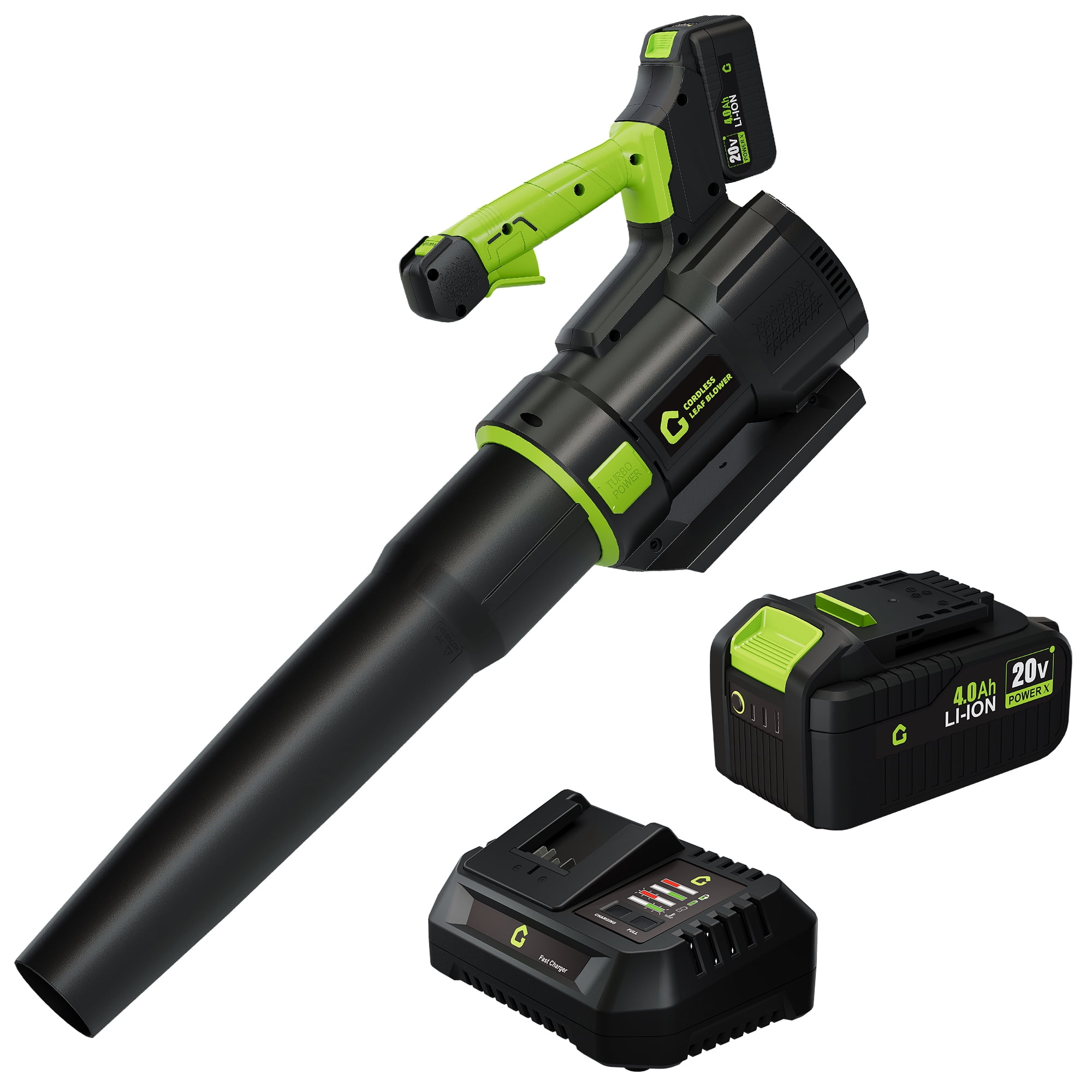
Can You Leave a Leaf Blower Battery on the Charger?
Follow the manufacturer’s instructions. Many modern chargers stop or reduce charging when the battery reaches full capacity, but that does not mean every charger and battery combination is safe to leave connected without limits.
For routine storage:
- Charge the battery with the approved charger.
- Place it on a dry, stable, nonflammable surface.
- Keep it away from direct sun, heaters, and flammable materials.
- Remove it from the charger when the manual recommends doing so.
- Store it within the temperature range listed by the manufacturer.
The U.S. Consumer Product Safety Commission advises consumers to use the correct charger, avoid damaged lithium-ion batteries, and stop using a battery that shows signs of damage or overheating.
Never charge a swollen, cracked, wet, or damaged battery. Do not place a battery in household trash. Contact your local waste authority or use a household hazardous-waste or battery recycling program.

Common Charging Mistakes to Avoid
Avoiding a few common mistakes can reduce damage and safety risks.
- Do not mix voltage systems. A 40V battery is not interchangeable with a 20V or 56V system.
- Do not use an unapproved charger. Matching the plug is not enough.
- Do not charge a hot battery. Let it cool in a safe place first.
- Do not charge a damaged battery. Replace it or ask the manufacturer for guidance.
- Do not cover the charger. Airflow helps control heat.
- Do not use an extension cord unless the manual allows it. Some manufacturers prohibit extension cords with certain chargers.
- Do not store the battery in a hot vehicle. High heat can shorten battery life and increase risk.
- Do not keep using a battery that swells or leaks. Move away from it and contact the manufacturer or local hazardous-waste service for instructions.
A charger that becomes mildly warm may be operating normally. Strong heat, smoke, a burning smell, sparks, or unusual noise is not normal. Unplug it if you can do so safely and stop using the equipment.

Which Battery and Charger Setup Is Best for Your Yard?
The best setup depends on how long you need to work and how often you use the blower.
| Yard work pattern | Practical setup |
|---|---|
| Small yard and short cleanup | One small battery and standard charger |
| Weekly cleanup of a medium yard | One medium battery with a faster charger |
| Large yard or heavy leaves | A high-capacity battery or two compatible batteries |
| Long work sessions | Two batteries so one can charge while the other is in use |
| Occasional use | Standard charger, with correct storage between uses |
A rapid charger can reduce waiting time, but it may cost more and can produce more heat. A standard charger may be adequate if you use the blower for only a few minutes at a time.
Do not select a charger by speed alone. Confirm that it is designed for the exact battery platform. The battery, charger, and blower should be compatible with one another.

FAQs About Charging Leaf Blower Batteries
How long does a 40V leaf blower battery take to charge?
A 40V battery commonly takes 60 to 180 minutes to charge, depending on its Ah rating and charger. A small 2.0–2.5 Ah battery may charge in about an hour. A 4.0–5.0 Ah battery may need two to three hours on a standard charger.
How long does a 20V leaf blower battery take to charge?
A 20V battery often takes 45 to 150 minutes. Small 2.0 Ah batteries charge faster than 4.0 Ah or 5.0 Ah batteries. The charger’s amp rating can change the result significantly.
Can I use a different brand’s charger?
Usually, no. Even if the battery fits, the charger may not use the correct voltage, current, or communication system. Use the charger listed for that battery platform.
Why does my battery charge but run for only a few minutes?
Possible causes include an aging battery, high-power turbo use, cold conditions, blocked airflow, or a battery gauge that is out of calibration. If runtime has dropped sharply, contact the manufacturer or an authorized service center.
Should I fully drain a lithium-ion leaf blower battery before charging it?
No. Lithium-ion batteries do not need to be fully drained before charging. Charging after normal use is generally acceptable, provided the battery is not hot or damaged and the manufacturer’s instructions allow it.
Conclusion
Most leaf blower batteries take about one to two hours to charge, but the full range can be roughly 30 minutes to 3 hours. Battery capacity, charger output, temperature, starting charge, and battery age determine the actual time.
Check the Ah rating on the battery and the charging chart in the owner’s manual. Use the approved charger, let hot batteries cool, and stop using any battery that is swollen, cracked, leaking, or unusually hot.
For your next step, identify the battery’s voltage and Ah rating, then compare them with the charger model and the manufacturer’s stated charging time.