

A cordless leaf blower battery usually lasts 15 to 60 minutes per charge. Light-duty blowers may run longer on low speed, while powerful models used at full throttle may last 10 to 20 minutes. Runtime depends on the battery’s watt-hours, blower power, speed setting, debris, and battery age.
For a typical American homeowner, one fully charged battery is often enough for a small driveway, patio, or yard cleanup. Larger lawns may need a second battery or a larger battery pack.
This guide explains how long a leaf blower battery lasts per charge, how long the battery itself may last before replacement, and how to get more runtime from it.
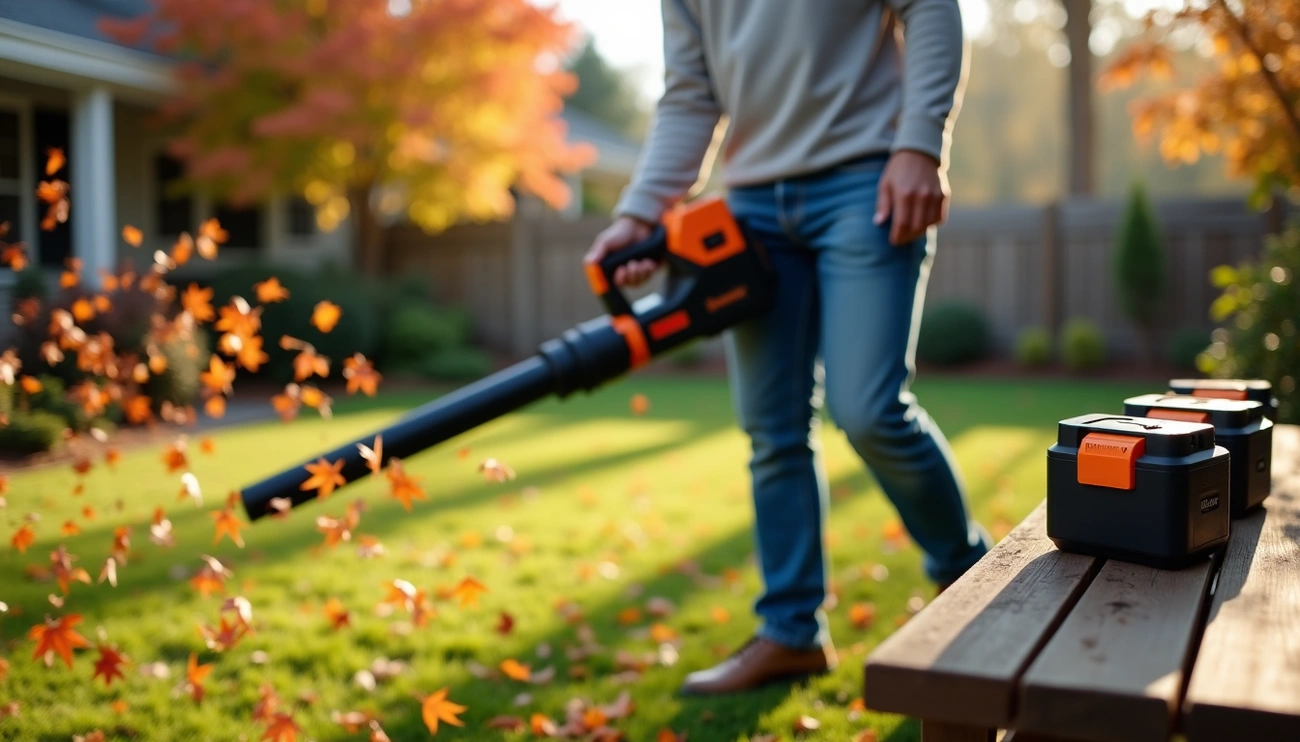
Typical Leaf Blower Battery Runtime
Most cordless leaf blowers run for different lengths of time based on their speed setting.
| Blower use | Typical runtime per charge |
|---|---|
| Low speed for dry leaves | 30–60 minutes |
| Medium speed for general cleanup | 20–40 minutes |
| High speed for wet leaves | 10–25 minutes |
| Turbo mode | 5–15 minutes |
| Compact handheld blower | 20–60 minutes |
| High-power handheld blower | 10–30 minutes |
| Backpack battery blower | 30–90 minutes, depending on the battery |
These ranges are practical estimates, not guarantees. A manufacturer’s runtime claim may use a specific battery, speed, nozzle, and test method. Real yard work can produce shorter results because users often change speed, clear heavier debris, or work against wind.
A blower used only to move dry grass from a sidewalk may run for much longer than the same blower used to push wet leaves across thick grass. Turbo mode also uses much more energy than low speed.
Why runtime claims vary
Manufacturers may measure runtime under controlled conditions. Some tests use continuous operation at a set speed. Others may measure intermittent use, where the trigger is released between tasks.
Before comparing two blowers, check:
- The battery capacity used in the test
- The speed setting
- Whether turbo mode was included
- The blower’s air volume and air speed
- Whether the test measured continuous or intermittent operation
- The battery temperature and age
A blower advertised as running for 60 minutes may reach that figure only on low speed with a large battery. That does not mean it will run for 60 minutes at maximum power.
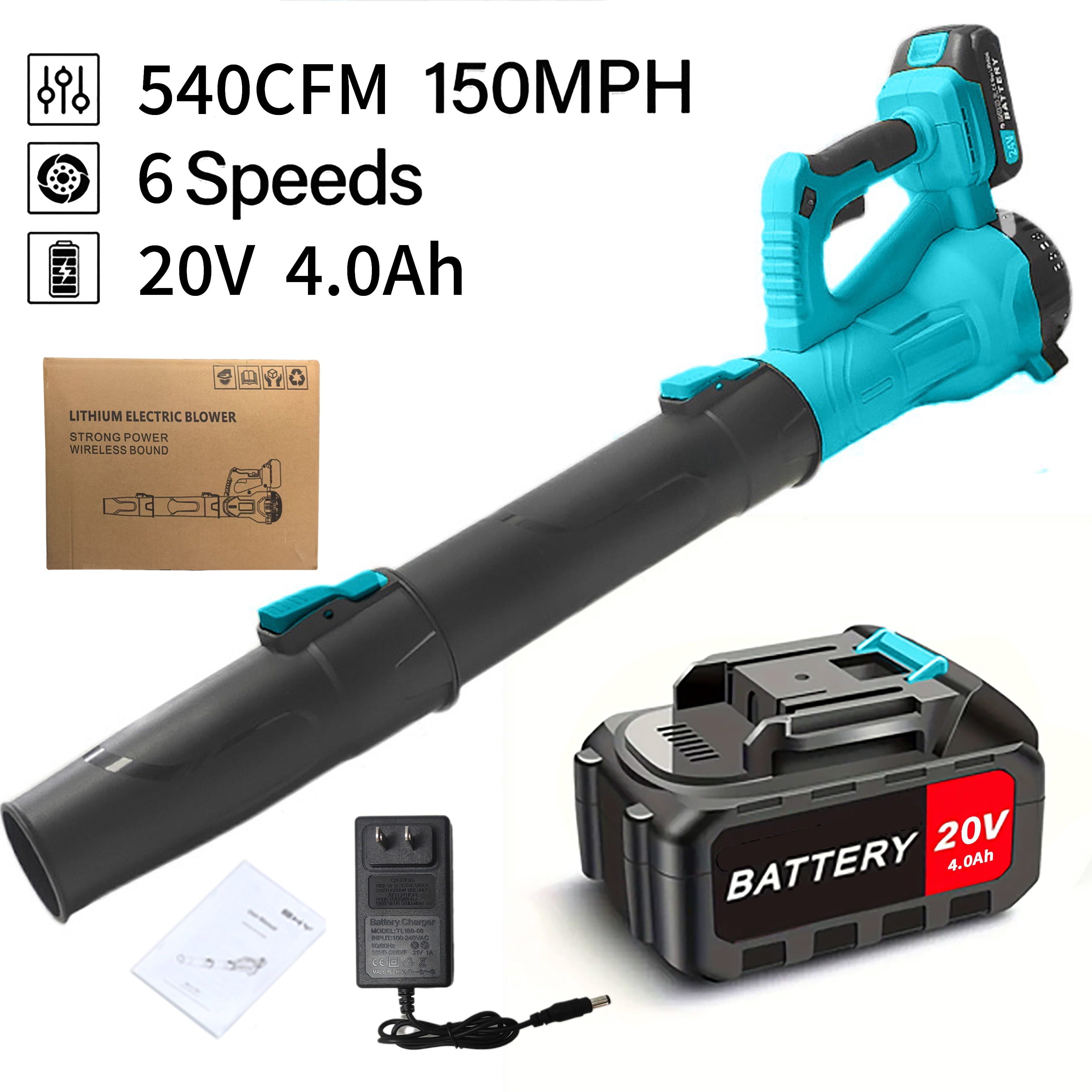
How Battery Size Affects Leaf Blower Runtime
Battery size is best compared by watt-hours, or Wh. Watt-hours estimate how much energy a battery stores.
The basic formula is:
Watt-hours = volts × amp-hours
For example:
- A 40-volt, 2.5-amp-hour battery stores about 100 Wh.
- A 40-volt, 5.0-amp-hour battery stores about 200 Wh.
- A 56-volt, 5.0-amp-hour battery stores about 280 Wh.
A battery with twice the watt-hours may provide close to twice the runtime on the same blower. The result will not always be exact because larger batteries can change tool balance, heat, and power demand.
Example runtime calculation
Suppose a leaf blower uses an estimated 500 watts during normal operation. A 200 Wh battery would provide:
200 Wh ÷ 500 W = 0.4 hours
That equals about 24 minutes under those conditions.
This is a hypothetical calculation. Actual runtime is usually lower because batteries do not deliver all their stored energy as useful output, and blower power changes with speed.
Voltage does not tell the whole story
A higher-voltage battery is not automatically a longer-lasting battery. A 40-volt battery with 5 amp-hours stores about 200 Wh. A 60-volt battery with 2.5 amp-hours stores about 150 Wh.
In that example, the 40-volt battery stores more energy despite the lower voltage.
Voltage mainly describes the electrical system and the power the tool can use. Amp-hours describe battery capacity within that voltage system. Watt-hours provide the more useful comparison across different voltage platforms.

What Changes How Long a Leaf Blower Battery Lasts?
The largest factors are speed, debris, battery size, temperature, and blower design.
Speed setting
Speed has a major effect on runtime. A blower on low speed may use much less power than one running at full throttle. Use the lowest setting that moves the debris.
Low speed works well for:
- Dry leaves on pavement
- Grass clippings
- Dust and light debris
- Cleaning around flower beds
- Clearing a vehicle or garage floor
High speed may be needed for:
- Wet leaves
- Pine needles
- Heavy piles
- Debris trapped in grass
- Moving material uphill or against wind
Turbo mode is useful for short bursts. Using it for the entire job can drain the battery quickly.
Air volume and air speed
Leaf blowers are commonly rated by:
- CFM: cubic feet per minute, or the volume of air moved
- MPH: miles per hour, or the speed of the air stream
Higher CFM helps move larger amounts of leaves. Higher MPH helps break up or shift dense, wet, or stuck debris.
A powerful blower may clear a job faster but use more energy each minute. Total battery use depends on both runtime and the time needed to finish the work.
Type of debris
Dry leaves are usually easy to move. Wet leaves, acorns, pine cones, and damp grass need more force.
A blower may run longer when it moves light debris quickly, even if the motor is powerful. It may run for less time when the user holds the trigger at high speed to move heavy material.
Nozzle design
A narrow nozzle can increase air speed at the outlet. It may help with stubborn debris but can also encourage high-speed use.
A wider nozzle may move more material over a larger area. The best choice depends on whether the job requires concentrated force or broad cleanup.
Temperature
Very hot or cold conditions can affect lithium-ion battery performance. A cold battery may provide less power until it warms. Heat from heavy use can also cause the battery or tool to reduce output or stop temporarily.
Do not charge a battery immediately after demanding use if the manufacturer says to let it cool first. Place it in a dry, moderate-temperature area and follow the charger instructions.
Battery age and condition
Lithium-ion batteries gradually lose capacity. An older battery may still operate normally but run for less time than when new.
Runtime can drop faster if the battery has been:
- Stored fully discharged
- Exposed to high heat
- Dropped or physically damaged
- Charged with the wrong charger
- Left in a hot vehicle
- Used beyond its intended tool system

How to Estimate Your Own Leaf Blower Runtime
The most useful estimate comes from your actual cleanup pattern.
Step 1: Check the battery rating
Find the voltage and amp-hour rating on the battery label or product manual. Multiply them to estimate watt-hours.
For example:
56 volts × 2.5 amp-hours = 140 Wh
Step 2: Check the blower’s power information
Some manuals list power use or provide runtime charts. Others provide only battery recommendations and expected use.
If the manual gives runtime for a specific battery, use that figure as the starting point. Confirm the speed and test conditions.
Step 3: Adjust for your speed setting
Use a shorter estimate if you:
- Run at full throttle
- Use turbo often
- Move wet or compacted debris
- Work on thick grass
- Use the blower continuously
Use a longer estimate if you:
- Work mostly on low speed
- Release the trigger often
- Clear hard surfaces
- Move dry leaves
- Use a larger battery
Step 4: Measure one real cleanup
Charge the battery fully. Use the blower as you normally would. Record how long it works before the battery indicator shows low charge or the tool stops.
Repeat the test on a similar day if the result seems unusual. A single test may be affected by temperature, wind, debris, or an incomplete charge.
A simple planning example
Suppose your yard cleanup takes 25 minutes. Your blower runs for about 20 minutes at the speed you need.
You have three practical choices:
- Use a larger compatible battery.
- Carry a charged spare battery.
- Reduce the time spent at maximum speed by working in smaller sections.
The best option depends on battery cost, tool weight, charging time, and the size of your property.

How Long Does a Leaf Blower Battery Take to Charge?
A leaf blower battery often takes 30 minutes to several hours to charge, depending on its capacity and charger.
Typical charging times may look like this:
| Battery size | Basic charger | Fast charger |
|---|---|---|
| Small battery | 30–90 minutes | 20–45 minutes |
| Medium battery | 1.5–3 hours | 30–90 minutes |
| Large battery | 3–6 hours | 1–3 hours |
These are general ranges. The correct time depends on the battery platform and charger model.
A larger battery stores more energy, so it usually takes longer to recharge. A fast charger can shorten the wait, but it may produce more heat. Use only a charger approved for that battery system.
Do not use a charger from a different brand or voltage platform unless the manufacturer specifically states that it is compatible. An incorrect charger can damage the battery and create a fire risk.

How Long Does a Leaf Blower Battery Last Before It Needs Replacement?
A lithium-ion leaf blower battery commonly lasts several years or hundreds of charge cycles, but the exact service life varies.
A charge cycle means using an amount of energy equal to the battery’s full capacity. Using half the battery today and half tomorrow is roughly one full cycle, even though the battery was charged twice.
Battery life depends on:
- Number of charge cycles
- Heat exposure
- Storage conditions
- Depth of discharge
- Charging habits
- Battery design
- Workload
- Physical damage
The battery may not stop working suddenly. Instead, its runtime gradually becomes shorter. A battery that once powered a blower for 30 minutes may later provide only 15 to 20 minutes.
Signs that the battery may need replacement
Consider replacement when:
- Runtime is much shorter than before
- The battery will not reach a full charge
- The battery shuts off under normal load
- The charger reports a fault
- The battery becomes unusually hot
- The battery case is swollen, cracked, or damaged
Stop using a battery that is swollen, leaking, cracked, or hot without a clear reason. Do not open it, repair it, or place it in household trash. Contact the manufacturer, a local household hazardous-waste program, or a battery recycling service for disposal instructions.

How to Make a Leaf Blower Battery Last Longer
Good operating habits can improve runtime and slow battery wear.
Use the lowest useful speed
Start on low speed. Increase power only when the debris does not move. This can save energy and reduce noise.
Work with the wind
Whenever possible, move leaves in the same direction as the wind. This reduces the force the blower must overcome.
Keep the nozzle at the right height
Hold the nozzle close enough to move debris, but not so close that leaves become trapped or scattered. Sweep in a steady motion rather than holding the air stream on one spot.
Clear in stages
Move leaves into small rows or piles first. Then make a final pass to collect them. This often uses less energy than trying to push a large pile across the entire yard.
Keep the battery clean and dry
Wipe dust from the battery contacts and inspect the housing. Do not submerge the battery or use a damaged pack.
Store it properly
For longer storage:
- Follow the manufacturer’s storage charge guidance.
- Keep the battery in a cool, dry place.
- Avoid direct sunlight and hot vehicles.
- Keep it away from metal objects that could short the contacts.
- Store it out of reach of children.
- Do not store it beside fuel or other flammable materials.

Battery Leaf Blower Safety in the United States
Battery-powered blowers are quieter than gas models, but they still require care.
Wear eye protection because leaves, stones, and sticks can become airborne. Hearing protection may also help, especially with high-power blowers used for long periods.
Before starting, inspect the area for rocks, toys, wire, and other objects. Keep people and pets away from the air stream. Never point the blower at another person or animal.
Follow local rules for noise, yard-waste cleanup, and operating hours. Some U.S. cities and counties restrict leaf blower use or limit gas-powered equipment, but local rules differ. Check your municipality before planning regular use.
Do not modify the battery, bypass safety controls, or use a damaged pack. If a battery overheats, smells unusual, smokes, or changes shape, move away from it and contact emergency services if there is an active fire. Never use water on a lithium-ion battery fire unless directed by emergency professionals.
Cordless Versus Gas Leaf Blower Runtime
A cordless blower has a limited runtime per charge, while a gas blower can usually continue after refueling. The trade-off is that cordless models need charging and spare batteries, while gas models require fuel, oil or fuel mixing in some designs, engine maintenance, and more ventilation care.
Cordless blowers are often convenient for:
- Small and medium yards
- Short cleanup jobs
- Patios, decks, and driveways
- Users who want less routine engine maintenance
- Areas with local gas-equipment restrictions
A gas blower may better fit:
- Large properties
- Long, continuous cleanup
- Heavy wet debris
- Users who already maintain gas equipment
The key comparison is not only minutes per charge. Consider total cleanup time, noise, maintenance, storage, local rules, and the cost of extra batteries.

Common Mistakes That Reduce Battery Runtime
Several habits can make a healthy battery seem defective.
Using turbo for the entire job
Turbo mode can drain a battery quickly. Use it for short, difficult sections instead of continuous operation.
Comparing batteries by voltage alone
Voltage does not show total stored energy. Compare watt-hours when battery systems have different voltage ratings.
Running a partially charged battery
A battery indicator may show charge, but demanding work can reduce runtime if the battery was not fully charged. Charge it according to the manual before comparing performance.
Charging a hot battery
A battery may need time to cool after heavy use. Charging it while hot can trigger a protection delay or increase wear.
Assuming a larger battery always solves the problem
A larger battery usually adds runtime, but it also adds weight. A heavy pack may make the blower tiring to hold, especially during overhead or extended work.
Ignoring the blower’s air path
Grass, dust, and debris around vents or the intake can affect cooling and performance. Turn off the blower, remove the battery if the manual requires it, and clean it as directed.

Frequently Asked Questions
Is 30 minutes enough for a leaf blower?
Thirty minutes is enough for many small and medium cleanup jobs. It may not be enough for a large property, wet leaves, or continuous high-speed use. A spare battery can extend work without waiting for a recharge.
Does a higher amp-hour battery last longer?
Yes, within the same voltage system, a higher amp-hour battery generally stores more energy and can run longer. A 5.0 Ah battery usually lasts about twice as long as a 2.5 Ah battery on the same tool under similar conditions.
Can I use a different brand’s battery in my leaf blower?
Usually, no. Battery packs, tools, and chargers are designed for specific electrical and physical systems. Use only batteries approved for the blower’s platform.
Why does my leaf blower battery die so fast?
Possible causes include turbo use, wet debris, a small battery, cold temperatures, a blocked air path, an incomplete charge, or battery aging. Test the blower on low speed with dry debris, then compare the result with the manufacturer’s runtime guidance.
Should I leave my leaf blower battery on the charger?
Follow the battery and charger manual. Many modern chargers stop or reduce charging after the battery is full, but long-term storage instructions still vary. Unplug the charger when practical and store the battery in a cool, dry place.
Can I use a leaf blower while it is charging?
Most cordless blowers are designed to run from a removable battery, not while connected to a charger. Do not use a charger as a power source unless the manufacturer specifically allows it.
Conclusion
A leaf blower battery usually runs for 15 to 60 minutes per charge, with low-speed work lasting longer and turbo use draining the battery faster. The most reliable way to compare runtime is to check watt-hours, review the manufacturer’s test conditions, and measure your own cleanup time.
For a small U.S. property, one charged battery may be enough. For a larger yard or heavy debris, choose a higher-capacity battery, keep a spare charged, or plan time for recharging. Store the battery away from heat and damage, and replace it when runtime drops sharply or the pack shows physical problems.
Next step: Check your blower’s battery voltage and amp-hour rating, multiply them to estimate watt-hours, and compare that figure with the runtime you need for one typical cleanup.